

























































The Trump administration is weighing a new 7.5% tariff on Chinese goods tied to allegations of excess manufacturing capacity, a move that would push total second-term duties on China to roughly 20% just weeks before President Trump and Chinese President Xi Jinping are set to meet in Washington. The tariff would apply on top of an existing 12.5% replacement rate, according to people familiar with the matter.
As reported by Bloomberg, the timing is no accident. The proposed 7.5 percentage point duty precisely fills the remaining headroom under a commitment Washington made to China's Commerce Ministry on July 27, 2026, that capped replacement tariffs at 20%, according to Investing.com. Beijing has said that a 20% total is consistent with the trade truce the two nations struck earlier this year, per Bloomberg's reporting.
Trump's first-term levies on China, which were extended during the Biden administration, remain separate from and additional to the duties imposed during his second term, according to Bloomberg. That layering helps explain why a single 7.5-point addition carries such outsized diplomatic weight right now.
Why 7.5% and Why Now
The specific figure traces back to a legal detour. The Trump administration pivoted to Section 301 of the Trade Act of 1974 for its overcapacity probe after a late-February 2026 Supreme Court ruling invalidated earlier executive tariffs imposed under the International Emergency Economic Powers Act, the same Investing.com report notes. That ruling forced the federal government to refund an estimated $81 billion to $100 billion in struck-down duties, which is why Section 301 has become Washington's primary tariff vehicle going forward.
US trade officials are also considering an alternative structure that would publicly announce a higher headline duty rate on Chinese imports but suspend a portion of it, yielding the same effective 7.5% rate, per Investing.com. The specific suspension parameters remain under active negotiation, the outlet reports.
The overcapacity tariff would arrive alongside other Section 301 actions already stacking on Chinese goods. The Office of the US Trade Representative implemented standalone Section 301 tariffs of 10% to 12.5% on 60 trading partners on July 24, 2026, following an inquiry into forced labor enforcement, according to logistics firm Dimerco. Those forced-labor levies apply on top of existing Chinese tariff lines.
A Summit Two Decades in the Making
President Trump has locked in September 24, 2026, as the confirmed date for Xi's visit to the White House, marking the first Chinese state visit to Washington in over a decade, per Investing.com. It follows Trump's own trip to Beijing earlier this year, when the two leaders met May 14 through 15, 2026, and agreed to charter two new institutions — the US-China Board of Trade and the US-China Board of Investment — to manage bilateral trade in non-sensitive commercial sectors, according to a White House fact sheet. That May agreement also secured Chinese promises to buy American farm goods and Boeing aircraft.
Beijing has not stayed quiet on the overcapacity accusations underlying the new tariff proposal. China's Ministry of Commerce issued a formal position paper on July 28, 2026, rejecting US claims of excess capacity in electric vehicles, solar panels, steel, and cement, according to KIRO 7 News. The ministry pointed to booming global exports that pushed China's 2025 trade surplus to a record near $1.2 trillion as evidence that its export volumes reflect legitimate global demand rather than dumping.
Ripple Effects Already Reshaping Trade
The broader tariff landscape has already scrambled national trade patterns this year. Following the Supreme Court's ruling striking down the IEEPA tariffs, the overall national average US tariff rate dropped from nearly 10% in January 2026 to about 6.7%, driving a 15% surge in total imports, according to a report from Equitable Growth. Trade with China has remained an exception, continuing to contract even as overall imports climbed.
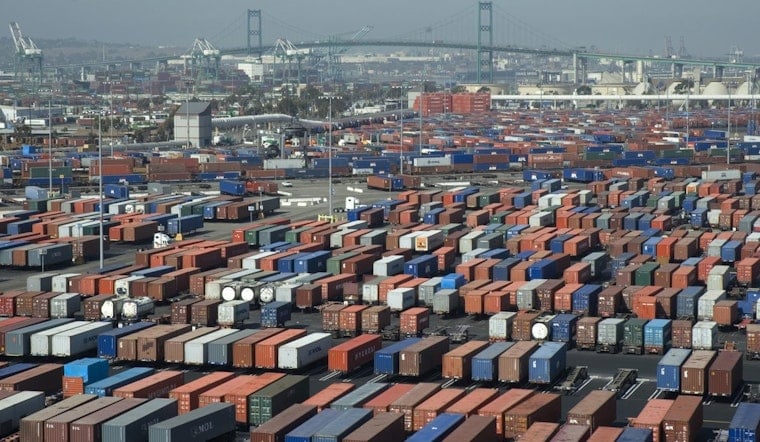
That contraction shows up starkly on the West Coast. Hoodline previously reported that China's share of containerized import cargo moving through the Port of Los Angeles fell from 61% in 2020 and 53.4% in 2025 down to roughly 40% this year, as importers rerouted supply chains toward Southeast Asian nations. West Coast ports saw a surge in volumes over the summer as importers raced to beat tariff deadlines.
California's agricultural sector has already absorbed a heavy toll from the broader trade fight. A University of California analysis found that California agricultural exporters lost roughly $1 billion in trade with China during 2025 tariff disputes, with top commodities dropping 64% from an annual average of $1.55 billion down to $554.2 million — a decline Hoodline detailed in its earlier coverage of the fallout for Central Valley farmers left holding the bag. Tree nut and wine growers suffered the steepest losses in that analysis.
With the September summit now on the calendar, the proposed overcapacity tariff functions as leverage heading into the highest-stakes US-China talks in years. Whether Washington ultimately imposes the straightforward 7.5% rate or opts for the higher-headline, partially suspended structure under discussion remains unresolved as both sides prepare for Xi's arrival in Washington.





