

























































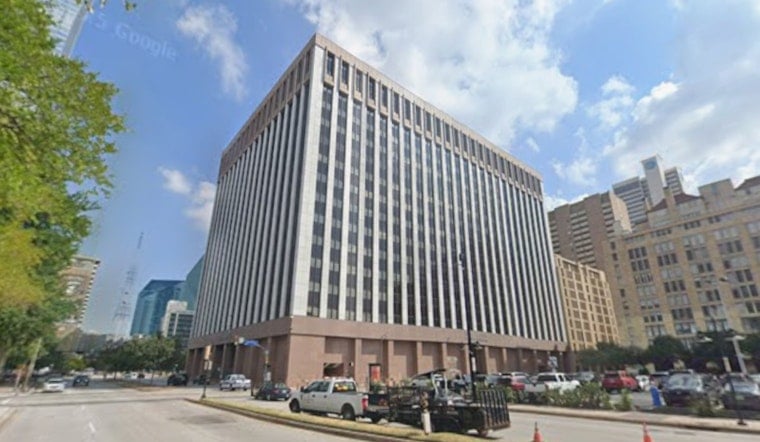
A federal jury in the Northern District of Texas has sided with a former University of Texas at Arlington engineering professor who accused the university of gender discrimination and retaliation, finding last Friday that she was wrongfully stripped of her leadership role and ultimately fired after she raised internal complaints about how male colleagues treated her. Dr. Haiying Huang, a decade-long faculty member in the Department of Mechanical and Aerospace Engineering, sued under Title VII of the Civil Rights Act after alleging that UT Arlington failed to address what she described as an ongoing retaliatory, discriminatory and hostile work environment.
According to CBS News Texas, Huang claimed she faced discrimination and retaliatory firing after complaining through the university's internal system, alleging that male colleagues repeatedly challenged her authority and that departmental leadership preferentially treated those colleagues over her. She was removed from committee leadership positions and eventually terminated from her role as associate chair, a post she claims was handed to a male replacement, per the Texas Conference of the American Association of University Professors. Huang had also complained directly to UT Arlington's Equal Opportunity Services office, alleging that the resulting internal investigation was incomplete and biased.
University's Defense Called Circular by Huang's Legal Team
UT Arlington reportedly argued at trial that it terminated Huang because her complaints and the resulting investigations had brought discord to the department, according to the CBS News Texas report. Huang's attorneys pushed back forcefully on that reasoning, questioning whether future events could logically justify past adverse actions taken against her. The Texas Conference of AAUP reported that her legal team called the university's argument circular and pretextual, framing it as an attempt to blame Huang for the fallout of complaints that were themselves protected activity under federal law.
Court records reviewed by PacerMonitor show the case, formally titled Huang v. University of Texas at Arlington, was filed February 26, 2025, under case number 4:25-cv-00181. Early in the proceedings, U.S. District Judge Mark Pittman denied UT Arlington's motion to dismiss the case, a ruling documented by Midpage on July 2, 2025, that allowed Huang's employment discrimination and retaliation claims to move toward trial rather than being thrown out at an early stage.
Jury Awards Back Pay, More Remedies Expected
The jury awarded Huang back pay, according to the Texas Conference of AAUP, which publicized the verdict statewide as the faculty union representing members across 100 Texas higher education campuses. The AAUP also reported that the court is expected to award additional front pay losses and attorneys' fees in post-verdict proceedings. Federal law caps non-economic damages for Title VII discrimination and retaliation claims at $300,000 for large employers like UT Arlington, though back pay, front pay, and attorney fee awards fall outside that statutory limit, according to guidance published by Bachman Law. That distinction means the jury's back-pay award and any forthcoming front-pay or fee rulings from the judge could add substantially to whatever damages figure emerges from the case.
Huang was represented by attorneys Frank Hill and Ian Klein of Hill Gistrap, P.C., a firm based in Arlington, Texas, along with additional counsel from Cherry Johnson Siegmund James PLLC and White, Rose & Hilferty PC, according to the PacerMonitor case filing. CBS News Texas reported that it reached out to the University of Texas at Arlington for comment on the verdict.
A Decorated Researcher Before the Dispute
Before the departmental conflict that led to her firing, Huang had built a substantial research record at the Arlington, Texas campus. She joined UT Arlington in September 2014 after earning her Ph.D. in Aerospace Engineering from Georgia Tech in 1998 and working at Bell Laboratories and Purdue University, according to her university faculty profile. In March 2019, the university touted her work securing nearly $900,000 in combined grants from the U.S. Department of Defense and the Office of Naval Research to develop advanced structural health monitoring sensors. She also taught specialized upper-level and graduate courses including Fracture Mechanics in Structural Design, Solid Mechanics, and Statics within the mechanical and aerospace engineering department.
The verdict lands amid broader unease among Texas faculty. A 2025 Texas AAUP survey found that roughly a quarter of surveyed faculty statewide had applied for out-of-state jobs, citing concerns over administrative policies and campus climate, according to reporting from Higher Ed Dive. UT Arlington itself is a major public Carnegie R1 research university enrolling more than 42,000 students and reporting $155 million in fiscal year 2024 research expenditures. It remains unclear whether the university plans to file post-trial motions or pursue an appeal of the verdict to the Fifth Circuit Court of Appeals.



