

























































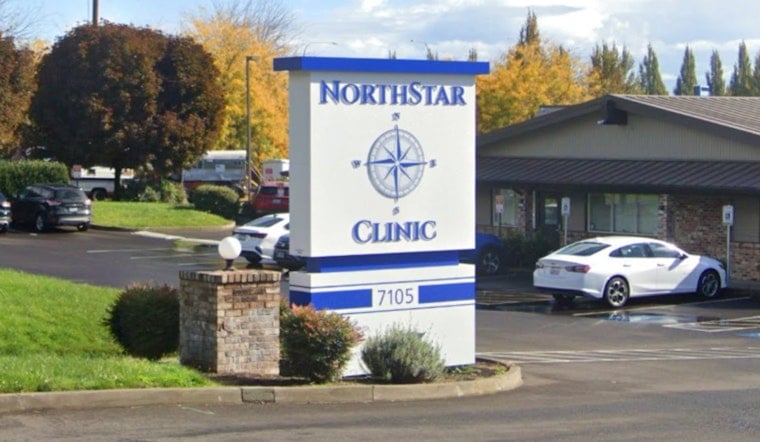
Vancouver City Council has approved a five-year, $4.94 million contract with the Cowlitz Indian Tribe to operate a mobile opioid treatment program that will primarily serve residents of the city's planned Bridge Shelter. The mobile service is an extension of the tribe's NorthStar Clinic, bringing medication for opioid use disorder and other care directly to people experiencing homelessness before and after they move into the shelter.
In comments reported by The Columbian, Jamie Spinelli said the mobile unit will treat and stabilize individuals before they enter the shelter and continue their care once they've moved in. Spinelli added that opioids and fentanyl have become a communitywide issue, not one confined to any single encampment or neighborhood. Community members already have access to general opioid treatment services at existing clinics, but officials say the mobile model removes the barrier of getting people to a fixed location.
A Program Rebuilt From Collapse
The contract approved this week caps a rocky path for Vancouver's mobile treatment ambitions. The city originally finalized a $1.65 million first-year mobile opioid treatment agreement with Columbia River Mental Health Services in February 2025, but the nonprofit suspended most of its operations the following month amid severe cash flow problems, according to Oregon Public Broadcasting. Columbia River Mental Health Services had held the city's agreement to operate the mobile clinic before those financial difficulties forced the pause, the newspaper's report noted.
The Cowlitz Indian Tribe stepped into that gap on February 1, when it officially took over ownership and operation of NorthStar Clinic - Southwest Washington's largest opioid treatment clinic - from Columbia River Mental Health Services, according to The Daily Chronicle. The transition followed a July 2025 letter of intent aimed at stabilizing behavioral health care across the region, according to a statement from the Cowlitz Indian Tribe. NorthStar Clinic first opened in Vancouver on August 8, 2023, and now anchors the tribe's expanded mobile treatment services.
A 120-Bed Shelter Rising in East Vancouver
The mobile unit's long-term home will be the Bridge Shelter, a 120-bed facility the city expects to open late this year at 5313 N.E. 94th Ave. Vancouver City Council approved a $9.38 million construction contract with Tapani, Inc. in October 2025 to build it, using off-site pre-engineered steel structures meant to speed up construction, according to the City of Vancouver. Once finished, it's projected to be the largest shelter in Clark County, and Portland-based nonprofit Do Good Multnomah has been selected to handle daily shelter management, case management and housing transition services on-site, per Oregon Public Broadcasting.
Funding for that campus came from a mix of public and philanthropic sources. The project secured $2.75 million from the Clark County Opioid Abatement Council in June 2025. It also drew an $800,000 PeaceHealth grant for a commercial kitchen and $1.9 million from the Ed and Dollie Lynch Fund, which covered eight outreach positions on the city's Homeless Assistance and Resources Team, as Hoodline detailed in its earlier Bridge Shelter coverage.
State Settlement Dollars Fuel Both Sides of the Deal
Vancouver has operated under a declared civil emergency around homelessness since 2023, a designation that lets the city bypass certain procedural delays when addressing situations that could cause injury, death or property damage, per the newspaper's reporting. That status has shaped much of the city's rapid contracting around both shelter construction and addiction treatment in recent years.
As of February, Vancouver had received more than $3 million from Washington's 10-year, $1.2 billion statewide opioid settlement, part of a pool in which the state's local governments are sharing $55 million total, according to a City of Vancouver accounting of the funds. Separately, under state law SSB 6099, passed in 2024, Washington sets aside 20 percent of its settlement share directly for federally recognized Tribes to fund addiction prevention and treatment, a set-aside established after formal consultations with 29 Washington Tribes, per the Washington State Health Care Authority.
Shelter Beds Scarce as Police Calls Mount
The urgency behind the contract traces back to a stark numbers gap. Clark County's 2025 homeless crisis report counted 8,202 people experiencing homelessness across 3,830 households, while the county maintained only 443 year-round shelter beds, and its housing hotline fielded more than 50,000 calls that year, as Hoodline reported in its county homelessness report. Vancouver police data show officers spent 1,822.50 hours - about 16.2 percent of their overall time - responding to calls tied to unsheltered homelessness as of June 2026, a figure the newspaper cited from the council's presentation.
Clark County's Opioid Abatement Council, managed by administrator Carelon Behavioral Health, awarded $5.3 million in settlement grants across seven local organizations in 2025, funding efforts that include jail-based addiction care, youth prevention programs and peer recovery coaches, according to Clark County. The Bridge Shelter contract and the mobile treatment program represent two pieces of that broader countywide response to the opioid crisis.





