

























































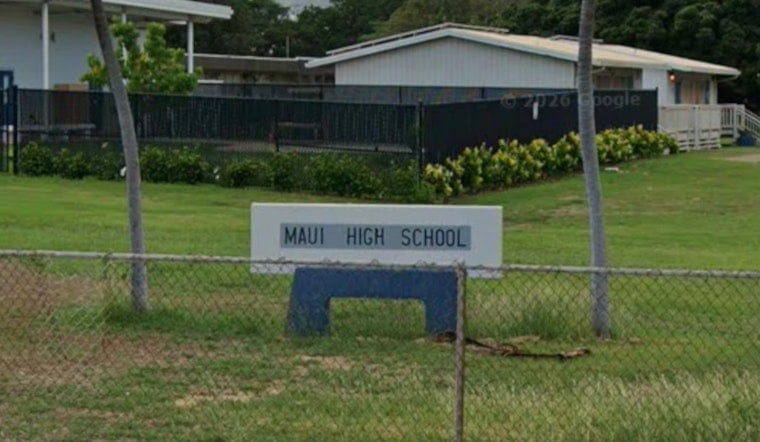
Someone tore through a construction site at Maui High School overnight between August 26 and 27, demolishing concrete walls, structural columns, and pallets of building materials in what state officials are calling severe criminal property damage. The destruction has halted work on a new campus restroom facility and pushed the project's completion back by months.
The Hawaiʻi Department of Accounting and General Services reported that a construction site at the Kahului campus was vandalized, according to Aloha State Daily. The site sustained shattered concrete blocks, damaged pallets of materials, and bricks knocked out of walls, and as reported by Maui Now, the destruction extended to demolished structural columns throughout the interior of the restroom construction area. DAGS is asking anyone with information about the incident to contact the Maui Police Department.
Keith Regan, who serves as DAGS director, state comptroller, and acting lieutenant governor, said additional money and time are needed to fix the damage, order replacement materials, and restart the project. The bathroom project originally carried a contract value of $1.09 million with a completion date of January 6, 2027, though the vandalism has already delayed the timeline by months, per the same account. Full damage assessments are still pending, DAGS spokesperson Diane Ako said via email, leaving the ultimate cost of repairs unresolved for now.
Security Under Consideration as Repairs Loom
Ako said the contractor is considering adding security measures to the site, though DAGS has not confirmed when or whether those measures will be put in place. Unknown individuals caused thousands of dollars in damage at the site, and no suspects have been publicly identified. That financial gap matters under state law: Hawaiʻi Revised Statutes § 708-821 sets the threshold for second-degree criminal property damage, a Class C felony, at more than $1,500 in losses, while damage exceeding $20,000 escalates the offense to first-degree criminal property damage, a Class B felony, according to Justia Law.
DAGS holds legal authority over capital improvement projects at state facilities under Hawaiʻi Revised Statutes § 26-6, managing contractor selection, field inspections, and contract administration on behalf of the Department of Education, which operates Maui High School's campus. If minors or students are eventually identified as responsible, Hawaiʻi Administrative Rules Title 8, Chapter 19 governs school discipline, mandatory police reporting, and financial restitution for property damage on Department of Education grounds, according to the Hawaii Department of Education.
A Familiar Face Overseeing the Fix
Regan's role atop DAGS carries an unusual backstory. Governor Josh Green named him acting lieutenant governor on April 23, 2026, after Lieutenant Governor Sylvia Luke took an indefinite leave of absence, per the Office of the Governor. Regan has kept his executive duties running the state's accounting and general services department while also filling the constitutional role of the state's second-in-command.
Before his state appointment, Regan spent more than 15 years in Maui County government, serving as finance director and managing director under Mayor Alan Arakawa, as reported by Civil Beat. That local government background gives him firsthand familiarity with the kind of infrastructure headaches now playing out at Maui High School, where a stalled restroom project sits at the intersection of state bureaucracy and county-level history.
Decades of History on the Kahului Campus
Maui High School educates roughly 1,700 to 1,900 students across grades 9 through 12 on a 75-acre Kahului campus that includes 12 major buildings and 36 portable classrooms, drawing students from Kahului, Kihei, and Wailea. The school traces its roots to 1913, when it was founded in the sugarcane plantation town of Hamakuapoko, before relocating to its current South Lono Avenue site in January 1972.
For now, the campus is left waiting on two fronts: a damage assessment from DAGS inspectors that has yet to be finalized, and a decision on whether the contractor will add security to prevent another setback before crews can even begin rebuilding what was destroyed.





