

























































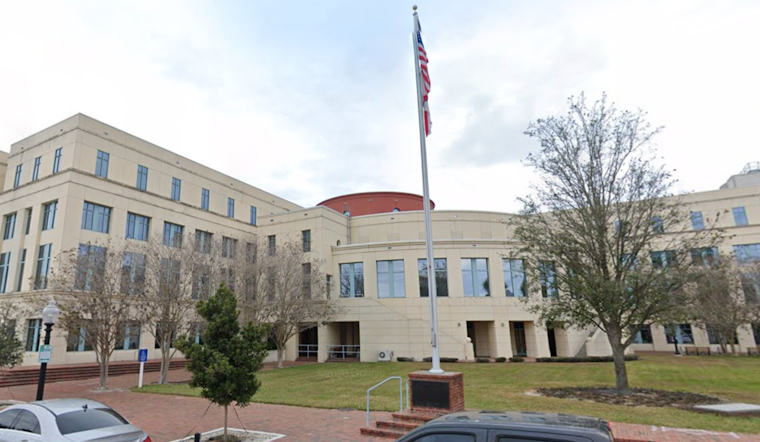
Volusia County is done considering a temporary timeout on large-scale data centers — commissioners want them gone for good. On Monday, August 17, the Volusia County Council voted unanimously to skip a staff-recommended six-month moratorium and instead directed county legal staff to draft a formal ordinance permanently banning large-scale data centers in unincorporated parts of the county.
The decision came after hours of public comment, according to WFTV, with county staff having presented research supporting a temporary pause before council members opted for immediate, permanent prohibition instead. As Orlando Weekly reports, Volusia County staff had recommended a 12-month moratorium on large-scale data centers, but the eight-member council chose to move forward with a permanent ban instead. Volusia County leaders cited community pressure and potential negative effects on water supply, electricity, and quality of life as reasons for the decision, per Orlando Weekly.
Why Volusia Acted Now
County staff had been directed in June to research the environmental and health risks tied to these facilities, and the resulting white paper reportedly found that large-scale data center water demand is well-founded and locally acute. Per that same white paper, data center water consumption poses a genuine risk to a resource with no substitute — a particularly pointed concern in a county that Orlando Weekly notes is particularly susceptible to sinkholes. A single large-scale data center, defined under the proposal as a facility with a peak electrical load of 50 megawatts or more, can use up to 5 million gallons of water a day.
Resident Carol McFarlane told county leaders that water and electricity impacts are huge and that low-frequency sound from these facilities is a public health concern, according to Orlando Weekly's reporting. Fellow resident Don Dempsey said he wants large-scale data centers gone entirely, adding that he wants to preserve water for future generations rather than use it for data centers. Troy Kent, another resident who weighed in, said he'd heard nothing positive about large-scale data centers.
What Happens Next
The proposed ban, which applies specifically to unincorporated Volusia County, is already functioning under what's known as pending ordinance doctrine — a legal mechanism that freezes new large-scale data center development applications while the formal ordinance is drafted. That formal ordinance will still need to clear review by the Planning and Land Development Regulation Commission and face two public hearings before it's finalized, the outlet reports.
County Chair Jeff Brower said local leaders are expected to restore local control over the issue, and he urged Volusia residents to consider political candidates' positions on data centers when they vote. Notably, the ban would apply only to unincorporated areas — incorporated cities within the county, including Deltona, DeLand, and Daytona Beach, retain their own local authority to regulate or welcome data center development independently.
Cities Within Volusia Are Charting Their Own Course
Some of those cities are already moving on parallel tracks. Ormond Beach unanimously enacted an 18-month moratorium on data center applications on July 28, giving staff time to draft its own permanent municipal ban, with the duration deliberately timed to align with the expiration of state growth management restrictions in October 2027. Meanwhile, voters in Edgewater are scheduled to decide a data center regulation ordinance through a municipal ballot referendum in November, following a related Hoodline report on Edgewater's ban confusion that unfolded earlier this summer.
Just outside Volusia's borders, Flagler County has become a testing ground for a different kind of digital infrastructure debate. DC BLOX broke ground this year on a 33,760-square-foot subsea cable landing station in Palm Coast anchored by Google's Sol subsea cable, generating local debate after executives mentioned potential future campus expansions of up to 100,000 square feet. City officials have since clarified that the approved facility is a specialized cable landing station rather than a hyperscale server farm.
The Legal Backdrop: SB 180 and SB 484
None of this would be legally possible without a specific carve-out. Florida SB 180 froze local governments' ability to enact more restrictive or burdensome land-use, growth management, or planning policies in counties covered by federal disaster declarations for Hurricanes Debby and Milton — a freeze that remains in effect through October 1, 2027 and covers Volusia County. Orange County has already sued over SB 180, per Orlando Weekly's reporting.
What makes Volusia's ban possible despite that freeze is Florida SB 484, signed by Gov. Ron DeSantis in May, which gave Florida county governments explicit authority under state law to regulate and decline large-scale data center development even amid the broader zoning freeze. That same law also requires utilities to ensure that data centers with 50 megawatts or more of load pay the full cost of their service — a provision that's already sparked an August legal challenge before the Florida Public Service Commission, with consumer advocates disputing Duke Energy's proposed data center tariff, according to WUSF.
Part of a Wider Statewide Wave
Volusia isn't acting in isolation. Walton County became the first in Florida to enact an outright permanent data center ban by a 5-0 vote in June, embedding the prohibition directly into its Land Development Code. Jackson County followed with its own permanent ban later that month, replacing a prior one-year moratorium and stripping out a proposed exemption clause to close potential loopholes. At least 12 Florida municipalities currently have temporary data center moratoriums either enacted or in progress, Orlando Weekly reports, part of a broader trend Hoodline has tracked across counties including Manatee, Lake, Pasco, Hernando, Sarasota, and Citrus.
State-level financial incentives still cut against that local resistance. Under Section 212.08(5)(r) of the Florida Statutes, large data centers remain eligible for state sales tax exemptions on equipment and electricity if they commit $150 million in cumulative investment and maintain a critical IT load of at least 100 megawatts — a threshold lawmakers raised from just 15 megawatts in 2025 while extending the exemption program through 2037. Orlando Weekly also reports that the data center industry has poured millions of dollars into political contributions and lobbying, with supporters including Amazon and Meta; the outlet notes that U.S. Rep. Byron Donalds has received millions from the industry and has refused to commit to a statewide data center moratorium, while U.S. Rep. David Jolly has pledged support for one.



