

























































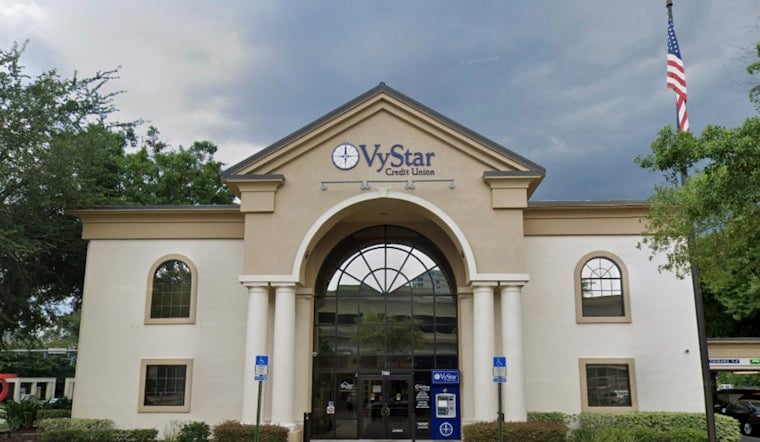
A Jacksonville woman's lawsuit accusing VyStar Credit Union of botching its investigation into a $42,000 impersonation scam has prompted other members of the credit union to come forward with their own concerns about account access and security. Several VyStar customers have reported problems with the credit union in the wake of the filing, according to a local news report.
The lawsuit, filed in U.S. District Court in Jacksonville and first reported by News4JAX, alleges that fraudsters impersonating VyStar representatives accessed the Jacksonville woman's accounts and stole $42,000. The suit contends that VyStar's security controls failed after safety locks were disabled once anomalous activity had already been detected, and it claims the credit union later denied her fraud reimbursement claim. The allegations have not been proven in court, and the case remains pending.
Other Members Say They Have Questions Too
One longtime VyStar customer, who has banked with the credit union for decades and spoke anonymously, told News4JAX she reached out after hearing about the lawsuit because she was concerned about the exposure of her personal information. She said a VyStar representative confirmed, per her account, that someone had accessed her account, and she recalled thinking, “I was like, wait a minute, I never called VyStar.” She said she did not lose any money and did not provide credentials to a scammer, but she said a VyStar employee had accessed her account without her permission and that she later received a text asking her to rate an interaction with a VyStar representative that she says she never had.
The lawsuit has prompted other VyStar members to report similar concerns, though the credit union says the information provided so far does not support characterizing the situation as an ongoing security problem, according to a VyStar spokesperson cited by the same report. VyStar has not publicly commented on the specific allegations in the Jacksonville woman's case.
How the Scam Allegedly Worked
According to the lawsuit's claims, scammers impersonated VyStar representatives to manipulate victims into voluntarily sharing sensitive account credentials, which VyStar says include personal identification numbers, debit card numbers, and one-time passcodes. VyStar said sharing those details with anyone who reaches out is unsafe, no matter who the caller claims to be. The credit union said financial institutions have limited ability to intervene once a customer has willingly handed over legitimate credentials to a scammer.
That distinction sits at the center of a broader legal fight over fraud liability. Regulatory guidance from credit union compliance experts, cited by America's Credit Unions, notes that under federal Regulation E rules, electronic transfers initiated by fraudsters who trick victims into sharing passcodes or credentials remain legally classified as unauthorized transfers — even when institutions frequently dispute those claims. A separate analysis on peer-to-peer payment fraud highlights an ongoing regulatory battle over whether bank liability extends to transactions when customers are manipulated into approving them through social engineering, since payment platforms usually treat consumer-submitted transfers as final.
VyStar Points to Its Fraud Safeguards
VyStar said it invests continuously in protecting members' accounts and information, and that it maintains safeguards across its systems that are continuously updated and strengthened. The credit union said it monitors card-related fraud around the clock and locks accounts immediately once members confirm fraudulent activity. Its fraud prevention alerts, sent by real-time text and phone, ask members to confirm or deny suspicious activity, and VyStar said it investigates every fraud complaint thoroughly and fairly, conducting those investigations consistent with applicable law.
The credit union also said it educates members about fraud protection through emails, webinars, social media, seminars, and in-branch training, and that members can report fraud 24 hours a day, seven days a week, year-round. VyStar pointed to scams increasing significantly as a reason for that ongoing outreach.
A History of Scrutiny Over Account Access
The lawsuit lands at a sensitive moment for VyStar. In October 2024, the Consumer Financial Protection Bureau ordered VyStar to pay a $1.5 million civil penalty and refund all uncompensated member fees after a botched May 2022 digital banking migration locked customers out of their accounts for weeks. Federal regulators found that senior management had rushed the platform conversion past internal technical warnings.
VyStar has also seen its branches and account infrastructure targeted by criminals in other recent Northeast Florida cases. In a counterfeit-check ring exposed last month, Duval County authorities charged an Orlando man accused of recruiting roughly 20 people to make fraudulent ATM deposits at VyStar and Community First Credit Union branches, causing $13,549 in losses to VyStar. Separately, VyStar branch employees intervened in March to stop an ongoing exploitation scheme after staff grew suspicious that a 79-year-old member appeared confused while being driven between branches to withdraw $23,000 in cash.
A National Surge in Bank Impersonation Scams
The Jacksonville case fits into a much larger national pattern. Federal Trade Commission data released in June showed imposter scams cost consumers $3.5 billion in 2025, with bank impersonation representing the highest-loss subcategory among business impersonators, and those losses have nearly tripled nationwide since 2020. Overall consumer fraud losses in the United States climbed to a record $16 billion in 2025, a 25% jump from $12.5 billion the year before, driven in large part by digital payment apps and spoofed communications.
Locally, the financial stakes of a $42,000 loss are especially steep. A February economic survey co-produced by VyStar and TransUnion found that 62% of Jacksonville-area residents spend at or above their monthly income, leaving many households with little buffer against a sudden scam loss, and 42% of local respondents said they were more worried about debt than the year before. Founded in 1952 as JAX Navy Federal Credit Union, VyStar has grown into Florida's second-largest credit union, serving more than 1 million members with assets exceeding $13.8 billion across nearly 100 branches in Florida and Georgia, according to Forbes.
Editor's Note: This article has been updated to correct the court in which the lawsuit was filed.



