

























































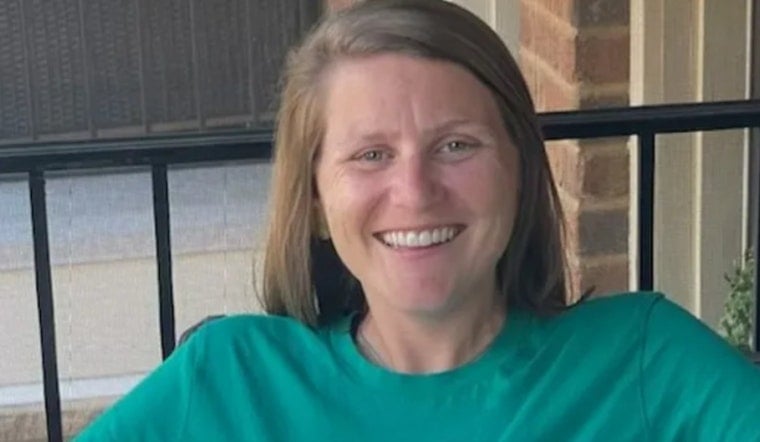
Olivia Whitford Wooten has lived with ALS for 1,133 days, far longer than doctors often predict for the disease, and this September a Charlotte nonprofit is sending her, largely homebound and reliant on a wheelchair and a daily morphine pump, back to Boston, the city where she once planned to build her career.
Wooten, a 34-year-old Wake County woman, was diagnosed with ALS after watching her father, Robert Wooten, die from the disease in 2017. According to WRAL, her diagnosis upended plans to apply to graduate school and find a job in Boston, a path she had been actively pursuing before her diaphragm and ability to stand began to fail. She had visited the city with her mother back in 2022, before the disease progressed to its current stage.
Watch Love Grow, the Charlotte-based nonprofit covering the trip, is a group founded to support widows and widowers, according to the outlet's reporting. Its founder, Ashley Manning, started the effort in 2021 as a local Valentine's Day outreach project; by 2026 it had grown to deliver more than 4,000 floral arrangements and care packages to widows and grieving families nationwide, per Axios. In May, the organization expanded further, delivering 700 Mother's Day care packages and flowers to mothers who have lost a child, the same Axios report notes.
A Trip That Requires More Than a Plane Ticket
Commercial travel is unrealistic for Wooten given her medical needs, the station's report states, and Watch Love Grow is instead covering a private flight along with medical support for the family's long weekend in Boston. A medical professional will travel with the Wootens and provide support for morphine-pump problems and other needs along the way. That level of accommodation reflects a broader reality for advanced ALS patients: continuous non-invasive ventilation and IV medication pumps face insurmountable hurdles on standard commercial flights, according to Your ALS Guide, which cites strict regulations on equipment operation, battery backup, and the need for dedicated clinical attendants.
Wooten receives morphine daily through a PICC line and pump to help manage her breathing difficulty, which has worsened as her diaphragm weakens and made speaking increasingly harder. Low-dose morphine is recommended in advanced ALS palliative care specifically to relieve the severe breathlessness and air hunger caused by weakening respiratory muscles, according to guidelines from the Palliative Care Network of Wisconsin. Non-invasive ventilation, delivered through portable machines without a surgical tracheostomy, is considered one of the most effective interventions for extending survival and improving quality of life once diaphragm strength begins to decline, per the ALS Network.
A Family History That Shadowed the Diagnosis
Robert Wooten, Olivia's father, died from ALS at age 51 in 2017, a loss that made his daughter's own diagnosis land with particular weight. ALS can be hereditary, and healthcare providers can now test 44 genes associated with the disease; Olivia Whitford Wooten was tested and does not carry any of the 44 genes screened. Modern genetic panels can screen more than 40 distinct genes linked to ALS and identify pathogenic variants in roughly 70% of familial cases, though only about 10% of ALS cases overall are familial, according to research published in PubMed Central.
Wooten's survival so far already runs counter to typical expectations. The average life expectancy after an ALS diagnosis is three to five years, though roughly 30% of patients survive five years or more and 10% to 20% live at least a decade, according to the CDC. The agency's National ALS Registry estimates roughly 35,000 people in the United States currently live with the disease, with about 5,000 new cases diagnosed each year. Younger age at disease onset is one of the primary clinical factors linked to longer survival, medical research compiled by the CDC indicates, which offers a possible explanation for why Wooten, diagnosed in her early 30s, has outlived the median timeline.
Family and Faith, One Day at a Time
A high school friend connected the Wooten family with Watch Love Grow, setting the September trip in motion. Elizabeth Wooten said she was humbled by the nonprofit's offer, and the organization has said that Olivia's story has touched many people and earned their support. Watch Love Grow said it hopes the experience shows Wooten how much her life has mattered.
Wooten herself has pushed back on being framed as inspirational solely because of her diagnosis, and she has said she does not believe she deserves a gift merely because she is dying. She has said this world is not the best that she has waiting for her, and faith has become central to how the Wooten family approaches the uncertainty of her illness. The family has tried to help others facing terminal illness even while receiving time, resources, and support from others themselves.
Despite the physical toll of the disease, Wooten has said she chooses to be joyful and to laugh while living with ALS. She plans to keep looking ahead one day at a time as September approaches and she prepares to return, however briefly, to the city where she once imagined building a different kind of life.



