

























































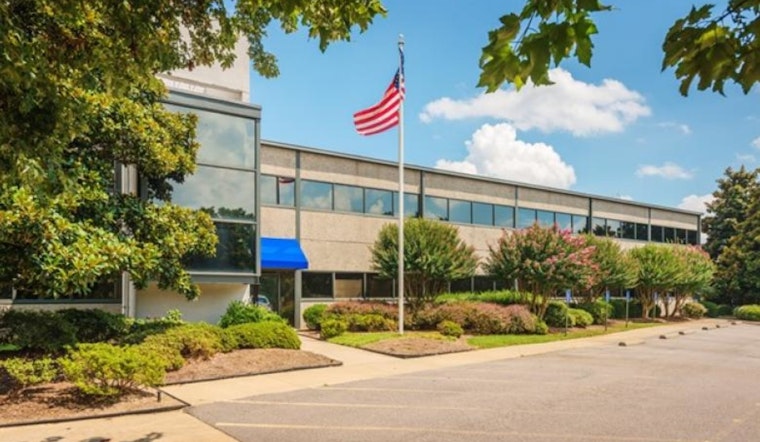
Republican Wake County sheriff candidate Kenny Blackwell owns a home in Franklin County that's listed as his mailing address, even though he's registered to vote at a Wake Forest property his wife owns in Wake County. With Election Day 67 days away, that dual-property arrangement has drawn scrutiny over whether Blackwell actually meets the state's residency requirements to hold the office he's seeking.
The scrutiny comes from an investigation by the ABC11 I-Team, which examined whether Blackwell lives full-time in the county he hopes to police. North Carolina law requires sheriff candidates to be qualified voters in the county they seek to represent, and the I-Team found that a photograph on Blackwell's campaign website matches the exterior of the Franklin County home. An unidentified man told the I-Team that Blackwell and his wife owned the Wake Forest home but did not live there.
Blackwell has pushed back on that characterization. He told the outlet that he is complying with the law and divides his time between the two properties, and he said he would not run for Wake County sheriff if he did not believe he could effectively serve the public. Voters, he added, should not question his commitment to serving Wake County.
What State Law Actually Requires
The residency question isn't just political noise — it's rooted in the North Carolina Constitution. Article VI, Section 8 states that anyone who isn't a qualified voter in an election for a specific office is legally disqualified from holding it, according to the UNC School of Government. Under state law, a qualified voter must live in the county where they're registered.
Crucially, North Carolina General Statutes § 163-57 defines voter residency as a person's fixed habitation — the place they intend to return to when absent — and explicitly states that owning property or paying taxes in a county does not by itself establish legal residency there, per the Brunswick County Board of Elections. When a person's living situation spans more than one set of electoral boundaries, the law looks specifically at where their primary bedroom or usual sleeping area is located to determine legal residence, according to the North Carolina General Assembly.
Candidates and voters alike are also required to establish continuous physical residence and domicile in the county for at least 30 days before Election Day. Blackwell has said he plans to fully move into the Wake Forest home at least one month before the November 3 election, which would put him inside that statutory window. His voting history shows some movement between the two counties: he voted in Franklin County during the 2024 primary and general elections, then voted in Wake County during this year's March primary.
No Formal Challenge Filed So Far
Despite the questions swirling around Blackwell's living arrangements, the Wake County Board of Elections has received no candidate challenges or protests against him, per the state board of elections. Formal challenges to a candidate's qualifications generally must be filed by a registered voter within 10 business days after candidate filing closes under N.C.G.S. § 163-127.2, according to the North Carolina State Board of Elections. That window has long since passed, though post-election protests remain available if disqualifying facts surface later.
Blackwell maintains he is acting within the law. Neither major party held a primary for Wake County sheriff in March, which set up a direct head-to-head contest between Blackwell and incumbent Democratic Sheriff Willie Rowe for November 3.
A Rematch of Résumés, Not Just Addresses
The residency debate is unfolding alongside a broader contrast in law enforcement backgrounds. Blackwell, born in September 1962 and raised in Wake County's Fowler's Crossroads community near Rolesville, has spent more than 38 years in law enforcement — as a Wake County sheriff's deputy, a U.S. Marshals Violent Fugitive Task Force officer, and a lead investigator with the North Carolina State Capitol Police. His campaign platform centers on reducing law enforcement response times, combating illegal drug distribution and human trafficking, expanding mental health support services, and raising deputy compensation.
Rowe, meanwhile, is a 28-year veteran of the Wake County Sheriff's Office who retired as a major before winning the sheriff's race in 2022, according to INDY Week. In that election, Rowe defeated then-incumbent Republican Donnie Harrison with 53.8% of the vote — 241,899 to 207,638 — out of nearly 450,000 ballots cast, per Wake County Board of Elections results. Whether Blackwell's residency situation becomes a bigger factor in the race may depend on what, if anything, election officials or voters do with it between now and November 3.




