

























































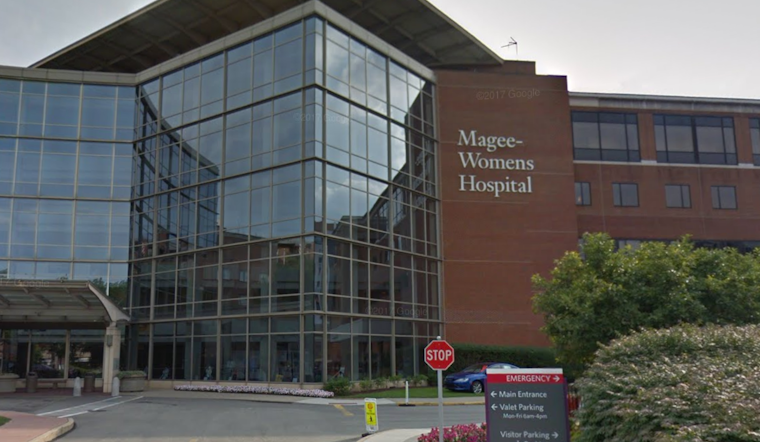
A Washington County woman says sheriff's deputies kept her shackled to a hospital bed through six hours of unmedicated labor, and that two male deputies stood by as she gave birth to her daughter. Nicole Lane, who was incarcerated on a misdemeanor drug charge, has filed a federal lawsuit alleging the restraints — and five more days of being handcuffed during her postpartum hospital stay — violated both Pennsylvania law and the U.S. Constitution.
Lane was transported to Magee-Womens Hospital in Pittsburgh from the Washington County jail the day after her rearrest for an alleged probation violation involving an address discrepancy, according to her account. As reported by WPXI, deputies shackled one of her wrists and her opposite leg to the bed, only removing the restraints so she could receive an epidural before reapplying them once her daughter was born. Court documents reviewed by the Observer-Reporter show Lane had already been experiencing severe preeclampsia symptoms in the days before delivery — headaches, blurred vision, vomiting, and high blood pressure — and that when she pressed an emergency button inside the jail, a nurse from contracted healthcare provider PrimeCare Medical, Inc. responded 30 minutes later with only a sports energy drink and over-the-counter pain medication.
Hospital Staff Had to Demand the Shackles Come Off
Lane was hospitalized postpartum because of the seriousness of her labor, delivery, and preeclampsia, according to her attorney, Jackie Perlow. Medical staff at Magee-Womens had to explicitly demand that deputies remove her arm and leg shackles so she could safely deliver, the same reporting notes. Per Lane, she remained handcuffed for five days of postpartum hospitalization following the birth.
Perlow represents Lane and said the restraints used during labor, delivery, and her five days of postpartum recovery violated both Pennsylvania law and the U.S. Constitution. She said the exceptions written into state restraint law did not apply in Lane's case. Pennsylvania law permits restraint exceptions only when there is a substantial risk of flight or a security concern, but otherwise prohibits restraints for incarcerated women during any stage of labor or any period of postpartum recovery.
A Legal Framework Built to Prevent This
Pennsylvania's Healthy Birth for Incarcerated Women Act, first enacted in 2010 as Act 28, was expanded by state lawmakers in late 2023 under Act 45. As reported by the Bucks County Beacon, the update extended anti-shackling protections to pregnant juveniles, established a mandatory post-birth bonding period of up to three days, and required annual reporting of restraint use by correctional facilities. Advocacy groups have pointed out that local county jails often operate with minimal state oversight, which can lead to breakdowns in compliance with those very protections.
Alexandra Morgan-Kurtz, co-counsel in the case and deputy director for the Pennsylvania Institutional Law Project, said no person should be shackled while their life is in danger. She added that Pennsylvania jails have a duty to provide incarcerated people with dignity and humane treatment. The Pennsylvania Institutional Law Project describes its mission as protecting and advancing the constitutional and civil rights of people incarcerated in Pennsylvania through litigation, advocacy, and legal advice.
Suit Alleges Neglect Extended Into Postpartum Care
The lawsuit does not stop at the delivery room. According to a press release from co-counsel Women's Law Project, jail officials denied Lane postpartum medical care and substance use disorder treatment medication when she returned to the facility, and had earlier threatened her with hospital transfer restrictions that would have barred emergency contact with her family during labor. Lane's case is co-represented by attorneys from the Women's Law Project, including Perlow and staff attorney Evelyn Mangold Nukal, working alongside the Pennsylvania Institutional Law Project.
Lane's federal complaint, filed June 17 in the U.S. District Court for the Western District of Pennsylvania as Lane v. Washington County et al., names Washington County, the Washington County Prison Board, PrimeCare Medical, Inc., Warden Jeffrey Fewell, Captain McDonough, and multiple sheriff's deputies and medical staff members as defendants, according to federal court filings. She had pleaded guilty in January 2025 in the Washington County Court of Common Pleas to misdemeanor drug possession and was sentenced to 12 months of probation, in addition to serving one year in jail on a prior 2021 charge, with her release coming on March 21, 2025, court records cited by the Observer-Reporter show.
A Pattern at the Jail's Medical Contractor
This is not the first time PrimeCare Medical has faced allegations of this kind. As reported by CBS News, the Harrisburg-based company was named in a September 2022 federal civil rights lawsuit alleging its nurses ignored a pregnant inmate's labor cries for six hours, resulting in her giving birth alone on a concrete cell floor at a Maryland jail. Separately, the Observer-Reporter reported in February 2025 that a federal wrongful-death lawsuit had been filed against Washington County, Warden Fewell, and PrimeCare Medical alleging an inmate suffered a fatal collapse in February 2023 after being left without proper care for a bleeding ulcer and pneumonia in an isolated cell.
Medical research on preeclampsia underscores why physical restraint during delivery carries such risk. Findings published in PubMed Central indicate the condition causes rapid blood pressure surges and seizure risks that cannot be safely managed in a shackled patient, and that restraints can delay emergency obstetric procedures like C-sections — delays as short as five minutes have been linked to permanent fetal brain damage.
Washington County leaders have declined to comment because of the pending litigation, per Channel 11. Lane said she is doing well now and is speaking out for other people so the alleged treatment does not happen again. She said she hopes that sharing her story and taking legal action will prevent another woman from experiencing similar treatment.



