

























































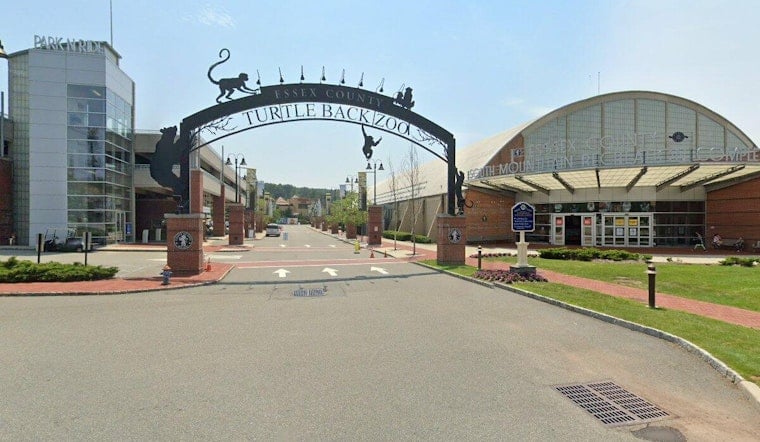
Essex County's Turtle Back Zoo has broken ground on a $7.9 million hoof stock barn that will bring zebras and additional mountain bongos to its African Adventure exhibit, part of a project tied to an international effort to save one of the world's rarest antelopes. Construction on the new barn began in July, with completion expected by spring 2027. The zoo currently houses two bongos, a critically endangered species that survives in the wild in numbers estimated at only about 100 animals.
The West Orange zoo, located inside South Mountain Reservation, awarded the publicly bid construction contract to Neptune-based Tsivicos Enterprises for $7,881,723, according to NJ.com. When engineering, design, and construction monitoring costs are added in, the project's contracts total nearly $8.9 million, according to We News. Wall-based firm French & Parrello was awarded $671,250 for professional design services, while Legacy Construction Management received $316,110 to oversee construction, per the same report.
Why Bongos Need the Help
Mountain bongos are large, forest-dwelling antelopes native to sub-Saharan Africa, and the eastern mountain bongo subspecies is listed as Critically Endangered on the IUCN Red List, with fewer than 100 individuals remaining in isolated montane forest pockets in Kenya, according to the Tropical Conservation Institute at Florida International University. They rank as the third largest antelope species in the world and male mountain bongos can weigh up to approximately 893 pounds, with both males and females sporting spiraled horns up to 39 inches long and reddish-brown coats marked by vertical white camouflage stripes, per the World Land Trust.
Turtle Back Zoo will participate in a Species Survival Plan with the Association of Zoos and Aquariums aimed at rebuilding the critically endangered bongo population, the zoo notes per NJ.com's reporting. The new barn will provide indoor space for the animals and is designed to facilitate bongo breeding, meeting AZA-mandated animal care requirements for the facility. Zoo Director Jilian Fazio said the exhibit expansion will diversify African Adventure and support wildlife conservation, the outlet reports.
A National Breeding Network
Turtle Back Zoo's effort joins a broader coordinated push among AZA-accredited institutions across North America working through the Mountain Bongo Species Survival Plan. Peer facilities have recently celebrated their own milestones, including an eastern mountain bongo calf born at ZooTampa in July 2026 and another born at John Ball Zoo in Grand Rapids in July 2024. Managed breeding across these institutions aims to maintain genetic diversity for potential future reintroductions to the wild.
Essex County Executive Joseph N. DiVincenzo Jr. said the addition of zebras and more bongos will increase exhibit diversity and boost visitor interest, according to NJ.com's report. Zebras, which inhabit savannahs, grasslands, and woodlands across eastern and southern Africa, will be exhibited alongside giraffes and the incoming bongos once the barn is complete. The project builds on African Adventure, which opened in May 2016 as a 3-acre, $7 million savanna-themed habitat featuring Masai giraffes, eland, ostriches, and tortoises before expanding to include lions and hyenas in 2017, according to Village Green. It remains the zoo's largest mixed-species exhibit.
Funding and a Growing Attraction
The hoof stock barn project is funded through grants from the New Jersey Green Acres Program and the Essex County Recreation and Open Space Trust Fund, per NJ.com. Green Acres is identified as a funding source for the project.
Essex County has invested more than $100 million in capital upgrades into Turtle Back Zoo since 2003. The zoo's revenue exceeds its operating expenses. The zoo opened in 1963 and has grown from exhibiting local wildlife to housing animals from around the world. It is accredited by the Association of Zoos and Aquariums.
Turtle Back Zoo had 979,056 visitors in 2023. Attendance topped 900,000 that year. The zoo is open seven days a week from 10 a.m. to 4 p.m., with adult admission priced at $22, senior and child admission at $19, and free entry for children younger than 2.





