

























































Keshawn Williams lost his ability to speak after surgery for an aggressive form of brain cancer, but he found a new way to tell his story: writing songs with an AI music generator from his wheelchair at a Westchester County hospital. The 11th grader crafted up to five songs using the platform Suno AI, including one called “Blythedale Bounce” that describes his cancer treatment and recovery.
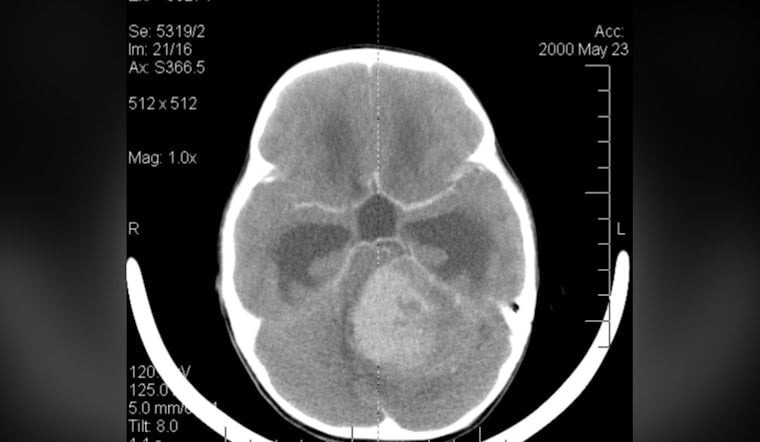
Williams was diagnosed with medulloblastoma, a fast-growing cancerous brain tumor, at age 12, according to ABC7 New York. He received chemotherapy, multiple surgeries, and extensive rehabilitation, and he developed scoliosis during one of the surgeries. Medulloblastoma is the most common malignant brain tumor in children, accounting for roughly 15% to 20% of all pediatric brain tumors, with about 350 to 400 new cases diagnosed nationwide each year, according to Boston Children's Hospital.
Five-year survival rates for pediatric medulloblastoma range between 70% and 80% when the disease has not spread, but survivors frequently face long-term physical, cognitive, and speech impairment from the surgery, radiation, and chemotherapy needed to treat it, per Medulloblastoma.org. That combination of treatments left Williams without speech and needing to relearn the muscle control required to write. He has continued rehabilitation and public school at Blythedale Children's Hospital, which is located in Westchester County.
A Hospital Built for Long-Term Recovery
Blythedale is New York State's only independent specialty children's hospital, operating a 94-bed inpatient facility dedicated to pediatric rehabilitation, according to entity background compiled by Wikipedia. The hospital partners with the Mount Pleasant Blythedale Union Free School District, a Special Act public school district chartered by the New York State Legislature in 1971 specifically to educate hospitalized inpatients and day hospital children while they undergo treatment. That arrangement is what has allowed Williams to remain an 11th grader while continuing his care.
The hospital traces its roots to 1891, when it was founded as a guild assisting homebound children in New York City, before establishing its Valhalla campus in 1922. It historically specialized in treating pediatric conditions including polio, tuberculosis, and scoliosis, the same spinal condition Williams developed during his surgery. Today the campus includes specialized therapy facilities such as the Milton Spahn Therapy Village and the Stavros Niarchos Center for Speech Pathology and Audiology, which deliver the speech, occupational, and physical therapy central to his recovery.
Finding a Voice Through AI-Generated Songs
Rebecca Carlin said music is helping Williams cope as he beats the odds, the ABC7 report notes. Williams uses music to describe his own cancer treatment and recovery, turning what he has been through into lyrics rather than speech. His mother, Jodiona Williams, said hearing his first song brings back memories of everything he went through.
Suno AI, the tool Williams used, is an AI music generator that lets users produce complete songs — including vocals, instrumentation, and lyrics — from simple text prompts. The generative AI startup was founded in Cambridge, Massachusetts in 2022 by Mikey Shulman and former Kensho AI colleagues, according to background from Wikipedia. By June 2026, the company had reached a $5.4 billion valuation after raising $400 million in Series D funding, driven by adoption so broad that users generate millions of AI tracks daily, per SiliconANGLE.
That scale has come with legal baggage. The Recording Industry Association of America and major labels including Universal Music Group and Sony Music filed federal copyright lawsuits against Suno AI in 2024, alleging the startup trained its models on copyrighted sound recordings without authorization, according to Forbes. Hoodline has previously reported on the company's rapid expansion and on the data scraping controversies fueling that scrutiny. None of those corporate disputes factor into how Williams has used the tool inside his hospital room — for him, it has simply been a way to put words to an experience he could no longer say out loud.
Music as Medicine for Young Patients
Clinical research shows music therapy activates neural pathways across both hemispheres of the brain, helping pediatric patients relearn motor skills, process cognitively, and cope emotionally during medical recovery, a mechanism Hoodline has previously examined. That research helps explain why writing “Blythedale Bounce” lined up with the same muscle control Williams needed to regain in order to write again, and why the song has resonated beyond his own room — it enables other children at the hospital to dance and take part in their own recovery.
Williams is wheelchair-bound and hopes to return to playing soccer. He says he plans to continue making music until he can walk. For now, songwriting has become both his outlet and his record of a fight that is still ongoing.


