

























































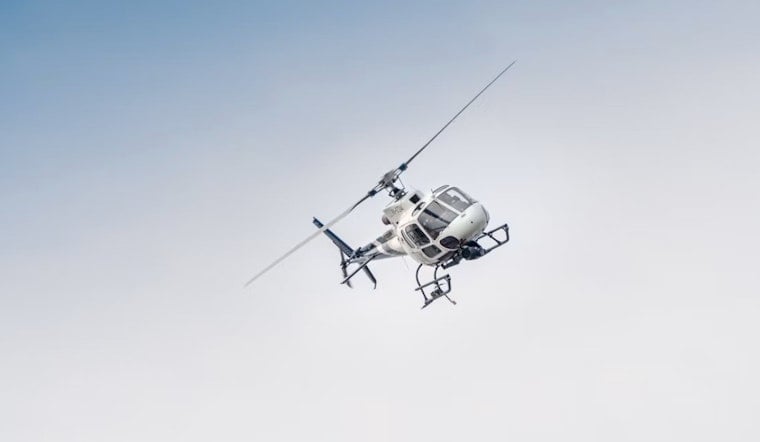
A defense contractor headquartered in Westlake, Texas, has been awarded a $10 billion contract to take over training for every U.S. Army helicopter pilot, a deal that will run for 26 years and reshape how the military teaches new aviators to fly. M1 Support Services LP will provide Initial Entry Rotary-Wing training for between 800 and 1,500 pilots annually at Fort Rucker, Alabama, under the Army's Flight School Next program.
The Army Contracting Command formally awarded the contract last Thursday at Redstone Arsenal, Alabama, as reported by the Fort Worth Report. M1's winning bid was one of 11 submitted to the Army, and the contract carries an estimated completion date of August 12, 2052. According to SAM.GOV, the award, designated W9124P-26-D-A004, carries a $10 billion maximum ceiling value and was executed under a Contractor-Owned, Contractor-Operated model through the Army's Commercial Solutions Opening framework — a mechanism that lets the military buy existing commercial technology instead of custom-built defense hardware.
George Krivo, CEO and chairman of M1 Support Services, said the company is honored to be entrusted with the mission, per the Fort Worth Report. The company's team on the contract includes General Dynamics Information Technology, Robinson Helicopter Co., the University of North Dakota Aerospace Foundation, and Quantum Helicopters. M1 already offers maintenance, repair and overhaul services, flight operations, logistics and engineering support, aircraft modifications, and flight training and simulation services to the U.S. Department of Defense and allied nations.
Why the Army Is Ditching Its Current Trainer
The centerpiece of the shift is aircraft: the twin-engine Airbus UH-72 Lakota, which has served as the Army's primary initial-entry trainer since the service restructured its aviation fleet in 2013, is being replaced by the lighter, single-engine Robinson R66 turbine helicopter, designated the TH-66 SAGE. Military leaders determined that the Lakota's advanced flight automation had become what TWZ described as a “crutch” that kept student pilots from mastering foundational manual flying skills.
Robinson's helicopter has over 85% of its components produced domestically at the company's vertically integrated manufacturing plant in Torrance, California, and the manufacturer says it offers the lowest acquisition price and direct operating cost of any turbine helicopter in its class over the past decade, according to a statement from Robinson Helicopter Company. M1 will train pilots through what the Army calls the Flight School Next training and simulation system, an AI-enabled adaptive learning environment that uses simulation platforms, immersive virtual training and proficiency-based instruction.
Clair A. Gill, commanding general of the U.S. Army Aviation Center of Excellence, said Flight School Next delivers new military helicopter pilots with better foundational skills and provides increased capability at significant long-term savings to the Army. Brent G. Ingraham, assistant secretary of the Army for acquisition, logistics and technology, said the program delivers next-generation training capabilities for increasingly complex operational environments. M1 has said it will deliver a fully integrated, innovation-rich training solution designed to develop more proficient Army aviators on time and on budget.
A Competitive Field, and a Consolidation of Contracts
M1's selection came after a multi-phase competition that initially evaluated six major helicopter manufacturers and prime contractors, including Bell Textron, which offered its Bell 505 Jet Ranger X, and Lockheed Martin, according to Breaking Defense. Flight School Next is designed to consolidate aviation training that previously ran across multiple separate contracts, with the goal of more efficiently producing proficient aviators. M1 will operate under an initial three- to four-year transition period under its first task order before fully assuming training operations, expanding total pilot output from the current 1,250 aviators annually to as many as 1,500, per Defense One.
The training hub itself carries a naming nuance worth noting for readers tracking Army Aviation history: the installation historically known as Fort Rucker was officially redesignated Fort Novosel in April 2023, honoring Medal of Honor recipient Chief Warrant Officer 4 Michael J. Novosel Sr., though military press releases and contract filings continue to use both names.
Lakota Still Flying, Just Not for New Pilots
The Lakota's removal from the primary training curriculum has not ended the Army's relationship with the aircraft. One day after the Flight School Next award, the Army awarded Airbus Helicopters a separate $115.4 million contract on August 14, 2026, to acquire up to 12 additional UH-72B Lakotas for operational mission requirements, according to GlobalMilitary.net. The Army currently operates a fleet of more than 470 Lakotas, meaning the twin-engine aircraft remains in active service even as it steps back from its training role.
The overhaul also arrives against a backdrop of rising concern over military aviation safety. Pentagon data released in 2025 showed a 55% jump in serious military aviation accidents during fiscal year 2024 compared to four years prior, as reported by Military Times. Just one day after the Flight School Next award was announced, the Army ordered a temporary, service-wide stand-down of AH-64 Apache training flights following an August 12, 2026, crash near Fort Cavazos, Texas, that killed two warrant officer aviators during a routine maintenance test flight, per CBS News. Apache training flights resumed after a safety review.
A North Texas Defense Player
M1 Support Services LP is headquartered at 1500 Solana Blvd in Westlake, in the Dallas-Fort Worth area spanning Tarrant and Denton counties. The company already operates major military aircraft maintenance contracts across North Texas, including flightline maintenance for Air Education and Training Command T-38 and T-6 trainers at Sheppard Air Force Base in Wichita Falls. Eric E. Garcia, senior business reporter at the Fort Worth Report, reported the contract award for the outlet, which broke the local angle on the deal for North Texas readers.



