

























































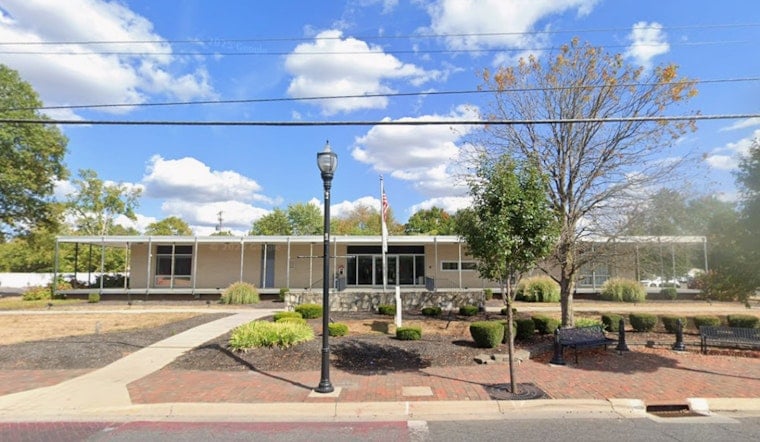
Whitehall City Council was forced to redo a vote installing Patricia Balser as council president this week after members raised allegations that the original tally violated Ohio's open meetings law, capping a contentious meeting that also saw a censure motion against embattled Councilmember Gerald Dixon tabled indefinitely. The council ultimately approved Balser's nomination a second time by a 4-3 vote, but not before City Attorney Brad Nicodemus warned that an unlawful process could void the appointment entirely.
The meeting, held in Whitehall, Ohio, marked one of the most turbulent sessions yet in a city government that has spent the better part of a year mired in overlapping political and legal fights, according to NBC4 WCMH-TV. Councilmember Lori Elmore alleged that the nomination process lacked transparency and may have violated Ohio's open meetings law, prompting the council to pause and eventually redo the vote after finding the initial process inappropriate, the station reported.
Why the Council Had to Start Over
Nicodemus told council members they could either continue with the original vote or table it while the allegations were sorted out, per the station's report. He said the claims of possibly unlawful private discussion were credible enough to require an investigation, and warned that a vote found to have violated the law would be void, along with the presidency itself. Nicodemus added that he planned to possibly seek assistance from the Ohio Auditor of State, the agency that serves as the state's chief compliance office for local public bodies and holds authority to investigate improper conduct by local officials, according to the Ohio Auditor of State.
Under Ohio's Open Meetings Act, all official deliberations and formal actions of a public body must occur in open session, and any formal action arising from private deliberations can be declared legally invalid by a court, according to the Ohio Attorney General. Nicodemus said he would bring a lawsuit before the city if the vote were ultimately found unlawful. The council first tabled the president nomination discussion, then tabled the vote itself for one week before eventually returning to redo it, per the station's account.
Balser's Nomination Passes on Second Try
When the council did revote, it approved Patricia Balser's nomination for council president by the same 4-3 margin, the station reported. Elmore and Councilmembers Amy Harcar and Devin Brown voted against Balser's nomination. Councilmember Mike Adkins, whose vote helped tip the outcome, said he made his choice on his own, per the outlet's reporting.
Elmore pushed back hard on the process, saying, “There has been no interview process. We don't know her education, qualifications, experience, what knowledge she has,” according to the station. Harcar alleged that recall organizers had collaborated with sitting councilmembers, though the station's report does not specify further detail on that claim. Whitehall had not opened applications for the new council presidency before the nomination proceeded, per the same account.
The vacancy stems from the resignation of former Council President Thomas Potter, who stepped down effective July 21 after relocating his residence to Columbus and no longer qualifying as a Whitehall elector, according to the Columbus Dispatch. The city's charter requires council to appoint a president within 30 days of a vacancy by majority vote, with appointment authority automatically transferring to Mayor Michael Bivens if council fails to act in time, per Whitehall City Council records. That deadline pressure explains much of the urgency behind the redone vote.
Balser's Rise Pits Her Against Recall Targets
The nomination fight carries deep political irony: Balser led the recall effort earlier this year against Elmore, Harcar and Bivens, all three of whom went on to survive a special recall election on June 23 after initial unofficial results showed Elmore trailing by six votes before provisional ballot certification confirmed her win, according to WOSU Public Media. That recall campaign, organized under the banner Whitehall Deserves Better alongside co-organizer Holly Stein, cited grievances over high-density housing development, municipal fiscal management, council decorum, and the city's clashes with the local police union.
Bivens is set to gain direct appointment authority over the council presidency if the council fails to act within the charter's 30-day window, a prospect that has added further tension to the standoff. Elmore, Harcar and Bivens all avoided the recall, but the animosity from that campaign appears to have carried directly into this week's fight over who should lead the council.
Censure Push Against Dixon Tabled Again
The same meeting also revived the council's long-running fight over Councilmember Gerald Dixon, who was arrested in December 2025 on felony charges of gross sexual imposition and compelling prostitution involving minors. The Franklin County Municipal Court dismissed those criminal charges later that month, though active law enforcement investigations reportedly remained ongoing, according to 10TV WBNS. Dixon was sworn into his new term in January shortly after his release from custody.
Council considered a motion this week to censure Dixon, but tabled the ordinance indefinitely on a 4-3 vote, following the same pattern as previous efforts to remove him in December, January and February that each failed to gain majority support. During the debate, Dixon told fellow council members, “If you want to dance, we will dance,” a remark the council described as threatening, per the station's report.
A City Already Under Legal Strain
The council presidency fight and the Dixon censure debate land against a backdrop of mounting legal exposure for Whitehall's city government. Capital City Lodge #9 of the Fraternal Order of Police filed a federal lawsuit against the city in late 2025 after administrators restricted union leaders' access to the municipal email system, a measure Nicodemus himself had publicly cautioned raised First Amendment concerns, per 10TV WBNS's reporting. That email restriction was later cited by recall organizers as one of their grievances.
Separately, a former Whitehall police officer filed a federal civil rights lawsuit against Bivens and senior city officials in March, alleging gender discrimination, a hostile work environment and unlawful retaliation for supporting union grievance activities, as Hoodline previously reported. That case remains pending in the U.S. District Court for the Southern District of Ohio. Between the police union litigation, the officer's discrimination suit, the unresolved questions surrounding Dixon's seat, and now a redone presidency vote facing possible state review, Whitehall's council has spent much of 2026 governing under a cloud of overlapping legal disputes.




