

























































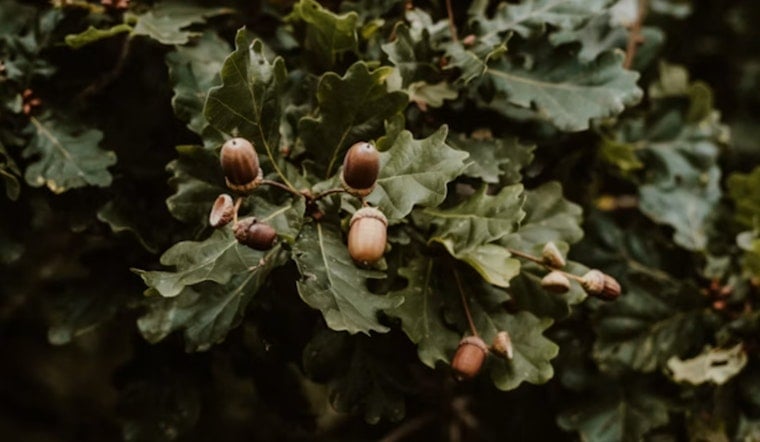
Hikers across Wisconsin are noticing something crunchy underfoot this year: an unusually heavy load of acorns weighing down oak branches from the Milwaukee metro area on outward. Sam Anderson, a research associate with the Nelson Institute of Environmental Studies, has personally observed trees with many acorns while hiking around the state, and it has him and other experts wondering whether 2026 is shaping up to be a full-blown mast year.
A mast year is essentially a boom cycle, when oak trees synchronize to produce a massive, region-wide acorn crop rather than a modest yearly trickle. As reported by the Milwaukee Journal Sentinel, red oak and white oak trees are quite common in the Milwaukee metro area, and both species appear to be part of this year's heavier crop. But Anderson cautions that whether 2026 truly qualifies as an acorn-heavy year will not be known until the nuts actually drop and can be counted, per his comments to the paper.
That uncertainty matters because oak reproduction is not as simple as it looks. White oak trees mature their acorns in a single growing season and drop seeds the same fall they flower, while red oak trees need two full years after spring pollination to finish the job, according to Iowa State University Extension and Outreach. That two-year lag means spring 2025 weather is important to acorn production for some trees, even as this year's crop also depends on how spring 2026 played out.
A Mild Spring May Have Helped the Crop Along
Milwaukee had a mild spring in 2026 with limited dramatic temperature changes, the Journal Sentinel's reporting notes, and that steadiness matters because oak flowers are fragile. Freezing temperatures during spring flowering can destroy oak catkins and severely stunt or eliminate acorn crops across a region's tree canopies, since oak flowers lack the protective petals that shield other plants from a late freeze, per Iowa State University Extension and Outreach. Spring temperature swings and frost can stunt acorn production broadly, and oak trees remain vulnerable to that kind of frost damage in any given year.
Individual regions may still experience different levels of acorn production even within the same state, and Fred Hoppe, president-elect of the Wisconsin Arborist Association, says many factors affect acorn production, including natural phenomena. Hoppe added that the underlying causes of acorn production cycles are not completely known, and heavy-acorn years are generally understood to result from multiple factors that researchers have not yet fully sorted out. Tree health itself also plays into how many acorns any single oak can put out in a given season.
Why Oaks Flood the Forest With Nuts
Evolutionary biologists describe masting as a strategy called predator satiation, in which oaks synchronously produce massive acorn crops to flood the ecosystem and overwhelm the animals that eat seeds, allowing enough nuts to survive and germinate, according to Mass Audubon. A single mature, healthy oak tree can produce up to 10,000 acorns during a peak mast year, and large Wisconsin oaks can produce as many as 10,000 acorns in busy years as well, far outpacing what squirrels, deer, and other wildlife could ever consume. Mass Audubon also notes that mast years tend to arrive every two to five years, part of a boom-and-bust rhythm that keeps seed-predator populations from building up during the lean years in between.
Notably, warmer weather has been associated with larger acorn production in European research, though the Journal Sentinel's reporting points out that the United States has no similar research linking warmer weather directly to acorn output. That leaves an open gap in the science even as Wisconsin's oaks appear to be having a big year regardless.
The Ripple Effects: Deer, Ticks, and Oak Health
Oak-hickory forests are the single most dominant forest type in Wisconsin, covering roughly 26 percent, or about 4.4 million acres, of the state's nearly 17 million acres of forestland, concentrated heavily in southern and western counties, according to Johnson's Nursery. The state also holds more than 2 billion cubic feet of growing stock volume in northern red oak alone, with the heaviest concentrations in the northwest and southwest regions, per the Wisconsin Department of Natural Resources. That scale means a genuine mast year would ripple across a huge swath of the state's landscape and wildlife.
One of those ripples shows up in deer season. State wildlife biologists note that abundant acorn crops shift white-tailed deer feeding movements away from open agricultural fields and deeper into forest canopies, according to Deer Friendly, which can lower hunter harvest rates when deer have less reason to wander into open fields for food. In lean acorn years, by contrast, deer often have to travel farther to reach farm crops instead.
A heavier acorn crop can also set up a public health story two years down the road. Long-term ecological studies show bumper acorn mast years lead to a predictable surge in human Lyme disease risk two years later, because abundant acorns boost winter survival and spring breeding among white-footed mice, according to Awkward Botany. Those mice serve as primary hosts for blacklegged tick larvae, which feed on infected rodents before developing into nymphs capable of transmitting Lyme disease to humans in subsequent seasons.
Protecting Oaks During a Big Acorn Year
A heavy acorn crop is also a reminder for property owners to be careful with their oak trees, since the same trees producing all those nuts remain susceptible to oak wilt, a fatal fungal infection. The Wisconsin Department of Natural Resources enforces harvesting and pruning restrictions from April 1 to July 15 each year, the window when sap-feeding beetles actively transmit fungal spores into fresh wounds on the bark. Red oaks infected with oak wilt typically die within two to four weeks and can spread the fungus to neighboring trees through grafted root systems.
Separately, researchers have found that forest health threats beyond weather can derail acorn production for years at a stretch. Severe defoliation from invasive spongy moth outbreaks depletes a tree's carbohydrate reserves, causing multi-year failures in acorn masting even in otherwise mature, healthy oak stands, according to a study published in the Proceedings of the National Academy of Sciences. In stands recovering from heavy defoliation, researchers observed six consecutive years of low acorn yields before production bounced back.
For now, Wisconsin's oaks are simply doing what they do best: producing more acorns than any deer, squirrel, or mouse population could ever eat in a season. Whether this fall proves to be a true statewide mast year, though, is a question that only the ground beneath those trees can answer once the nuts finally fall.





