

























































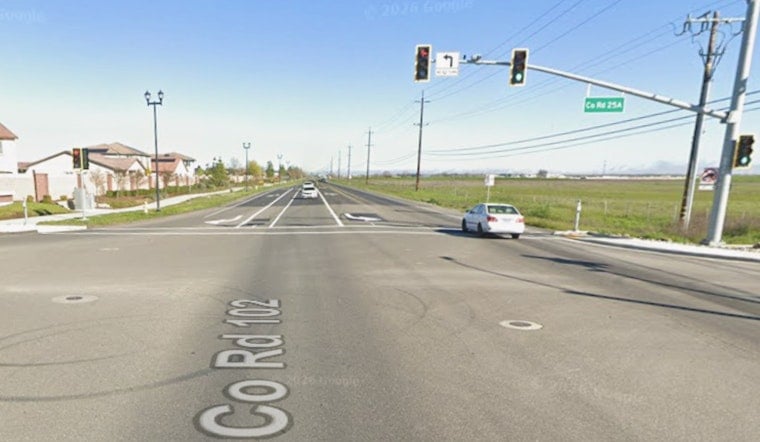
A 103-lot subdivision approved by the Woodland City Council nearly a decade ago has run about $600,000 over its original infrastructure budget, with the extra costs tied to an unbudgeted masonry wall, rough grading, and rising asphalt and concrete prices. The Woodland City Council has approved additional funding to cover the overrun, drawing on the Spring Lake Infrastructure Fee program rather than the developer's own pocket.
The subdivision, located northwest of County Road 25A and County Road 102, was approved by the Woodland City Council in August 2017 as part of the broader Spring Lake growth area, according to The Sacramento Bee. The plan called for 103 single-family lots along with landscaping and stormwater drainage improvements, and it was originally expected to cost about $1.7 million, per the same report. Builders had budgeted a 15% construction contingency at the time, enough to absorb roughly $260,000 in unanticipated costs without needing further city sign-off.
A Wall That Wasn't in the Plan
Costs blew past that cushion. Lennar Homes submitted invoices in May 2021 showing about $600,000 in additional improvement costs, the Bee's reporting shows, and roughly $250,000 of that came from a new masonry wall that wasn't part of the original agreement. Rough grading added another $280,000, while roughly $220,000 went toward urban forestry and a drainage ditch and a separate $220,000 covered a stormwater drainage outfall.
City staff attributed part of the increase to rising asphalt and concrete costs, according to a staff report cited by the outlet. The subdivision's plan had also included upgrades to County Road 25A, a corridor that already carries outsized importance for the neighborhood — it serves as Spring Lake's primary southern access route and is slated to receive roughly $3.1 million from the Spring Lake Infrastructure Fee program for a future interchange upgrade at State Route 113, with construction targeted for as early as 2028, according to the City of Woodland.
How the Fee Program Absorbs the Overrun
The Spring Lake Infrastructure Fee program will fund the cost increase, meaning the added expense flows through the same mechanism that has financed backbone roads, sewer, water, and storm drainage across the 560-acre master-planned area since the Spring Lake Specific Plan was adopted in December 2001. A Community Facilities District formed in 2004 authorized up to $112.5 million in Mello-Roos bond debt for that infrastructure, per the City of Woodland, with property owners in Spring Lake paying special taxes capped through 2050 to service the debt.
This is not Lennar's first large fee obligation in Spring Lake. In September 2020, the City of Woodland approved the builder's 97-unit Parkside 3 development in the same area, which required more than $3.1 million in Spring Lake Infrastructure Fees on top of citywide impact fees — assessed at $32,133 per multi-family unit for that site. Separately, the California Municipal Finance Authority approved up to $26.7 million in special tax bond financing in September 2025 for Lennar's 445-lot Merritt Ranch development elsewhere in Woodland, with backbone infrastructure for those lots nearly complete by late 2025.
A Broader Financial Check-Up for Spring Lake
The overrun surfaces as the City of Woodland works through a 2026 update to its Spring Lake Infrastructure Financing Plan, an effort meant to determine whether collected developer fees and bond proceeds will be enough to finish the master-planned area's remaining unbuilt infrastructure. That financing framework has already been stretched in other directions: the city allocated $5 million in unspent Spring Lake Mello-Roos bond funds toward its new $15 million Community Center Aquatic Center to satisfy developer park obligations, a project Hoodline previously covered. Tax-exempt bond rules required that $5 million to be spent within three years of issuance.
The pace of homebuilding tied to that same fee structure has strained other city systems too. Rapid single-family construction in Spring Lake pushed Tafoya Elementary to 152 percent of operating capacity by August, forcing the Woodland Joint Unified School District to redraw attendance boundaries district-wide for the first time in 25 years, even as older Woodland schools sit less than half full, Hoodline reported in its boundary-redrawing coverage.
Other Infrastructure Moving Forward
Not everything tied to Spring Lake's growth has run into cost trouble. The city completed the Sports Park Drive Pedestrian Overcrossing over State Route 113 in February 2026, an $8 million bridge connecting Spring Lake residential tracts to civic sports facilities, though it was financed through citywide traffic mitigation and pedestrian funds rather than Spring Lake infrastructure fees, according to the City of Woodland. The city and Yolo Transportation District also secured grant funding this year to relocate Woodland's main transit transfer point from County Fair Mall to Main Street, aiming to better connect downtown to growing residential areas like Spring Lake.
Ongoing maintenance in the neighborhood runs through a separate mechanism as well: the Spring Lake Landscaping and Lighting District, formed in 2005, funds public landscaping, greenbelts, and drainage corridors through annual property assessments that typically rise 2% a year. Because Spring Lake isn't fully built out yet, those assessment rates remain below their maximum allowed ceilings, the city notes — a reminder that the neighborhood's finances, like its infrastructure, are still very much a work in progress.




