

























































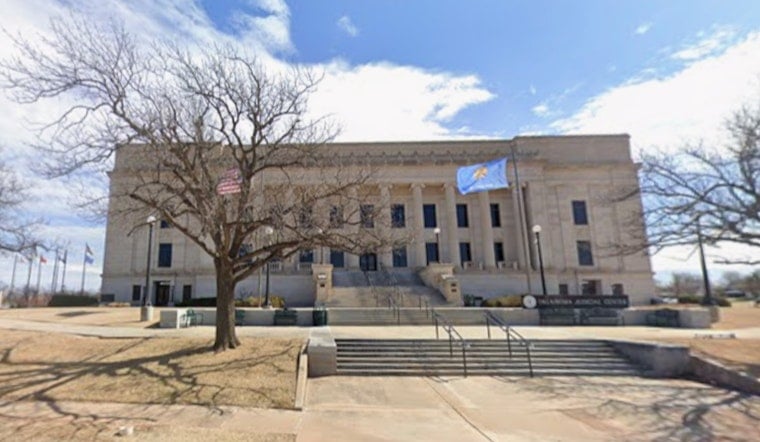
A 45-year-old Bryan County man no longer has a stalking conviction after Oklahoma’s highest criminal appellate court ruled that a 40-minute YouTube rant about his ex-wife and the legal system did not amount to stalking. The court ordered the case against Lon Brandon Meeks dismissed, turning an ugly online outburst into a consequential free-speech ruling.
Meeks and his ex-wife divorced in 2019, and she obtained a protective order that barred direct or indirect contact, including calls, texts, emails and social media communications. The video reportedly discussed his belief that he had been treated unfairly, criticized the judicial system and included graphic descriptions of sex acts, according to Oklahoma Voice.
The Oklahoma Council of Public Affairs, which filed an amicus brief in the case, said Meeks had been serving a five-year sentence with the final portion suspended. The group argued that publishing a video about someone is not automatically the same as directing communication at that person.
The Court Said A Public Rant Was Not Direct Contact
The Oklahoma Court of Criminal Appeals said the state’s anti-stalking law is designed to shield people from unwanted conduct, not censor someone from talking negatively about a third party to a broader audience. As Oklahoma Voice reported, the court emphasized that a post can be about a person without being directed toward that person.
That distinction was central because Meeks did not send the YouTube video directly to his ex-wife, even though she was discussed in it. The court’s reasoning treated the video as public speech rather than the kind of targeted contact contemplated by the stalking statute.
Oklahoma’s Stalking Law Still Requires More Than Offensive Speech
Oklahoma’s model criminal jury instructions say prosecutors must prove that a defendant willfully, maliciously and repeatedly followed or harassed another person, while also showing that the conduct would cause a reasonable person to feel threatened or harassed and actually caused those feelings. The elements are outlined by the Oklahoma Court of Criminal Appeals.
The ruling does not create a blanket pass for online threats or harassment. Repeated direct messages, threats, surveillance or other conduct aimed at frightening a person could still support a stalking case; the issue here was whether a public video about an ex-wife qualified as contact directed at her.
Free-Speech Fight Grew Out Of A Messy Divorce
The Oklahoma Council of Public Affairs said the case raised broader questions about whether courts can punish speech simply because it is offensive and connected to some underlying action. Its legal center described Meeks’ video as morally troubling but argued that the First Amendment still protects speech that is not directed at the person being discussed.
The appeals court’s decision leaves the protective-order history and the bitter divorce dispute in the background, but it draws a clear line for Oklahoma prosecutors: criticizing or describing someone online is not necessarily the same as contacting, threatening or stalking them.





