

























































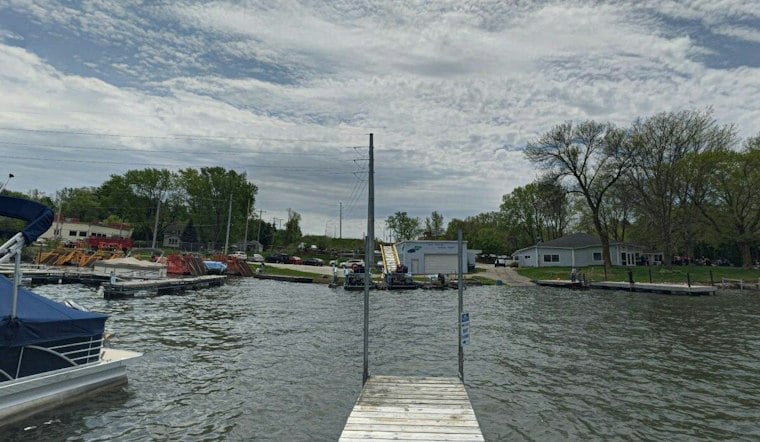
A 1,000-year-old Indigenous dugout canoe has been discovered in Pewaukee Lake, marking the first such find in Waukesha County since researchers pulled 16 ancient canoes from Lake Mendota in Madison. The discovery extends a wave of underwater archaeological finds well beyond the state capital.
The canoe's location in Pewaukee Lake pushes the search for ancient watercraft into one of southeastern Wisconsin's most popular recreational lakes, according to the Milwaukee Journal Sentinel. It comes not long after archaeologists mapped 16 ancient dugout canoes submerged in Lake Mendota, with radiocarbon dating showing the oldest of those vessels dates back roughly 5,200 years, to about 3200 BCE, per the Associated Press. Lake Mendota itself sits within ancestral Ho-Chunk territory historically known as Teejop, the AP notes.
A Regional Pattern Emerges Beyond Madison
Until recently, discoveries like this were treated as isolated curiosities. That began to shift after a recreational diver in June 2021 found a remarkably intact, 1,200-year-old oak canoe buried 24 feet underwater in Lake Mendota — a find initially mistaken for a modern object before carbon dating revealed its true age, according to On Wisconsin Magazine. That single discovery helped launch a broader research effort that has since spread across the state, and the Pewaukee Lake canoe suggests the phenomenon is not confined to the Madison area.
Researchers with the Wisconsin Historical Society have theorized that ancient Indigenous travelers intentionally stashed dugout canoes underwater in lakebed sediment, essentially using the practice as a communal sharing system, or a kind of prehistoric parking lot, to keep the wood from drying out and cracking between trips, according to Smithsonian Magazine. Submerging the canoes in shallow mud prevented the wood from decaying and shrinking, the magazine reports.
How the Canoes Were Built to Last
Dugout canoes found across Wisconsin's inland lakes were hand-carved from single tree trunks — primarily red oak, white pine, cottonwood, and elm — using fire and stone tools, according to PBS Wisconsin. Ancient craftspeople had to seal the wood's cellular structure to keep the vessels watertight, a task made trickier by the fact that red oak is naturally porous and required specialized sealing techniques, the outlet reports in its coverage of the canoes' history in Lake Mendota.
The Wisconsin Dugout Canoe Survey, established in 2018 by University of Wisconsin-Madison researchers and state maritime archaeologists, had documented 73 confirmed dugout canoes statewide as of 2024. That places Wisconsin second in eastern North America behind Florida, which holds the highest total with more than 400 documented dugout canoes, per the university's Archaeology Lab.
Legal Protections for Underwater Artifacts
Submerged cultural resources located on public lakebeds — including prehistoric canoes and historical shipwrecks — are owned by the State of Wisconsin and managed by the Wisconsin Historical Society in public trust, under amendments to the Wisconsin Field Archaeology Act, according to the State Bar of Wisconsin. The law was amended in 1989 specifically to cover underwater archaeological finds like the one in Pewaukee Lake.
State law strictly prohibits removing, defacing, or damaging any archaeological object from state-managed underwater lands without an official permit, according to the State Bar of Wisconsin. Two canoes recovered from Lake Mendota are undergoing preservation, including polyethylene glycol stabilization and planned freeze-drying; one vessel is slated for public display at the new Wisconsin History Center in 2027, the outlet reports.
Tribal Consultation Shapes What Happens Next
State maritime archaeologists conduct their mapping and recovery work in formal partnership with Wisconsin First Nations, including the Ho-Chunk Nation and the Bad River Band of Lake Superior Chippewa, according to the Associated Press. Native nations are consulted on whether artifacts should be retrieved at all or left undisturbed in the lakebed, a decision that will likely factor into what becomes of the newly found Pewaukee Lake canoe.
The Late Woodland period lasted from 500 to 1200 CE. The Ho-Chunk have an ancestral connection to the Madison area, which is also associated with effigy moundbuilders.



