

























































A 14-foot dead reticulated python surfaced in Baltimore's Gwynns Falls this week, discovered by a worker climbing down a ladder to empty the dumpster of Gwynnda the Good Wheel of the West. Cyril Appleby-Kellett made the grim find around 11 a.m. on September 22. The decaying snake had an unpleasant odor.
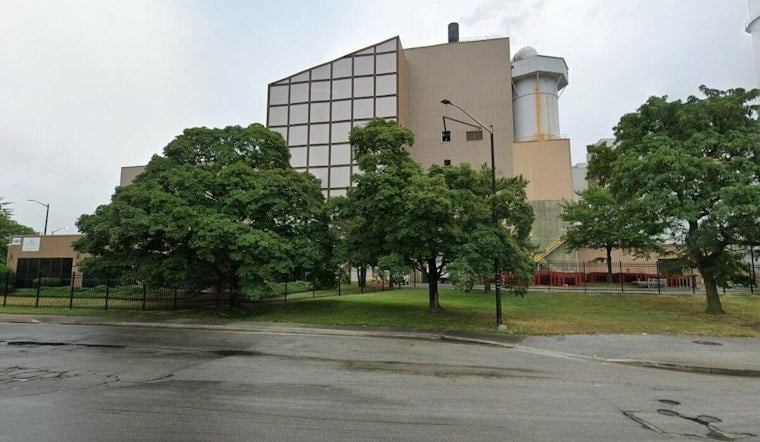
Appleby-Kellett, who serves as technical operations lead at Clearwater Mills, shared the discovery on Instagram, according to WMAR-2 News. He said the python washed down the river and was left for him by workers at the nearby Wheelabrator facility, and he was quick to clarify that the image was not AI-generated. Appleby-Kellett is also the nephew of John Kellett, the inventor of Baltimore's trash wheel system, giving the discovery something of a family connection to the very machine that intercepted it.
Details of the timeline come from The Baltimore Banner, which reported that the python had an unpleasant odor. Clearwater Mills operates Baltimore's fleet of trash wheels, machines designed to collect trash and debris before it can travel farther into the city's waterways.
A Trash Wheel Built for Exactly This
Gwynnda, installed in June 2021 at the mouth of Gwynns Falls, is the largest of Baltimore's four trash wheels and is designed to remove up to 300 tons of trash and debris annually, according to the Waterfront Partnership of Baltimore. The wheel picked up the python carcass, according to the same Banner report.
A python is far from the strangest thing Gwynnda and its sibling wheels have hauled out of the water. Clearwater Mills operations staff have reported previous finds that include beer kegs, drug paraphernalia, sex toys, an acoustic guitar, and even a pair of Balenciaga shoes valued at roughly $1,600, the Banner's report notes. Between May 2014 and April 2024, Baltimore's four-wheel fleet has pulled more than 5.2 million pounds of garbage and debris out of 123 square miles of local urban watershed, according to DredgeWire.
Not the First Snake in Baltimore's Waterways
This is not the trash wheel program's first brush with a python. Back in August 2015, a 5-foot-long ball python was found alive, curled up on Mr. Trash Wheel, spotted by Cyril Appleby-Kellett's brother, per WMAR-2 News. Unlike this week's discovery, that snake survived and was taken to a new home after being temporarily kept by its finder, per the same Banner reporting on the fleet's history.
That earlier incident left enough of a mark on Baltimore that Peabody Heights Brewery, in partnership with the Waterfront Partnership of Baltimore, created Mr. Trash Wheel's Lost Python Ale, which debuted in 2017. A portion of the beer's proceeds supports the Healthy Harbor Initiative's cleanup efforts, according to WMAR-2 News.
Where the Python Likely Came From
Reticulated pythons are not native to Maryland. The species, found naturally in South and Southeast Asia, is a non-venomous constrictor recognized as the world's longest snake, with the longest captive female measuring 7.67 metres, according to Discover Wildlife.
Maryland's Criminal Law § 10-621 covers specified animals and certain venomous-snake families, subject to exceptions; reticulated pythons are not among the listed snake families, according to the Animal Legal & Historical Center.
The timing places this discovery alongside a separate state conversation about reptile regulation. In September, the Maryland Department of Natural Resources proposed stricter rules on keeping and breeding native reptiles such as box turtles and rat snakes to curb poaching and disease, though officials were explicit that the proposal does not touch non-native pets like pythons, according to WBAL-TV. The snake was almost certainly an escaped or released pet.
For now, the python's remains have followed the same path as the rest of what Gwynnda pulls from the water. Trash and debris collected by the wheel fleet get trucked to Baltimore's waste-to-energy incinerator, where it is burned to generate electricity for more than 45,000 area homes, per DredgeWire's reporting on the program.




