

























































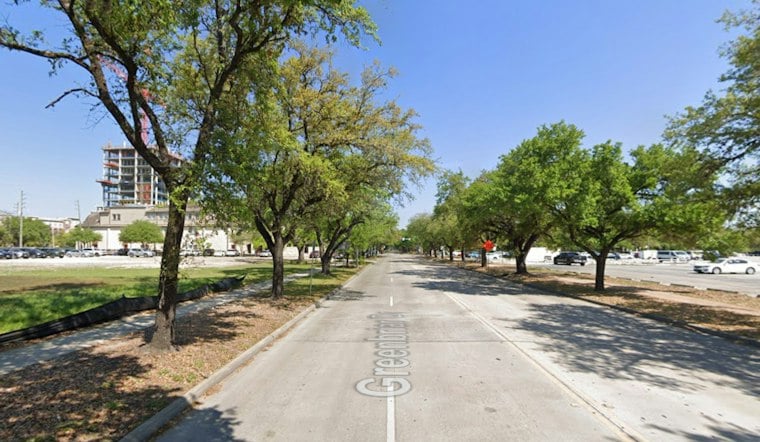
A 24-story high-rise called Greenbriar Residences could soon break ground at 5610 Greenbriar Drive, bringing a $170 million mix of housing and retail to a site less than a half-mile from Rice Stadium. A preliminary filing with the Texas Department of Licensing and Regulation indicates the project could begin construction as early as December 2026, with work scheduled to continue through September 2029.
The filing, first reported by Chron, lists Chaucer EAT LLC as the property owner and Ziegler Cooper Architects as the design firm behind the tower, which is planned to span roughly 531,000 square feet of retail space and multifamily residences. According to Chron, Chaucer EAT LLC has contact information associated with Rice University, though the university has not confirmed any connection to Greenbriar Residences, and the project is not specifically identified in the university's Gateway announcement. The relationship between Greenbriar Residences and the Gateway project's overall budget remains unclear, per Chron's reporting.
Greenbriar Residences appears tied to the broader Gateway Project, a $120 million initiative to redevelop university-owned land in Rice Village and link the campus to the neighborhood, according to Chron. Rice University has defined Gateway as a transformative effort on university-owned land that will create a seamless, pedestrian-friendly corridor linking the campus to the heart of the village, while reimagining the west side of campus anchored by the renovation of Rice Stadium, per Rice Athletics. That project centers on extending Amherst Avenue toward Greenbriar Drive, ultimately connecting Morningside Drive through Chaucer Drive to Entrance 13A on Greenbriar Drive, and would create space for future retail, restaurants, housing and greenspace.
Demolition Already Underway Near the Stadium
Gateway began with the demolition of the Greenbriar Annex, a vacant building at 5650 Greenbriar Drive that previously housed Rice University's Development and Alumni Relations offices, according to Community Impact. An inflatable athletic practice facility near Rice Stadium was cleared at the same time, on November 7, 2025. The project also includes a renovation of Rice Stadium itself, which is turning 75 years old.
Architecture firm Populous is leading that stadium overhaul, which will shrink seating capacity from roughly 47,000 to about 30,000 while adding a three-level concourse and 14 private suites, according to CultureMap Houston. The redesign aims to turn the stadium into a “stadium in a park” capable of hosting concerts and community events year-round, not just football games.
Public Money Already Flowing Into the Corridor
Infrastructure for the broader redevelopment is backed by a $430 million bond package that four registered voters approved in November 2025 for the newly established Rice Village Management District, funding street extensions, drainage, and parking improvements around the Gateway corridor. Hoodline previously covered the tiny bond vote that packed such an outsized financial punch. Houston City Council had formally consented to creating the 28.7-acre management district back in March 2025.
Rice Real Estate Company, the university-affiliated entity that manages non-academic property investments, holds about 260,000 square feet of commercial space across three blocks of Rice Village and leases roughly 97% of that footprint to more than 60 merchants and restaurants, according to Rice Athletics. The entity's strategy has shaped much of the commercial development taking root around campus.
Luxury Towers Already Reshaping the Neighborhood
Greenbriar Residences would join a wave of high-end vertical development already remaking Rice Village. The Chaucer, a 15-story luxury condominium tower headed by Randall Davis Company, is estimated to cost $65 million and offer 33 residences, with completion targeted for October 2027. Hoodline reported that the tower topped out this spring with roughly 65% of its units, priced between $1.7 million and $5.5 million, already under contract.
Nearby in the Museum District, the Forme tower opened in May 2026 as a hybrid residential building with rents ranging from $1,750 for studios to $5,600 for three-bedroom suites, converting a previously stalled co-living construction site into a mix of long-term apartments and short-term suites, as Hoodline detailed in its earlier coverage of that project. Demographic data cited by Revilo Real Estate shows the trade area within a five-mile radius of Rice Village had an average household income of $136,653 in 2020, more than double the national average, a purchasing-power profile that has encouraged developers to chase high-end mixed-use and multifamily projects in the corridor.
No Zoning, But Rules Still Apply
Because Houston does not operate under a traditional municipal zoning code, high-rise residential projects like Greenbriar Residences are governed instead by private deed restrictions and city land-use ordinances, including Chapter 42's Residential Buffering Ordinance, according to the City of Houston. Houston voters have rejected formal zoning referendums three times, in 1948, 1962 and 1993, leaving setback rules and parking mandates as the primary municipal checks on projects like this one.
The push toward denser housing near Rice Village also lines up with a broader statewide trend. Texas lawmakers have enacted housing legislation aimed at easing local land-use barriers and streamlining approvals for high-density multifamily housing in major metropolitan areas, according to The Texas Tribune, as state leaders prioritize expanding urban housing supply to address rising living costs across Texas cities.





