

























































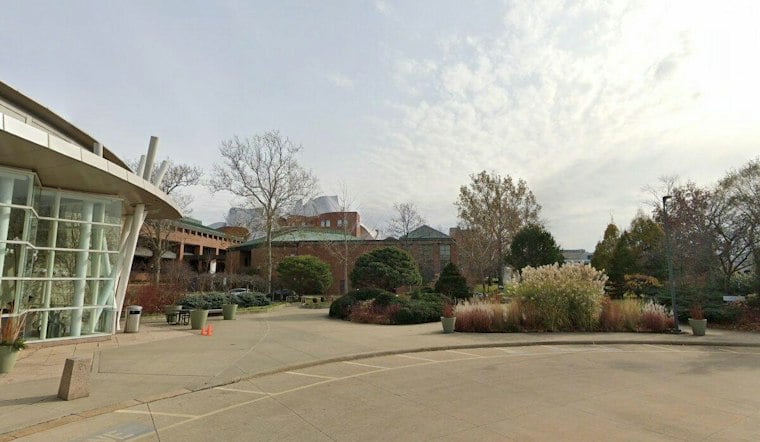
The Western Reserve Herb Society is bringing its 79th Annual Herb Fair back to the Cleveland Botanical Garden on October 17, filling the grounds at 11030 East Blvd. with tussie mussies, dried flower bundles, herbal teas and dyed linens handcrafted by its members. The fair runs from 10 a.m. to 3 p.m., and admission is included with regular garden admission, which costs $21, while Cleveland Botanical Garden members get in free.
Most of what's for sale traces back to the society's own Herb Garden on the botanical garden's grounds, according to Cleveland.com. Western Reserve Herb Society members harvest herbs they grow themselves and turn them into culinary blends, wreaths, teas, baked goods, jams and jellies, potpourri, pressed-flower cards and more, though some of the plants used at the fair are grown by members elsewhere. The society manages the Herb Garden that supplies much of the raw material for those products.
Free Talks Cover Turmeric, the 2026 Herb of the Year
Beyond the tables of handmade goods, the fair offers free 15-minute talks throughout the day, touching on topics ranging from herbs for relaxation to gentle approaches to herbal wellness and ways to add sprinkle and sparkle to holiday foods. One scheduled topic centers on turmeric, which the International Herb Association named its 2026 Herb of the Year for its culinary, medicinal and dye properties. Visitors can also drop into free make-it-and-take-it workshops to build a dream pillow or a lavender room spray, and garden tours are available for those who want a closer look at where the ingredients come from.
The garden itself has roots going back to a 1969 agreement between the society and the botanical garden. It was designed by member and landscape architect Elsetta Gilchrist Barnes and now holds more than 3,500 individual plants, according to Holden Forests & Gardens. The space is organized into nine themed sections, including a Knot Garden, Culinary Garden, Medicinal Garden and a Historic Roses collection, along with an Edible Flower Garden added in 2023 during a facility remodel, per the Western Reserve Herb Society.
A Garden Full of History, From Shaker Relics to a Poet's Tree
Scattered through the garden are artifacts that predate the fair itself, including a 1795 sundial, a 1910 horse-watering trough, two stone mounting blocks and an armillary sundial rescued from the historic North Union Shaker Settlement. Last August, the society joined Holden Forests & Gardens and the Forest City Garden Club to re-dedicate a 1941 plaque honoring poet Paul Laurence Dunbar alongside a rare Japanese Lilac tree, a piece of history originally placed in Wade Oval by the Forest City Garden Club the same year.
The Herb Fair isn't just a craft sale — it's the society's primary fundraiser. Proceeds support horticultural scholarships, community educational programs and the upkeep of the Herb Garden itself, and the society's scholarships have historically awarded up to $10,000 annually to undergraduates pursuing horticulture and environmental degrees. That's a notable output for an organization that, per tax records reviewed by Cause IQ, held $1.38 million in net assets in fiscal year 2025 while running entirely on volunteer labor with no paid staff.
From a Lakeside Boathouse to a Regional Conservation Network
The Western Reserve Herb Society itself dates to May 22, 1942, founded by local volunteers to teach northeastern Ohio about the horticultural, medicinal and culinary uses of herbs, according to the Herb Society of America. Its host venue has its own long arc of change: the Cleveland Botanical Garden began in 1930 as the Garden Center of Greater Cleveland, operating out of a boathouse near Wade Lagoon before rebranding in 1994 and growing into its current 10-acre site, as detailed by Cleveland Historical.
In 2014, the Cleveland Botanical Garden merged with the 3,500-acre Holden Arboretum in Kirtland to form Holden Forests & Gardens, linking the urban Herb Garden to a much larger network of conservation land across northeast Ohio. That merger means a jar of herb-society jam or a hand-tied wreath sold at the fair this year helps fund scholarship work tied to an institution that now stretches well beyond University Circle. Visitors heading to the October 17 fair will find that history layered into nearly every corner of the garden they're walking through.





