

























































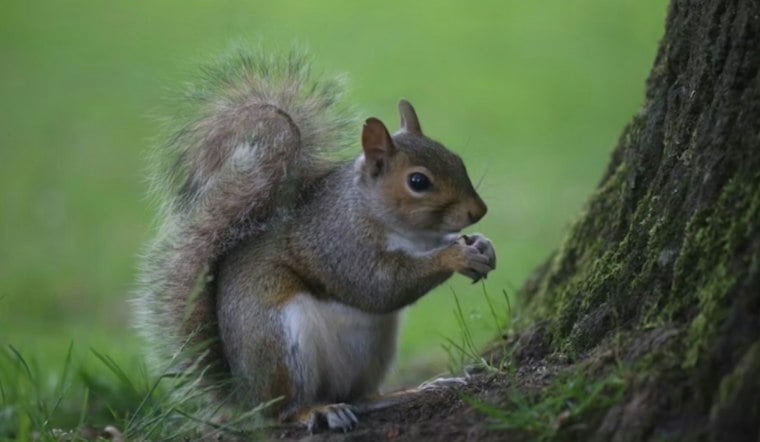
A squirrel wandered into a CORE Electric Cooperative substation off Ridge Road in Castle Rock, Colorado, and set off an explosion that knocked out power to roughly 4,400 members in the area. The Town of Castle Rock confirmed the cause of the blackout, which struck the growing Douglas County suburb south of Denver.
Local resident Clair Whitehead first learned something was wrong the way a lot of people in town did: over the scanner. “We first heard about an explosion, that's how it came in over the radio,” Whitehead told localmemphis.com. Once the lights went out, her first move wasn't to check the breaker box — it was to check on her fish. “This is Bubbles. My pride and joy,” she said of the five-year-old goldfish she keeps alongside her three dogs, adding that after the incident, she now has “some beef” with squirrels.
How a Squirrel Can Take Down a Substation
Squirrels climbing utility poles and seeking shelter inside transformers is far from a freak occurrence, according to the same report. Wildlife contact with equipment is common enough that CORE Electric Cooperative says wildlife — typically birds or rodents — accounts for between 5% and 10% of outages on its system every year, and that squirrel-related damage tends to peak in October and November.
Ji Yoon Lee, who has studied squirrels for years with the American Public Power Association, said the animals are “consistently among the leading causes of power outages,” per the outlet's reporting. The association has also noted that summer tree growth gives squirrels ample opportunity to reach lines and equipment they otherwise couldn't access, setting the stage for exactly this kind of late-summer disruption.
The numbers back up how common the problem is nationally. According to the American Public Power Association, squirrels caused 7,196 sustained power outages across the U.S. in 2023 based on data from more than 320 public power providers, making them the third-leading cause of outages nationwide. In the Midwest, squirrels were the third-leading cause of outages that year.
Wildlife-triggered blackouts aren't just a Colorado quirk, either. Critter Guard estimates that roughly 13 million Americans experience power outages caused by wildlife interference annually, making animal interference the second-leading cause of unplanned outages in the country. Squirrel contact with high-voltage equipment has even reached Wall Street before: according to Foley Equipment, animal-induced disruptions twice triggered temporary trading halts on the NASDAQ stock market, in 1987 and 1994.
Why Utilities Can't Squirrel-Proof Everything
CORE Electric Cooperative — Colorado's largest electric distribution cooperative, serving nearly 170,000 members across a 5,000-square-mile territory in central Colorado — protects its equipment by regularly inspecting its system and covering most energized components to prevent wildlife contact, but it cannot cover every piece of equipment, especially inside a substation.
When squirrels do get into high-voltage substations, they can cause arcing and fires.
The Outage Affected the Area
The outage affected about 4,400 members in Castle Rock, Colorado.
Residents can sign up for DougCo Alert, the county's system for receiving official evacuation, shelter-in-place, and public safety updates.
CORE Electric Cooperative's system is designed to switch load to other areas when equipment fails, which helped limit how long the outage lasted. Power was restored to the roughly 4,400 impacted members within two hours and ten minutes, according to the report. It's a pattern Hoodline has tracked before — squirrels have snarled other cities' grids, underscoring how vulnerable suburban electrical networks remain to small animal interference even as utilities invest in monitoring and inspections.





