

























































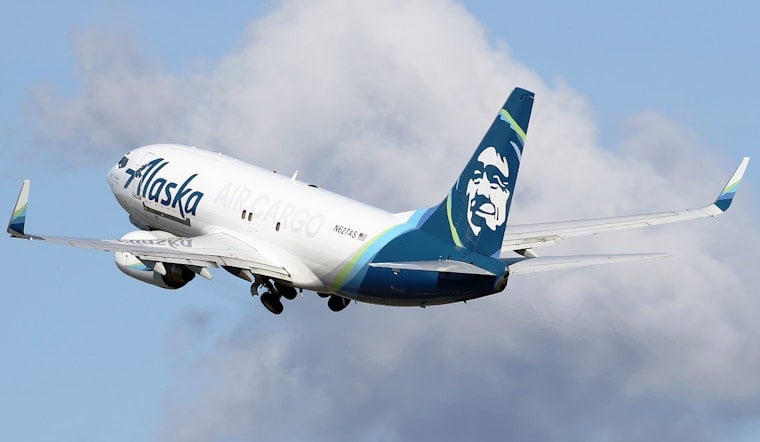
Alaska Airlines is flying out of Long Beach Airport again, more than a decade after it last left the gate there, launching twice-daily nonstop service to Seattle that puts it in direct competition with Southwest Airlines on the same route. Long Beach Airport officials marked the inaugural inbound and outbound flights with a celebration featuring a live DJ, cake and giveaways for passengers.
Alaska last served Long Beach in January 2015, according to MyNewsLA.com, ending an on-and-off presence at the airport. The carrier announced its return to the Long Beach-Seattle corridor in May, and the new route now runs year-round between Long Beach Airport and Seattle-Tacoma International Airport. Airport Director Cynthia Guidry has overseen the airport through the run-up to the relaunch.
The timing is notable because Southwest Airlines already began its own daily nonstop flights from Long Beach to Seattle and Portland in August, meaning the two carriers are now going head-to-head on the same West Coast corridor for the first time in years. That overlap traces back to JetBlue Airways, which fully departed Long Beach Airport in October 2020 after nearly two decades there, relocating its Southern California operations to LAX following a 2017 Long Beach City Council vote against building an international customs facility, according to Simple Flying. That departure freed up gate capacity that other carriers, including Southwest, moved quickly to absorb.
A Tight Squeeze for Gate Space
Long Beach Airport operates under a strict municipal noise ordinance that caps commercial flights at 58 per day — 41 permanent slots plus up to 17 supplemental slots reviewed annually through local noise budget monitoring, according to the City of Long Beach. Those flights are also restricted to operating between 7 a.m. and 10 p.m. Southwest Airlines currently holds roughly 86% of all commercial slots at the airport, or 50 of the 58 total, after absorbing capacity relinquished by departing carriers, per the Long Beach Watchdog.
Alaska secured its own foothold by being awarded two permanent daily flight slots from the airport's official waitlist, allowing it to operate the twice-daily Seattle service. As of April, seven air carriers remained on that waitlist hoping to acquire permanent slots, reflecting how much demand exists for access to Southern California's secondary airports even as the ceiling stays fixed at 58 daily commercial flights.
Fares, Aircraft and Alaska's Broader Reach
The Long Beach-Seattle flights use Boeing 737 aircraft, with introductory one-way fares starting at $139 when the route was announced in May. According to Alaska Airlines, the carrier is now the only one flying between Seattle and all five major Los Angeles-area airports. An Alaska Airlines spokesperson said the year-round flight provides convenient access to all that Southern California has to offer, whether guests are in search of beach time or a theme park.
Alaska's history at Long Beach goes back further than its 2015 exit — the airline had previously ended a regularly scheduled version of the same Seattle route back in 2009 amid low passenger demand at the time. The carrier's Long Beach relaunch also comes two years after Alaska Air Group acquired Hawaiian Airlines in 2024; the two carriers now operate under separate brands, and Hawaiian continues to run its own flights from Long Beach Airport to Honolulu and Kahului, Maui.
Airport Growth Meets Noise Limits
The competitive jockeying for slots is unfolding as Long Beach Airport works through a broader modernization push. The airport broke ground in May on a $37 million concourse overhaul, backed by a $24 million Federal Aviation Administration grant, to update 11 terminal gates ahead of the 2028 Los Angeles Olympics. Long Beach Airport logged more than 3.8 million total passengers and over 16,700 aircraft landings in 2025, even as city officials anticipated a 15% drop in scheduled commercial flights this year.
The core tension for the airport remains balancing that growth against its legal obligations to nearby residents. Because the noise ordinance hard-caps total commercial operations at 58 daily slots, airlines eager to add Southern California capacity are left fighting over an allocation that the city cannot expand without changing local code. For now, that means Alaska's return and Southwest's expanded footprint will have to coexist within a ceiling that has not moved in years.





.jpg)