

























































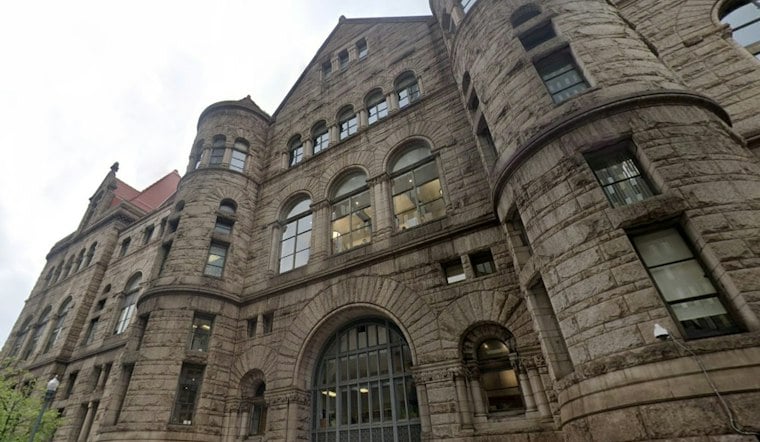
Allegheny County Council voted unanimously Tuesday to ban the construction or operation of large-scale data centers on any county-owned land or in county-owned buildings, drawing a hard line against facilities that draw 25 megawatts or more of electricity. The ordinance also blocks the infrastructure that typically comes with such facilities, including generators, utility lines, cooling water and wastewater treatment systems, water-holding tanks, pump stations and water towers.
The measure, as reported by TribLIVE, does not touch privately owned property. Under Pennsylvania law, zoning and land-use decisions on private land belong to individual municipalities, not the county, so a developer can still pursue a data center anywhere a local municipality's zoning code allows it. What council members did instead was close off county-owned parcels and buildings entirely.
Why Council Wrote in a Carve-Out for County Servers
The county's Sustainability and Green Initiatives Committee advanced the ban unanimously, chaired by Alex Rose. Rose said the committee adopted an amendment specifically to avoid accidentally banning servers already existing on Allegheny County property, so as not to disrupt county server operations or the 911 center. The ordinance carries nine sponsors: Michelle Naccarati-Chapkis, Dan Grzybek, Kathleen Madonna-Emmerling, Lissa Geiger Shulman, Pat Catena, Paul Klein, Jordan Botta, Bethany Hallam and Rose himself.
Council's own bill drew on outside research to make its case. The proposal cited work by University of Michigan public policy professor Ben Green, who found that a single proposed 2-million-square-foot data center near Ann Arbor, Michigan, would consume as much electricity as one million households, according to the Pittsburgh Post-Gazette.
Springdale's Dynamo DC Shows the Limits of the County Ban
Because the new rule only reaches county-owned property, it does nothing to stop the region's most closely watched private project: the 180-megawatt data center planned for Springdale. The 50-acre site was the former home of the Cheswick Generating Station, according to Pittsburgh's PublicSource. Per TribLIVE, the current design calls for a facility 75 feet tall and 652,000 square feet.
Developer Allegheny DC Property Co., owned by investment firm Davidson Kempner, renamed the project Dynamo DC in June and redesigned it into a two-story, 565,000-square-foot facility with a closed-loop cooling system meant to address resident worries over water use, noise and air emissions, as reported by WPXI. The project still needs county approvals.
Developer projections cited by the same PublicSource report estimate the Springdale complex could generate 500 to 1,000 temporary construction jobs, but only 80 to 100 permanent operational positions once it's running — a gap opponents have repeatedly pointed to when weighing the project's land, power and water demands against its long-term local payoff.
Neighboring Towns Are Writing Their Own Rules
With county government limited to its own property, the real zoning fights are playing out municipality by municipality. East Deer, Oakmont, Tarentum, Upper Burrell, Murrysville and Gilpin have adopted or are pursuing similar ordinances, according to TribLIVE. Pennsylvania's Municipalities Planning Code leaves zoning authority strictly with local municipalities, meaning county government has no power to impose land-use rules on private developments no matter how large.
State Regulators Are Also Moving to Contain Grid Risk
The county's action lands alongside a broader state effort to manage data center growth before it strains the power grid. A recent executive order from Gov. Josh Shapiro requires local approval before state environmental permit review and removes data centers from the state's PA Permit Fast Track Program.
The stakes behind that policy shift are significant. A study commissioned by the Pennsylvania Public Utility Commission and published this month warned that under a severe growth scenario, new data center power demand added to the PJM Interconnection grid between 2029 and 2030 alone could exceed the entire annual electricity consumption of the whole Commonwealth of Pennsylvania, according to Public Power. PJM operates the wholesale power grid, where AI-driven demand is outpacing new generation.
The Public Utility Commission established a model large-load tariff in May requiring customers using 50 megawatts or more of capacity to directly cover the grid infrastructure needed to serve them, rather than shifting those costs to residential ratepayers.
Together, the county's property ban and the state's new generation and tariff rules point to the same underlying worry: that hyperscale computing campuses could reshape Pennsylvania's power grid and household bills faster than regulators can keep up. Allegheny County's vote closes off its own land, but as Springdale's Dynamo DC and the wave of municipal ordinances across the Allegheny Valley show, the fight over where — and how — these facilities get built is far from settled.



