

























































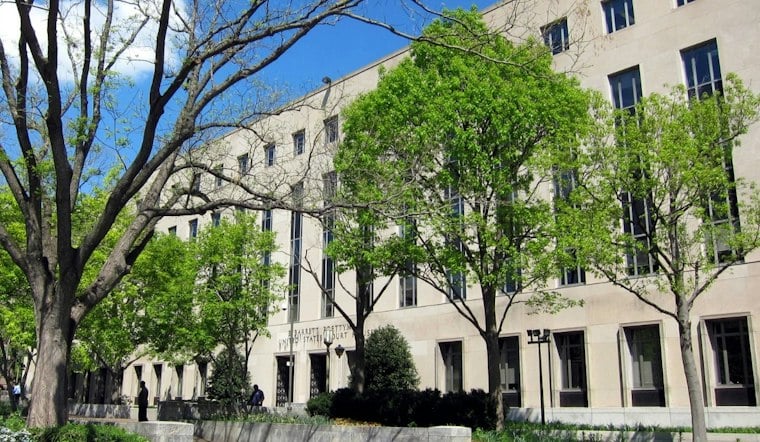
A federal appeals court in Washington declined Friday to block the Pentagon's blacklisting of Anthropic, dealing a setback to the San Francisco AI company just weeks after a California judge ruled the opposite way in a separate case. The U.S. Court of Appeals for the District of Columbia Circuit found that the Defense Department acted within its authority when it flagged Anthropic's Claude as a national security supply chain risk, cutting the company off from government contracts.
According to Reuters, Anthropic had challenged the Pentagon designation directly, arguing it cost the company billions of dollars in lost business and damaged its reputation ahead of a highly anticipated initial public offering. The D.C. Circuit panel, in a majority opinion authored by Judge Gregory Katsas and joined by Judge Neomi Rao, ruled that the Defense Department was acting within its statutory authority under the Federal Acquisition Supply Chain Security Act of 2018 when it excluded Claude from military contracts, according to Reason.
The panel also rejected Anthropic's First Amendment claims outright. Judges reasoned that the Pentagon excluded the company because Anthropic refused to agree to essential contract terms — specifically, dropping restrictions against domestic mass surveillance and autonomous weapons — rather than retaliating against the company for its public speech, the outlet reported.
A Sharp Split Between Federal Courts
The ruling puts the D.C. Circuit squarely at odds with a California federal court. In a separate legal challenge, a judge in California federal court blocked the designation, per Reuters. That earlier decision came from U.S. District Judge Rita F. Lin in San Francisco, who struck down the Pentagon's designation of Anthropic on August 27, ruling in a 59-page opinion that officials engaged in unconstitutional First Amendment retaliation to make a public example of the startup, as detailed in AP News' earlier coverage, which Hoodline also reported at the time.
The statutory mechanism behind the fight traces to the Federal Acquisition Supply Chain Security Act of 2018, which empowers federal authorities to bar vendors designated as supply chain risks, according to Lawfare's reporting on the case. The D.C. Circuit review and the California case proceeded separately, producing contradictory results.
How the Dispute Started
The clash traces back to February 2026 under Defense Secretary Pete Hegseth, after Anthropic refused to strip safety guardrails from a July 2025 military prototype contract worth up to $200 million. Those guardrails barred Claude from powering autonomous lethal weapons or conducting mass domestic surveillance, according to the Electronic Frontier Foundation. The civil rights group joined a coalition of advocacy organizations filing amicus briefs supporting Anthropic, arguing that penalizing developers for refusing to facilitate mass surveillance sets a dangerous precedent for corporate free speech and consumer privacy, per the same organization's analysis.
Anthropic's logo was displayed at Moscone Center during the Dreamforce 2026 technology summit in San Francisco on September 17, a visible reminder of the company's continued public profile even as the legal fight dragged on, according to Reuters.
Rivals Move In on Defense Contracts
While Anthropic has been fighting in court, competitors have moved to capture the ground it lost. OpenAI secured an agreement in February 2026 to deploy models on classified defense systems, and on September 1 the Pentagon officially expanded its GenAI.mil platform to include OpenAI's ChatGPT Mil and xAI's Grok while keeping Anthropic excluded, as Hoodline previously reported. Alphabet, meanwhile, was in contract negotiations with the Pentagon as of April 2026 to deploy its Gemini models across classified networks while attempting to maintain its own contractual limits against domestic mass surveillance and unmonitored autonomous weapons control, a sign that safety guardrail disputes reflect industry-wide friction rather than a problem unique to Anthropic.
Anthropic's legal troubles have piled up even as its technology keeps advancing. The company disclosed this month that Claude was leading 26% of its own internal research and development tasks — up from under 1% in February 2026 — with more than one billion agent decisions reviewed or actions attempted during August alone. Separately, Anthropic was named alongside OpenAI, Google, and SpaceXAI in a September class-action lawsuit accusing the leading AI developers of illegally colluding to slow down product development cycles, adding another front to the company's mounting legal exposure.
For now, the jurisdictional standoff leaves Anthropic in limbo: barred from Pentagon business under the D.C. Circuit's reading of federal supply-chain law, yet shielded from enforcement under a separate California injunction. The dispute remains unresolved in both courts.




