

























































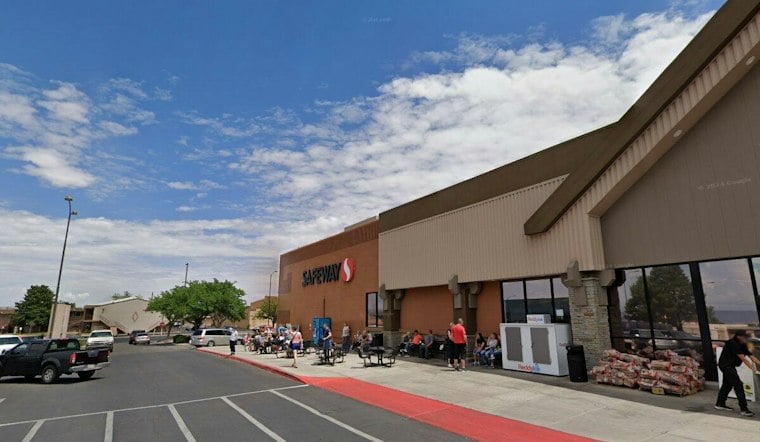
Arizona voters will decide in November whether city governments must get permission at the ballot box before raising taxes on groceries, a measure that small towns like Bisbee and Page say could force cuts to public-safety services, pothole repairs, swimming pool hours, and library book purchases. Proposition 316 would cap municipal grocery tax rates at 2% and require voter approval for any city seeking to impose a new grocery tax or raise an existing one; rates already above 2% could not be increased further, even with voter approval.
The measure, as detailed by Phoenix New Times, would let cities with rates already above 2% keep them, but bar those cities from ever raising the rate further. Bisbee, a border town of about 5,000 residents, currently charges a 3.5% grocery tax that generates roughly $700,000 a year, a sizable chunk of the city's $9 million budget that funds infrastructure improvements and wastewater treatment, according to the same report. Bisbee Mayor Ken Budge has called the measure governmental overreach, telling the outlet that local tax decisions should be made by the residents affected by them rather than state lawmakers in Phoenix.
What Could Get Cut
The potential service effects are projections, not announced cuts. Budge told Phoenix New Times that losing the ability to raise the grocery tax could eventually put public-safety spending, pothole repairs, swimming pool hours, and library book purchases at risk. Page, in northern Arizona, currently levies a 3% grocery tax. The measure would preserve that rate but prevent the city from raising it, the outlet reported.
Page has already lost $228,000 in annual revenue after state lawmakers eliminated municipal rental taxes, according to Phoenix New Times. The outlet also reported that the city’s hotel and lodging tax and amusement tax fell sharply this fiscal year as tourism revenue declined. Page spokesman Adam Geller told the publication that rental and grocery taxes provide stable, resident-generated revenue. Under Prop. 316, the city could keep its current 3% grocery tax but could not increase it.
How the Measure Reached the Ballot
Phoenix New Times reported that the proposal began as a complete ban on city grocery taxes, then shifted to a 2% cap after city officials pushed for a compromise. Chandler Mayor Kevin Hartke, president of the League of Arizona Cities and Towns, helped negotiate the change and described it to the outlet as a middle-ground approach. Chandler’s current 1.5% rate could still be raised if city voters approve an increase.
Republican lawmakers have sought to limit local grocery taxes since 2023, the report said. The Legislative Budget Committee estimated that eliminating grocery taxes altogether would cost cities $227 million in revenue by 2028. The cap would have different effects in different communities: Paradise Valley’s 2.5% rate, Litchfield Park’s 2.8% rate, and Taylor’s 3% rate would be preserved but could not be raised, according to Phoenix New Times.
What the Cap Changes—and What the Estimate Covers
Prop. 316 would cap municipal grocery tax rates at 2% and require voter approval for a city to impose a new grocery tax or raise a rate below 2%; cities already above the cap could keep their rates but not increase them. The Arizona Legislature says state law requires the Legislative Council to prepare an impartial analysis of each ballot proposal for the Secretary of State’s publicity pamphlet.
The $227 million figure cited above is an estimate for eliminating local grocery taxes altogether, not an estimate of the revenue impact of Prop. 316’s cap. The available figures in this account describe potential effects in particular cities, including Bisbee’s current grocery-tax revenue and Page’s reported rental-tax loss.
A Broader Pattern of State Preemption
Arizona’s municipal budgets have also been affected by other state tax changes. The state moved to a flat 2.5% individual income tax under Senate Bill 1828, according to the Tax Foundation. Senate Bill 1131 ended municipal residential rental taxes statewide beginning January 1, 2025. Phoenix responded to revenue losses by raising its general sales tax from 2.3% to 2.8% while keeping groceries untaxed, a move the Phoenix City Council approved 8-1 to protect public-safety staffing.
A Separate Change to Rental Taxes
The residential-rental tax change is separate from the grocery-tax proposal. The Arizona Department of Revenue says that, beginning January 1, 2025, cities could no longer collect transaction privilege tax on residential rentals of 30 days or more.
Arizona's grocery tax landscape is uneven by design: the state itself has not taxed groceries since 1980, according to Ballotpedia. That left grocery taxation entirely up to individual cities and towns. Today, 70 of Arizona's 91 incorporated cities and towns impose some local grocery tax, while Phoenix is one of three Valley cities without a food sales tax, meaning the measure's biggest practical impact falls on smaller and rural communities rather than the state's major metro hubs.
This is not the first time state lawmakers have tried to strip cities of grocery tax authority. Senate Bill 1063 sought to eliminate local food taxes, and city representatives opposed it, according to KJZZ. The bill was vetoed amid opposition from cities and the League of Arizona Cities and Towns. Proposition 316 represents lawmakers' latest attempt, and this time it will be up to voters rather than the legislature to decide the outcome.





