

























































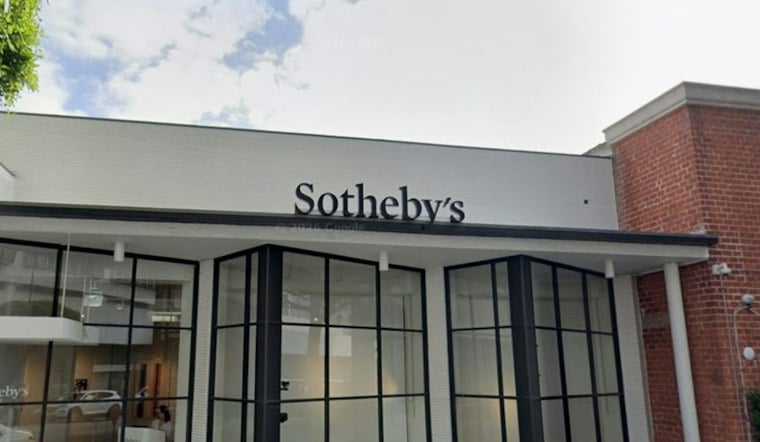
A dozen works from Armand Hammer's private art collection, including pieces by Mary Cassatt, Edgar Degas and Pierre-Auguste Renoir, are on view in Los Angeles this month before heading to auction in New York this November. The works carry a combined estimate of $25 million to $37 million, with proceeds set to benefit the Armand Hammer Foundation as it shifts toward grants for arts education and institutions.
According to the Los Angeles Times, the works from the late oil magnate's personal holdings will be previewed together at Sotheby's Los Angeles ahead of the November sale in New York. Highlights include Cassatt's “Summertime,” Degas' “Trois danseuses (jupes jaunes)” and Renoir's “Antibes.” The auction is part of a broader change in the foundation's role: after overseeing the collection, it is turning its attention to grants for arts education and institutions, the paper reported.
Sotheby's projects that Cassatt's “Summertime” could exceed $10 million and potentially set a new auction record for the artist, the Los Angeles Times reports. Cassatt was the only American to exhibit with the Impressionists in Paris, and the painting itself dates to 1894-95. Hammer purchased “Summertime” for $150,000 in 1971, a sale that the paper notes set a world record at the time both for Cassatt and for any female artist.
The Foundation's Transition
Armand Hammer moved to Los Angeles in 1956 at age 58, according to the Los Angeles Times, and later founded the Hammer Museum. That same year, he put $50,000 into two wildcat oil wells owned by Occidental Petroleum, a bet that helped build the fortune behind his art collecting. The museum and foundation now represent different parts of that legacy: the museum's institutional history is documented below, while the foundation is using the Sotheby's sale to redirect resources toward arts programs.
How the Hammer Museum evolved
According to the Hammer Museum, the institution opened to the public in November 1990 after being founded by Dr. Armand Hammer, then chairman of Occidental Petroleum Corporation. The museum's governance and collections changed soon afterward. The Hammer Museum says negotiations with UCLA began in 1992, the partnership was finalized in April 1994, and UCLA collections and staff moved to the museum the following year. That documented shift provides institutional context for the foundation's separate decision to sell works from Hammer's private holdings and focus on grantmaking.
Julian Dawes, also quoted in the Los Angeles Times, said women artists are increasingly recognized as undervalued compared with their male counterparts — a dynamic reflected in recent record-breaking sales. Leonora Carrington's “The Pleasures of Dagobert” sold for $28.5 million in 2024, breaking its own sales record, while Frida Kahlo's “El Sueño (La Cama)” sold for $54.7 million in 2025, becoming the most expensive artwork by a woman ever auctioned. Those results provide market context for Cassatt's projected $10 million-plus result, but they do not establish that works by women artists are being revalued uniformly.
What the market data shows
Cassatt's “Summertime” carries a projected price above $10 million, compared with the $150,000 Hammer paid for it in 1971, when the sale set a record for Cassatt and for any female artist. The broader market has grown but remains uneven: according to the Art Basel and UBS Global Art Market Report 2026, global art-market sales rose 4% to $59.6 billion in 2025. The same report found that women accounted for 50% of artists represented by primary-market galleries and 45% across all dealers in 2025, while disparities persisted at the highest-revenue levels. Those figures describe representation among dealers rather than auction prices, so they support a more qualified account of changing recognition: recent high-value sales are significant, but the data does not by itself show that the market has reached parity.
Degas' Dancers and a Foundation's New Direction
Degas' “Trois danseuses (jupes jaunes)” was painted around 1899, according to the Los Angeles Times, and Dawes said the artist used the pads of his fingers to work the pastel. Separately, similarly titled Degas works have been dated differently.
A separate Degas pastel of the same title sold for $5.78 million at Sotheby's New York on Nov. 20, 2025, more than one and a half times its low estimate, according to HENI. That price beat the work's previous auction result by $5.59 million, HENI reported, equivalent to an annualized return of 7 percent; the work had last sold at auction in 1980 for $190,000 at Sotheby's. Given the differences in dimensions, medium and sale history across these records, it is not established that they all refer to the same physical work.
Renoir's Riviera Scene Joins the Lineup
Renoir's “Antibes” is also part of the Hammer collection being previewed at Sotheby's Los Angeles, the Los Angeles Times reports. A separate Renoir work titled “Antibes, sketch” and dated to circa 1908 is catalogued by MutualArt, though it is unclear whether it is the same piece heading to the November sale.
Viktor Hammer, a descendant of the collector, told the Los Angeles Times that supporting arts programs honors his great-grandfather's legacy, especially as arts funding faces cutbacks. The Armand Hammer Foundation's pivot toward grantmaking, rather than continued stewardship of the physical collection, underscores the stakes riding on the November auctions in New York.





