

























































UNC Charlotte emergency management officials are searching for a suspect in an armed robbery that unfolded near campus Saturday afternoon, with the suspect last seen fleeing in a blue Kia Optima. The university sent out an alert shortly after 2 p.m. Saturday, and as of now, officials say they don't even know whether anyone was hurt during the incident.
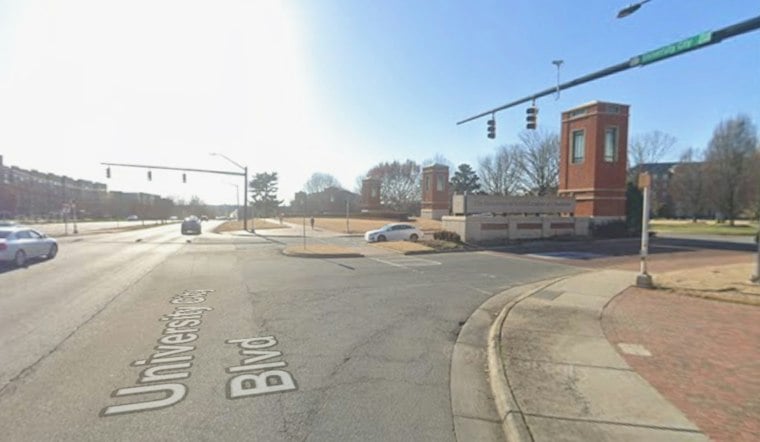
According to WSOC-TV, the blue Kia Optima was last seen near University City Boulevard, a busy commercial corridor that runs alongside the university. The station's report describes this as a developing story, with UNC Charlotte emergency management officials still working to locate the suspect and determine the full circumstances of the robbery.
It remains unclear whether the robbery occurred on campus proper or on public property adjacent to it, a distinction that matters both for jurisdiction and for how the incident gets logged under federal reporting rules. The Jeanne Clery Act requires UNC Charlotte to track and publish annual crime statistics for offenses that happen on campus, in residence halls, and on public property immediately adjacent to campus grounds, per the UNC Charlotte Police & Public Safety office, which maintains a designated Clery Compliance Officer to oversee that reporting.
How University Alerts Get Classified
The Saturday notice fits into a broader system UNC Charlotte uses to categorize safety information for students and staff. Per the UNC Charlotte Office of Emergency Management, immediate safety threats requiring protective action like lockdown or evacuation are classified as NinerAlerts, while non-emergency updates are distributed separately as informational NinerNotices. NinerAlerts go out across SMS, email, social media, the mobile app, and campus sirens.
Whether the armed robbery meets the legal threshold for a Class D felony charge will depend on how North Carolina prosecutors classify the weapon involved and the circumstances of the taking. Under North Carolina General Statute § 14-87, robbery with a dangerous weapon is a Class D felony carrying a mandatory state prison sentence upon conviction, according to the UNC School of Government, and that statute applies equally to completed takings and attempted takings involving a firearm or other dangerous weapon.
A Getaway Car With A Familiar Pattern
The suspect's choice of vehicle echoes a well-documented regional problem. Kias and Hyundais made up 80% of all stolen vehicles across Charlotte in 2022 before that share fell 15% by 2024, following a viral social media trend that exposed security vulnerabilities in the models, per the North Carolina Department of Justice, which noted that Attorney General Josh Stein pushed automakers for anti-theft software upgrades as thefts escalated statewide. It is not yet known whether Saturday's Kia Optima was itself stolen.
The pattern isn't new to University City specifically. In a 2023 case detailed by WSOC-TV, Charlotte-Mecklenburg police recovered a stolen Kia Optima just two miles from where it was taken after suspects reportedly used a USB cable to start the vehicle, with detectives eventually identifying suspects through restaurant receipts left inside the car.
A Corridor Already Under Scrutiny
Saturday's robbery adds to a string of violent incidents that have put University City's streets in the spotlight this year, including a shooting near a University City trail and an armed standoff at student-oriented apartments last month. The area is also central to a proposal before Charlotte City Council, which is scheduled to vote Monday on expanding UNC Charlotte police jurisdiction off campus into the surrounding University City area to help a short-staffed Charlotte-Mecklenburg Police Department, as reported by WSOC-TV.
Such an arrangement would rely on state law that already permits it. North Carolina General Statutes § 116-40.5 and § 160A-288 authorize public university police departments to enter formal mutual aid and extra-territorial jurisdiction agreements with municipal governments, according to the North Carolina General Assembly, and similar interlocal agreements already exist for police at NC State and UNC-Chapel Hill.
The expansion proposal comes even as citywide numbers show robberies trending downward. The Charlotte-Mecklenburg Police Department reported a 16% reduction in overall crime and a 23% drop in robberies across Charlotte during the second quarter of 2026 compared to the same period in 2025, attributing the decrease to targeted precision policing and community engagement.
For now, the core questions in Saturday's case remain open. UNC Charlotte officials have said they are still trying to determine whether anyone was injured during the robbery, and it has not been established whether UNC Charlotte police or CMPD holds primary jurisdiction over the investigation. This story is developing, and Hoodline will update it as more information becomes available.





