

























































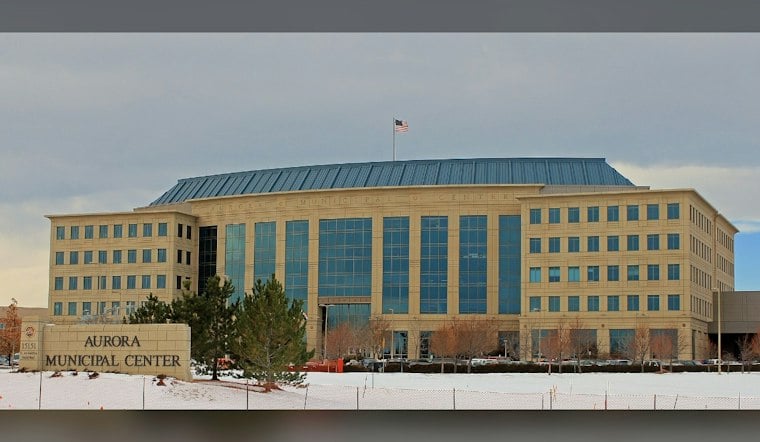
Aurora City Council voted to create a new socioeconomic impact permit that will force vape shops, liquor stores, pawn shops and rent-to-own outlets to keep their distance from each other in the city's lower-income neighborhoods. The measure passed with a single dissenting vote from Councilmember Curtis Gardner, capping nearly a year of council debate over how far city government should go in shaping the mix of businesses allowed to operate in struggling commercial corridors.
The vote, reported by the Denver Gazette, targets what the ordinance labels high-risk businesses: liquor stores, vape and smoke shops, pawn shops, rent-to-own stores and convenience stores that sell alcohol. Aurora currently counts 85 liquor stores, 59 vape or smoke shops, 14 pawn shops and 131 convenience stores selling alcohol or tobacco citywide, according to the same report. Trevor Vaughn told the outlet that these kinds of businesses are associated with negative health or financial impacts, especially when they cluster together.
How the Spacing Rules Work
Under the ordinance, high-risk businesses generally must sit at least 300 feet apart from each other, while businesses of the same type must keep 2,000 feet between locations, per the Denver Gazette's reporting. The permit also imposes broader buffers: high-risk businesses must be 500 feet from major transit stations and 1,000 feet from extended-occupancy motels. New businesses seeking the permit will pay $138 every other year, while existing businesses are grandfathered in and receive an automatic permit at no initial cost.
Council members amended the measure to shrink the required distance between convenience stores that stock healthy food, cutting the standard 2,000-foot separation down to 500 feet for stores that meet federal stocking standards. That change ties directly to a new USDA framework, set to take effect November 4, 2026, that determines which food stores must stock specified items to qualify for SNAP benefits. According to Sentinel Colorado's reporting on the broader policy, that federal rule requires SNAP-authorized retailers to expand their staple food inventory from three to seven distinct varieties across four categories, with at least one perishable item required in three of them, giving Aurora a lever to reward corner stores that stock fresh food with looser spacing rules.
Rooted in Crime-Mapping Research
Aurora licensing officials modeled the underlying spacing framework on Risk Terrain Modeling, a crime-forecasting methodology developed by Joel Caplan at Rutgers University's School of Criminal Justice that examines how specific commercial locations attract public safety incidents, according to Sentinel Colorado. City council packet materials also drew on the American Planning Association's Equity in Zoning Guide, which advises cities to restrict the overconcentration of health-compromising businesses in historically lower-income neighborhoods, the outlet reported separately. City licensing officials cited empirical research, including a 2018 study on crime surrounding urban retail outlets in low-income communities of color, showing that vape and tobacco stores exhibit crime correlations comparable to off-sale liquor outlets.
Existing and new businesses covered by the permit must also follow operational standards defined by Crime Prevention Through Environmental Design, a framework meant to prevent overconcentration of high-risk businesses in dilapidated shopping centers. Separately, the ordinance prohibits new socioeconomic impact permit operations from opening inside any shopping center exhibiting visible blight or maintaining a commercial vacancy rate higher than 50 percent, according to the outlet's earlier coverage. The permit was also structured to pair with the city's previously enacted derelict property ordinance, allowing code enforcement to revoke permits if a business shows a pattern of neglect, stays closed for six months, or repeatedly incurs nuisance violations.
A Long, Contentious Road to Passage
The proposal was first introduced in late 2025 by Councilmember Danielle Jurinsky before being delayed for amendments and re-sponsored in 2026 by Councilmember Alison Coombs, according to the Denver Gazette's earlier coverage of the ordinance's path through council. During the debate, Mayor Mike Coffman endorsed the spacing permit as very important, while dissenting council members like Steve Sundberg criticized similar permit concepts as anti-business intrusions into free-market operations, the outlet reported. Earlier draft versions of the policy would have expanded the list of regulated business types even further, to include check-cashing outlets, second-hand buyers, bail bond agencies and cannabis dispensaries, though those categories were not part of the version that passed.
The permit follows a separate move earlier in 2026, when Aurora City Council established a local tobacco retail license system requiring more than 300 stores selling tobacco, kratom or hemp products to pay a $500 annual fee to fund twice-yearly compliance checks, according to Denver7. The socioeconomic impact permit program is designed to prevent the overconcentration of high-risk businesses targeting diverse lower-income communities across Aurora. City council is set to cast a final vote on the measure at its next meeting, per the Denver Gazette.
The debate echoes other recent fights over commercial land use in Aurora, including the council's gas station and liquor store denial in July, when neighborhood opposition sank a conditional-use permit near Harmony. Council members have also weighed density restrictions on food trucks and pushed forward a citywide rental registry aimed at curbing neglected commercial and housing properties, part of a broader pattern of using licensing and zoning tools to reshape which businesses can operate where in the city's lower-income corridors.





