

























































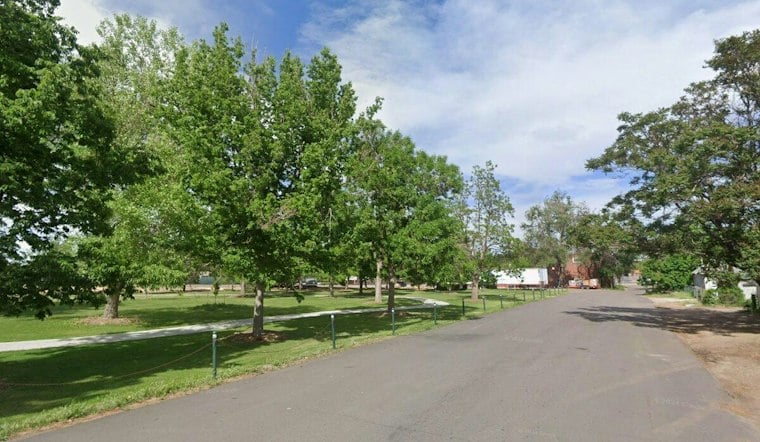
About 100 Green Valley Ranch residents packed a meeting this month to sound off on a proposed data center so large it would become the biggest in Colorado by square footage. The Trident project, planned for the northwest corner of E-470 and East 48th Avenue, is now in the final stages of approval by the city of Aurora, and many neighbors say they only found out about it in early September.
A Massive Project Moving Through City Review
According to the Denver Gazette, Vantage Data Centers submitted its application to Aurora on August 25, 2025, and the two-story facility would span 1.5 million square feet across 108 acres. The Gazette reports that Vantage operates 30 data centers across 12 countries. The site has already undergone two formal city reviews, and Aurora is now conducting a third; the city owes its comments back to Vantage by the end of this month.
The Trident property sits within an industrial zone district that permits data centers, and the Gazette notes that district allows administrative approval when no major adjustments are requested. Vantage did not respond to the Gazette's request for comment on the project.
Neighbors Say They Were Left in the Dark
Green Valley Ranch residents told the Gazette they feel blindsided, saying they didn't hear about the plan from either the city or Oakwood Homes, the community's real estate developer, until early September. Oakwood Homes said Trident is not its project and that it does not own the land, though the company said it has encouraged the data center's developer to engage with the community.
The uncertainty is already showing up in real estate. Carlene Embree, who is trying to sell her home in nearby Painted Prairie, told the Gazette that a potential buyer's biggest concern was the home's proximity to the proposed data center. Residents at the meeting raised broader worries about Trident's potential effects on safety, well-being, home values and health.
Generators, Air Quality and Noise Concerns
Much of the anxiety centers on what the facility would run on and emit. The Gazette puts the number of diesel backup generators at at least 60. Documents created by residents estimate that Trident could emit 25 to 75 tons per year of fine particulate matter and more than 800 tons per year of nitrogen oxides; residents said the pollutants can cause respiratory and cardiovascular risks.
Noise is another flashpoint. Hyperscale data centers are known to emit low-frequency noise. The Gazette points to Loudoun County, Virginia — known as Data Center Alley and home to the world's largest concentration of data centers — where local news publications have reported neighbor complaints about constant hum and fumes from similar facilities.
Power and Water Demands Add to the Pressure
Green Valley Ranch residents also worry about strain on the Xcel Energy Denver metro division grid, which the Gazette reports is shared with Denver International Airport. The airport currently uses about 45 megawatts of energy but is anticipated to need 400 megawatts by 2045, while Trident alone would use about 500 megawatts of power if approved — though Vantage does not disclose how much power the project would actually use, per the Gazette.
Those local numbers echo a much bigger statewide trend. Xcel estimates that new requests from data centers and other large-load customers could require more than 1,900 megawatts of additional power by 2031 — enough to power 2.1 million homes and a 31% jump in the utility's current total supply, according to The Denver Post.
Water is also a sticking point. Residents worry about Trident's water use amid drought conditions and existing restrictions, the Gazette reports, and the project will initially need 800,000 gallons of water for 10 chiller units before switching to closed-loop cooling systems.
Council Response and Statewide Regulatory Gaps
Aurora City Councilmember Amy Wiles, who represents the area, told the Gazette she is working to pass data-center regulations and keep the community informed. The council is enacting restrictions for the industry and has directed city staff to propose setbacks and buffers for data centers; council members are scheduled to cast a final vote on an evaporative cooling ban next Monday, September 28.
Aurora's push comes as Colorado wrestles with the issue statewide. The Colorado Public Utilities Commission earlier this year asked Xcel Energy, which serves 1.6 million Coloradans, to develop new rules ensuring data centers and other large-power users don't shift costs onto residential customers and small businesses, the Post reported. Dozens of Coloradans urged the PUC to adopt strict rules during a public comment hearing that ran more than three hours, and a Conservation Colorado poll found more than 90% of surveyed likely voters wanted commonsense rules to protect ratepayers, communities and natural resources from unrestricted data-center growth.
Colorado lawmakers have considered data-center bills for three straight years without reaching enough consensus to pass one, per the Post. As of June 2026, the state had 68 operating data centers with another 17 proposed or under development, according to a Foundation for American Scientists memo, which also found nine in 10 Colorado residents support rules protecting ratepayers and natural resources from unchecked growth. The memo notes that half of the state's 12 most populated counties have already imposed moratoriums on data-center development, even as Aurora's Trident review moves toward a decision in the coming days.




