

























































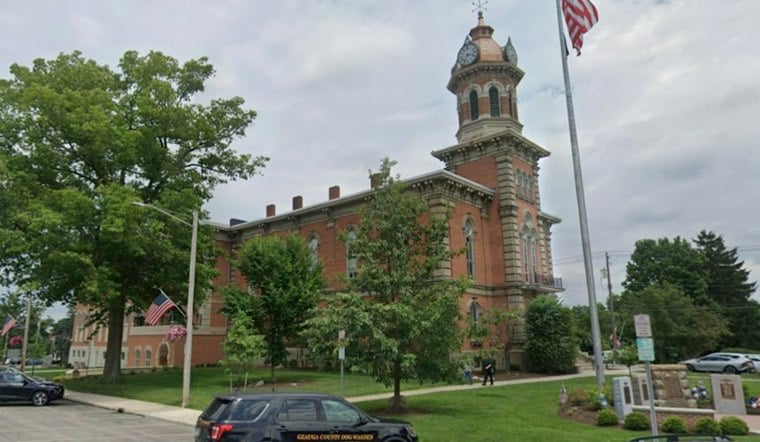
A Bainbridge Township home construction site has drawn a referral to the Geauga County Prosecutor's Office after commissioners determined the builder repeatedly failed to control sediment runoff pouring off the property and into nearby conservation easements. The county's sediment-control watchdog says the problems dragged on for nearly a year despite two formal notices of violation and a string of unmet promises from the builder to send workers out to fix it.
Geauga County Commissioners agreed to send the matter to the prosecutor's office for further action if necessary, according to Cleveland.com. The trouble traces back to September 2025, when the Geauga Soil and Water Conservation District approved an erosion and sediment-control plan for the property that required measures including silt fencing to keep soil from leaving the site. By November 13, 2025, district officials found much of that silt fence falling down or improperly secured, and stormwater was already carrying sediment beneath the fence and through disturbed soil into conservation easement areas near the property, per the same report.
A Pattern of Broken Promises
Colleen Sharp, a Natural Resource Technician for the district who conducts construction site inspections and manages the county's GIS storm sewer outfall database, notified the property owner of the problems and contacted the builder directly, the outlet's report notes. Snow then halted further enforcement inspections for several months, but Sharp said the problems remained once the snow melted, and the builder repeatedly promised to send workers to address the site without following up.
The district issued its first notice of violation on June 18, 2026, then a second on August 18 when the site still hadn't been corrected. The builder told Sharp an excavator would handle the problems, but a September 15 inspection found the required corrections still hadn't been made. At that visit, the builder told her final grading would be completed that week and the property would be seeded the following week, the article states.
Why the County Escalated Now
Sharp said the violation referral could have been withdrawn if the site had been stabilized and vegetation established, according to the same account. Instead, sediment from the construction site continued entering nearby streams, and the site remains a concern as winter approaches. Sharp recommended stabilizing the site immediately by seeding.
The county's authority to push the case toward prosecution rests on decades-old rules. Ohio Revised Code Section 307.79 authorizes county commissioners to adopt technically feasible standards for abating soil erosion and water degradation from nonfarm land development, giving Geauga County the legal footing to enforce compliance and refer holdouts to prosecutors. The Geauga Soil and Water Conservation District has enforced these rules under the county's Water Management and Sediment Control Regulations since they were first adopted by the Board of Commissioners in 1979, according to a county planning document.
State Rules and Local Stakes
Under the Ohio EPA's NPDES General Construction Permit, developers disturbing an acre or more of land are required to install and maintain effective sediment barriers, minimize exposed soil, and preserve a 50-foot undisturbed buffer around surface waters, per the Ohio EPA. Bainbridge Township sits within the Chagrin River watershed, where uncontrolled sediment runoff from construction acts as nonpoint source pollution that degrades water quality, destabilizes stream channels, and causes streambank downcutting, according to the Great Lakes Basin Program.
Ohio's administrative procedures governing Soil and Water Conservation Districts call for inspectors to issue progressive notices of violation for broken or improperly secured silt fencing, advancing unresolved site failures to county prosecutors when corrective deadlines are ignored, per the Wayne SWCD. That escalation ladder mirrors what played out in Bainbridge Township, where two separate notices failed to spur lasting fixes before the case reached commissioners.
The Financial Case for Faster Fixes
Academic research examining residential building sites in Geauga County, published in the Journal of Soil and Water Conservation, found that homebuyers and realtors perceive vegetated lots as significantly more valuable than unvegetated, muddy lots, offering builders a financial return that exceeds the cost of immediate seeding. That research suggests builders who stabilize sites quickly stand to gain more than they'd spend on the work itself, a detail that underscores why the delays at this site stand out.
Geauga SWCD urban specialists have historically performed more than 120 annual construction site inspections across Bainbridge Township and Chardon to verify erosion control compliance, according to older Great Lakes Basin Program reporting, underscoring how routine this kind of oversight normally is. Local township zoning codes across the county also stipulate that zoning certificates for home construction cannot be finalized without an approved erosion control plan or a permit from the Geauga SWCD, per a Thompson Township zoning resolution, adding another layer of pressure on builders to comply before commissioners get involved.
Cleveland.com reporter Molly Walsh, who covers Lake and Geauga counties, reported that the article's production was assisted by AI tools and reviewed by Cleveland.com staff.





