

























































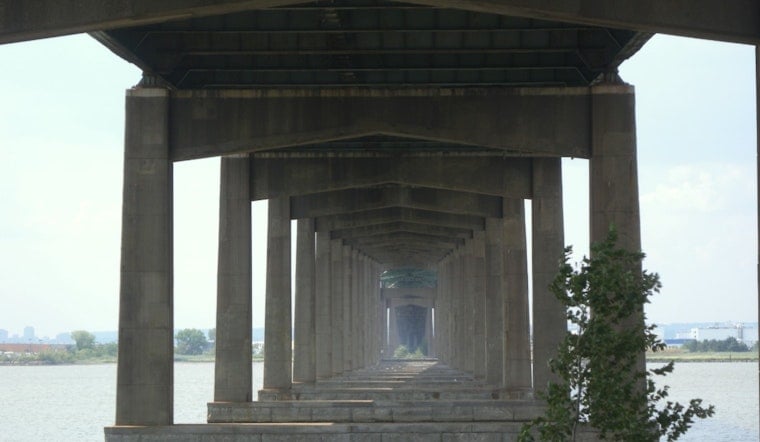
A netting project meant to keep pigeons from roosting under a Bayonne bridge instead trapped dozens of the birds inside, forcing the city and its pest-control contractor into a days-long rescue effort at Broadway and West Eighth Street. City officials say the netting was installed to cut down on bird droppings accumulating under the bridge, but roughly 30 pigeons were caught inside when the mesh was sealed, and as of the most recent count about five birds remained trapped.
According to NBC New York, the city has been running trap-and-release operations to free the remaining birds, with the Department of Public Works and its vendor engaged to remove them safely. The city administration said in a statement that it has been working to address the netting issue quickly and safely, and officials have urged the public not to feed the trapped birds. Bird welfare checks, initially conducted every 48 hours, were escalated to daily checks as the rescue effort continued, per Hudson County View.
The $64,215 netting contract, awarded to Ehrlich Pest Control by the Bayonne City Council back in May 2026, called for PVC-coated stainless steel mesh to be installed under three city bridges — Broadway at Eighth Street, Linnet Street, and Avenue E — while excluding Hudson-Bergen Light Rail structures, the outlet reports. Ehrlich is a regional pest management provider that offers bird exclusion barriers, netting, and trapping services across the eastern United States, and it worked in coordination with the city's public works department on both the installation and the rescue.
Two Successful Installs, Then a Problem at Eighth Street
Bird netting had already gone up earlier in summer 2026 at the Linnet Street and Avenue E bridge locations under the same contract; some birds that could not be removed from the bridge structures were trapped during installation and subsequently released, the same outlet notes. It was only at the Broadway and Eighth Street site that pigeons ended up sealed inside the structure when the netting was enclosed, turning a routine phase of the project into a public controversy.
Local advocacy group Jersey City Birds sent a formal letter to Mayor Sharon Ashe-Nadrowski and the Bayonne City Council demanding immediate intervention after social media posts alleged that dozens of birds had been trapped for more than a week, according to Hudson County View. The group mobilized after residents began sharing photos and videos of the trapped pigeons online, adding public pressure on top of the city's own rescue timeline.
Residents Torn Between Health Worries and Animal Welfare
For some Bayonne residents, the droppings problem the netting was meant to solve is not abstract. Eileen Murphy, who has COPD, told NBC New York she passes through the area frequently and covers her nose and mouth when doing so, saying she worries about what she is breathing in. She said she remains concerned about the nets even now.
Other residents see the tradeoff differently. Fred Gattuso told the station the area is better since the nets went up, but said the pigeons trapped in the netting could have been handled better. David Finney argued that the city should have provided some kind of place for the pigeons while addressing the droppings problem, rather than leaving them boxed in with nowhere to go.
Why the City Turned To Netting In the First Place
In an official statement issued on September 4, the City of Bayonne said routine pressure washing and cleaning by its Department of Public Works had proven ineffective at providing a lasting solution to bird droppings accumulating over pedestrian walkways. City officials describe the droppings as an ongoing public health concern, a characterization backed by outside research: accumulations of dried pigeon droppings are recognized public health risks, exposing people to airborne fungal and bacterial pathogens linked to histoplasmosis, cryptococcosis, and psittacosis, according to the Extension Foundation.
Rock pigeons like the ones nesting under Bayonne's bridges are considered an invasive, non-native species in North America and are explicitly excluded from federal protection under the Migratory Bird Treaty Act, per BillTrack50. New Jersey legislative proposals have also sought to clarify that state animal cruelty statutes do not apply to the management of rock pigeons when it is done for public health or property protection reasons, giving municipalities like Bayonne broader legal room to act against roosting birds than they would have with protected species.
Bayonne's predicament also isn't unique to New Jersey. Similar bird netting entanglements have drawn public outcry in New York City, where improperly installed or maintained mesh on scaffolding and elevated transit structures has trapped pigeons and prompted animal rescue interventions and city enforcement orders, according to GreaterGood. In those cases, building inspectors and rescue volunteers have had to cut netting open to free trapped birds, underscoring how exclusion projects meant to solve one problem can create another if installation goes wrong.
NBC New York's Adam Kuperstein reported on the Bayonne bridge situation, with Adam Harding credited as the article's author. As of the latest updates, the city says trapped birds have received multiple releases, and officials plan to trap and release the remaining pigeons shortly.





