

























































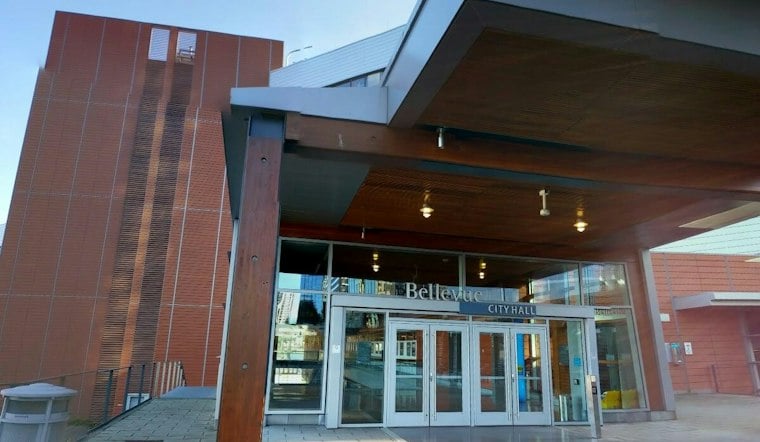
Julianne Jaillet disappeared from her Bellevue home sometime after 1:30 a.m. on June 1, 1985, after an argument with her husband. She was 36, had recently married and moved into a new home, and has not been seen since. The last confirmed sighting came a week earlier, on May 25, when her 10-year-old daughter had lunch with her at Bellevue Square. Four decades later, the case remains unresolved.
Jaillet married Ian Jaillet in January 1985, and the couple had recently rented a Bellevue home. In the days before her disappearance, she spoke with her sister, Margaret, and was reportedly in good spirits while shopping for furniture, according to FOX 13 Seattle. Her daughter, Tammy McAdams, was 10 at the time and has spent roughly 30 years working on the case, according to NBC News.
The missing persons report says Ian Jaillet told investigators that Julianne left on foot after the couple argued, taking a suitcase and clothing. He did not report her missing until June 18, 1985, 17 days later. He later told Bellevue detectives that he assumed she would return because she had previously gone away for several days, according to The Vanished Podcast. Julianne's parents ultimately filed the missing-person report with the Bellevue Police Department.
The Reno Purse Mystery
A Purse Turns Up 500 Miles Away Nearly two weeks after Julianne disappeared, on June 14, 1985, her purse was found at the MGM Grand Hotel in Reno, Nevada, and a hotel employee mailed it directly to the home of Julianne's parents, where her young daughter was staying, along with a note explaining that Julianne had apparently left it behind in the lobby, according to The Charley Project. The items were formally shipped back to Washington on June 18, 1985.
But the lead never panned out. Hotel security records showed no registration for Julianne between June 12 and June 17, 1985, and investigators found no airline or hotel records indicating she had ever traveled to Reno at all. The property has since changed ownership and now operates as the Grand Sierra Resort, per the same account. Whether the purse was staged, planted, or somehow carried there by someone else remains unanswered.
Suspicion Around a Delayed Report
Ian Jaillet obtained the purse and its contents from investigators in July 1985, and he has consistently denied any involvement in his wife's disappearance. He submitted to a polygraph examination in 1986 that came back inconclusive, and he again denied murdering Julianne or knowing her whereabouts when questioned by police in 2009. Still, tension within the family has lingered for decades. According to The Charley Project, when Julianne's daughter confronted her stepfather years later and told him her mother was gone because of him, he reportedly replied only, “I know.”
DNA Testing And A Growing Toolbox
In 2002, the Bellevue Police Department sent items from the purse to the Washington State Patrol Crime Lab for DNA extraction. Investigators used Tammy McAdams's DNA to confirm the items did belong to her mother, then compared Julianne's DNA against multiple unidentified Jane Does in the region — but found no matches. Her DNA profile has since been uploaded to CODIS, the national criminal DNA database, in hopes of a future hit.
The department has other tools at its disposal too. Bellevue maintains an in-house crime lab equipped with specialized forensic technology, including metal evaporation devices capable of pulling latent fingerprints off aging physical evidence, for reprocessing cold case files, according to KIRO 7 News. In 2016, the department assigned a dedicated cold case detective to re-examine evidence across 17 unsolved cases, including 10 missing persons investigations and seven homicides, spanning the department's full historical caseload.
Statewide funding may open new doors as well. In March 2024, Washington Attorney General Bob Ferguson allocated $500,000 to cover forensic genetic genealogy testing for unidentified human remains across the state, a technique that can cost upwards of $8,000 per case compared with roughly $2,500 for standard DNA testing, according to the Office of the Washington State Attorney General.
What Genetic Genealogy Can—and Cannot—Show
Washington's experience illustrates both the promise and the limits of the technique. The Washington State Attorney General's Office said 163 unidentified remains awaited further testing when the state announced its $500,000 initiative. In a separate case, CNN reported that Snohomish County investigators used genetic genealogy to arrest William Earl Talbott II on May 17, 2018, in connection with the 1987 killings of Jay Cook and Tanya Van Cuylenborg. That investigation involved crime-scene DNA and a suspected perpetrator; it does not establish that genetic genealogy alone can locate a living missing person or determine what happened to Jaillet.
The U.S. Department of Justice's interim policy likewise treats genetic associations produced by genealogy services as investigative leads, not conclusions. Investigators must use traditional genealogy and additional investigative work to determine what an association means, and the process depends on obtaining a usable DNA profile and developing genealogical leads.
A Daughter Who Refuses To Stop
Tammy McAdams began sharing her mother's story on TikTok in 2023, part of a broader effort to keep the case in public view. Her story has also been featured by Light the Way, a missing persons advocacy project founded by Shayna Richard in 2020 that has spotlighted dozens of cases and supports families of missing people and unresolved homicide victims. McAdams says she plans to keep working her mother's case for as long as it takes.
Julianne Jaillet had brown hair, green eyes, stood 5 feet 7 inches tall, and weighed about 125 pounds at the time she disappeared. She would be 77 years old today. Her case is listed in NamUs under Case MP11898, according to the National Missing and Unidentified Persons System. Anyone with information is asked to contact the Bellevue Police Department at 425-452-6917.




