

























































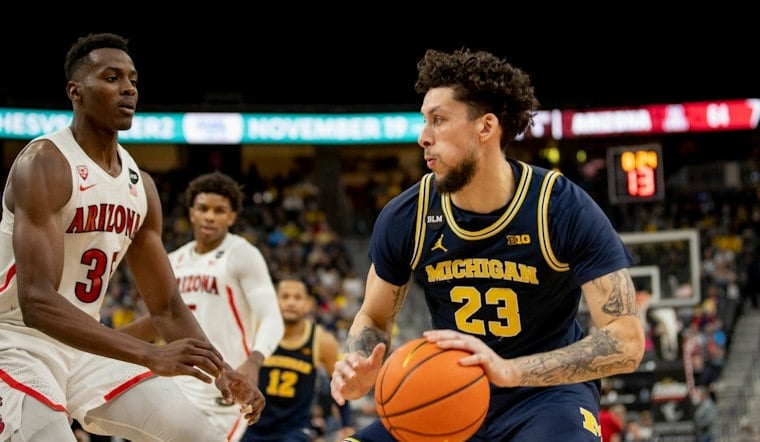
Christian Koloko has a chance to return to the NBA after agreeing to a one-year contract with the New Orleans Pelicans. The 6-foot-11 center from Cameroon missed time after a blood clot in his lungs led to treatment with blood thinners and a medical review that kept him from playing. His recovery included surgery to relieve pressure on a vein in his left arm; now he will compete for a place on New Orleans’ roster.
The Toronto Raptors selected Koloko 33rd overall in the 2022 NBA draft, according to NBC Sports. During his rookie season, shortness of breath and fatigue led to the discovery of a lung clot and a prescription for blood thinners. As Newswise reported, the medication posed a risk of severe internal bleeding in the event of a hard fall or collision, limiting his ability to play. Toronto later released him.
A Panel Built for Life-Threatening Cases
After Koloko’s condition became known, the NBA sent his case to its Fitness-to-Play Panel, which reviews potentially life-threatening conditions or injuries, according to NBC Sports. Other teams could not sign him while the review was pending, and he could not play or practice until he was cleared. Koloko has said doctors initially could not identify the source of the clot and that he thought his basketball career was over after one season.
How the NBA’s Medical Review Works
The collective bargaining agreement provides for a three-physician Fitness-to-Play Panel: one doctor appointed by the NBA, one by the Players Association and a third selected by agreement of the first two, according to the Daily News. In Koloko’s case, the panel review meant he could not play or practice until he received medical clearance.
A later evaluation at Cedars-Sinai identified a problem in the vein draining Koloko’s left arm. Newswise reported that Ali Azizzadeh, director of the hospital’s division of vascular surgery, noted that the arm was three centimeters larger in diameter than the right. A venogram revealed a major clot, and doctors diagnosed venous thoracic outlet syndrome: compression of the subclavian vein between the collarbone and first rib.
Removing a Rib to Save a Career
The treatment addressed the vein compression. According to Newswise, Cedars-Sinai surgeons removed Koloko’s first rib and some attached muscle to create more room, then removed scar tissue around the vein and placed a patch to widen it. Azizzadeh said repetitive overhead movement can cause scarring of this vein in athletes, including basketball players, baseball players and swimmers.
Newswise reported that after surgery and rehabilitation, Koloko was able to stop taking blood thinners. He resumed workouts and, a few months after surgery, received NBA clearance to play.
A Pattern Among NBA Big Men
Koloko is not the only NBA player to face this kind of scare. San Antonio Spurs center Victor Wembanyama was diagnosed with deep vein thrombosis in his right shoulder in February 2025 and missed the remainder of that season, according to UT Southwestern Medical Center. Toronto Raptors wing Brandon Ingram was treated for a similar clot back in 2019 and returned to play, as The New York Times has reported. Even outside the pros, University of Illinois basketball player Jason Jakstys was diagnosed with venous thoracic outlet syndrome after developing left-arm pain, swelling and a blood clot, and underwent the same first-rib resection surgery as definitive treatment to prevent the clot from recurring, according to Northwestern Medicine.
What Comes Next in New Orleans
Koloko’s one-year deal with New Orleans is listed on his official NBA.com player page. He is expected to compete for one of the team’s final roster spots during training camp, according to CBS Sports. Whether he makes the roster for the 2026-27 season remains to be seen. His signing gives him another opportunity after a medical setback that once left him unsure whether he could continue playing.





