

























































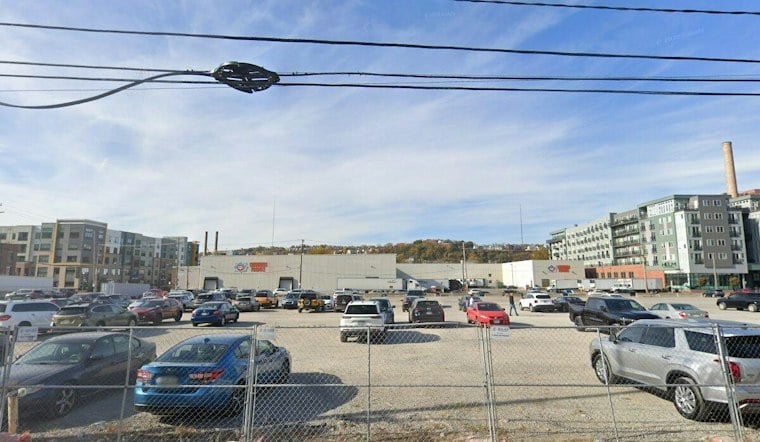
Shovels hit dirt this week on one of the last big vacant lots in Pittsburgh's Strip District, as McCaffery Interests broke ground on Brickworks, a $100 million residential project that will bring 260 luxury apartments and 40 townhomes to a 1.75-acre site at 2121 Smallman Street. The development, split across two apartment buildings plus a row of for-sale townhomes, is expected to be finished by spring 2028.
According to WPXI, the project includes an elevated pool deck and pet amenities among its planned features, and developers describe the parcel as one of the few remaining vacant sites left in the increasingly crowded neighborhood. Brookline-based Laurel Communities is co-developing the site to build the 40 for-sale townhomes, while Chicago-based McCaffery Interests is handling the 260 rental units, according to the Pittsburgh Post-Gazette. The entire buildout will rely on union labor throughout construction, the paper reports.
A Long Road From Brickyard to Blueprint
The Smallman Street lot has a complicated history. McCaffery Interests acquired the site in 2020 after an earlier $80 million commercial development plan from New Jersey-based Rugby Realty stalled out, per the same Post-Gazette account. The lot previously housed a brick manufacturing operation that once supplied Pittsburgh's steel mills.
Zoning filings submitted to the city identify the site as a 3.45-acre parcel zoned Riverfront Industrial Mixed-Use, according to the City of Pittsburgh Planning Commission. Parking remains a consideration for the project, given how often parking and traffic dominate public comment on major developments.
McCaffery's Deep Roots in the Neighborhood
Dan McCaffery, CEO of McCaffery Interests, described the Strip District as a bustling area and pointed to his company's long-standing ties to the city, per WPXI. McCaffery Interests previously converted the historic Armstrong Cork factory into more than 290 residential lofts in 2007, and the developer has also worked on Lot 24 and the redevelopment of 1600 Smallman Street and the Strip District Terminal building, according to the company's own project history.
That track record helped prove out residential demand in a corridor once dominated by rail hubs and wholesale produce vendors. The Strip District's residential population reached 3,453 people in 2026, a 347% increase since 2015, with another 2,509 units currently in the development pipeline, according to Strip District Neighbors.
Neighbors Watching Parking and Grocery Access
Brickworks isn't rising in isolation. Directly next door, Midwood Investment & Development proposed a project in July featuring 464 apartment units and a 37,000-square-foot ground-floor supermarket, as reported by The Pittsburgh Wire. The Strip District has gone without a full-service grocery store for roughly a decade, making that adjacent project a closely watched piece of the puzzle for incoming Brickworks residents.
Total private and public investment in the Strip District corridor has reached about $1.5 billion since 2011, a figure that includes ongoing projects like a $23 million historic warehouse conversion at 2560 Smallman Street into luxury lofts, Hoodline previously reported. Brickworks now joins that long list of projects reshaping the neighborhood's skyline, even as questions about parking, pedestrian safety, and everyday amenities continue to follow the corridor's rapid residential growth.



