

























































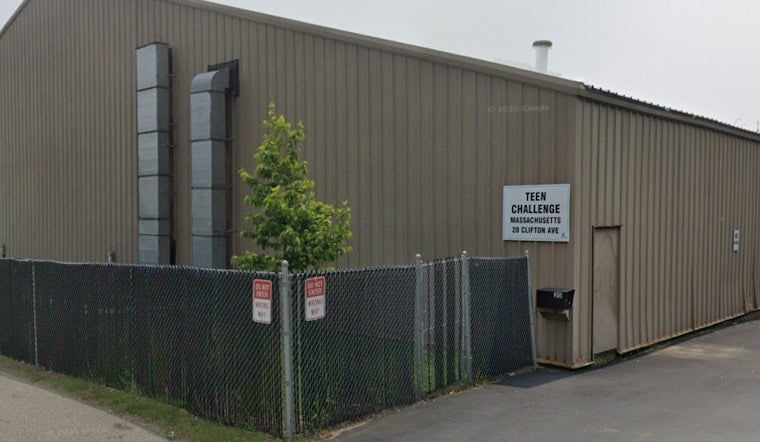
A Brockton-based addiction treatment program has been ordered to pay $1.15 million after Massachusetts labor regulators determined it illegally forced hundreds of residents to work without pay for outside businesses, disguising the arrangement as rehabilitation. Adult & Teen Challenge, Northeast, Inc., which runs a 108-bed men's facility in Brockton and a smaller program in Worcester, must pay slightly over $850,000 of that total directly to affected residents as restitution.
The violations occurred from August 2017 through August 2025, according to the Boston Globe, which reported that the organization required more than 200 men to perform unpaid work for private businesses through an internal staffing operation it called Labor Source. Attorney General Andrea Campbell announced the enforcement action, saying that people seeking substance use disorder treatment deserve dignity and fairness rather than labor exploitation.
According to the Massachusetts Attorney General's Office, the state cited the organization not just for failing to pay minimum wage but for violating separate state wage laws by failing to keep accurate payroll records and failing to allow participants to earn and use earned sick time. The state's announcement detailed the full scope of the statutory violations uncovered during the investigation.
How Regulators Determined the Work Wasn't Therapy
The Massachusetts Department of Labor Standards interprets the state's minimum-wage laws by weighing whether work is connected to a treatment plan, voluntary, educational, therapeutic, or simply replacing the labor of a paid employee. State law allows charitable, educational, or religious organizations to run unpaid rehabilitation or training programs, but only when the work genuinely supports rehabilitation.
In this case, regulators found the labor benefited the nonprofit and its for-profit clients rather than the residents themselves. Michael Flanagan, writing for the department in June, noted that participants performed landscaping or snow shoveling whenever clients needed it, regardless of any rehabilitative benefit. That review found work assignments were scheduled around outside corporate customer demand rather than resident needs, with residents dispatched to shovel snow or perform landscaping whenever clients called, according to the state's announcement.
The Department of Labor Standards determined in June that the program's work did not qualify for a minimum-wage exemption, a finding state officials say marked the first ruling of its kind. The determination established, per the state's release, the first legal precedent in Massachusetts history finding that mandatory unpaid work inside a substance use disorder treatment program constitutes employment rather than exempt rehabilitation.
Assignments Ranged From Snow Shoveling to Phone Solicitation
Beyond landscaping and snow removal, the labor source assigned residents to office cleaning, food preparation, telephone fundraising, and storefront solicitation, according to the Globe's reporting. Adult & Teen Challenge, Northeast, Inc. had claimed its unpaid labor qualified under the state's rehabilitation and training exemption, arguing the work was part of its broader model, which the organization says blends vocational training with Bible studies and offers clinical counseling, recovery coaching, and job training over 10- to 12-month residential stints.
The state investigation and enforcement action were led by Assistant Attorney General Alex Sugerman-Brozan and Supervising Investigator Jennifer Pak within the AG's Fair Labor Division, the same unit that fined Boston's Zuma restaurant $1.8 million over tip pool violations last year. The Attorney General's Office says it will distribute the restitution money directly to the residents affected.
A Well-Funded Nonprofit With Regional Reach
Adult & Teen Challenge reported $14.5 million in revenue and $12.8 million in expenses in 2023, and employed 189 people that year, per the Globe. Chief Executive Officer Pasco Manzo received $132,172 in total compensation from the organization and its affiliates in 2023.
The Brockton and Worcester programs are part of a national network of roughly 220 Teen Challenge programs across 20 states, and the New England branch also operates men's facilities in Connecticut, Maine, New Hampshire, and Vermont, as well as women's centers in Massachusetts and Rhode Island, according to Adult & Teen Challenge New England. It remains unclear whether the organization will appeal the citations or change its work assignments at those other facilities.
Part of a Broader National Pattern
The Massachusetts case fits into a wider pattern of scrutiny facing addiction rehabilitation programs that rely on unpaid resident labor. A 2020 investigation by Reveal and the Center for Investigative Reporting found that hundreds of rehab centers nationwide, including numerous Teen Challenge affiliates, regularly required unpaid labor for private businesses under the banner of work therapy.
Teen Challenge affiliates elsewhere have faced their own legal challenges. In April, nine women filed a federal lawsuit alleging forced unpaid labor, severe isolation, and human trafficking violations at Central Indiana Teen Challenge between 2013 and 2019, a case Hoodline reported on this year. Separate federal litigation in Missouri this year similarly targeted a Kansas City residential academy affiliated with Adult & Teen Challenge over allegations of uncompensated labor and coercive treatment under federal anti-trafficking laws.
Massachusetts' minimum wage rose from $11.00 per hour in 2017 to $15.00 per hour in 2023 under the state's 2018 Grand Bargain law, a phase-in that helped drive the back-wage liability accumulated over the eight years of alleged violations, according to a review by AllVoices. The Attorney General's Office encourages workers who suspect wage violations or labor exploitation to submit complaints online at mass.gov/ago/fld or call the Fair Labor Hotline at (617) 727-3465.





