

























































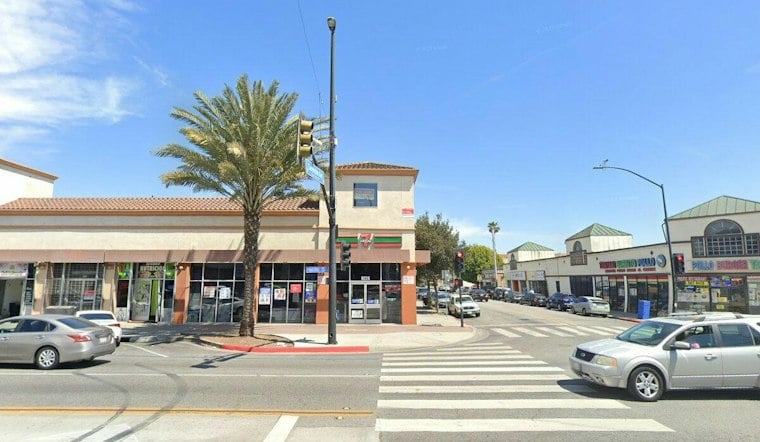
A $1 energy drink at a North Hollywood 7-Eleven was listed at $3.49 at checkout during a reporter’s visit, one example of the gap between shelf and register prices found at Los Angeles County stores. County inspection results and later store visits indicate the mismatch was not limited to a single purchase.
A Guardian investigation reported that 7-Eleven and Circle K customers were charged more at checkout than shelf prices for items including snacks, beverages, toiletries, tobacco and medications. In Los Angeles County, 7-Eleven failed 335 of 909 price-accuracy inspections, a 37% failure rate. The investigation also identified high rates at two individual locations: a Huntington Park store had a 67% overcharge rate in 2024, and a North Hollywood store had a 50% rate that year; the locations are about 19 miles apart.
Reporters Found the Pattern Still Holding in July
In July, a Guardian reporter returned to 10 Los Angeles County 7-Eleven stores that had previously failed price-accuracy inspections and bought 10 items at each. Half of the shopping trips included overcharges, the outlet reported. At the North Hollywood store, five items rang up above their advertised prices.
Among the North Hollywood examples, a tropical fruit-flavored snack marked $1 rang up at $2.89. A Hershey's Mr. Goodbar listed at $2.29 cost $3.49 at checkout; an energy drink marked $1 with a rewards card also rang up at $3.49. Separately, the New York Post reported that five of 13 items sampled at a Pomona 7-Eleven in 2025 rang up above their shelf prices. The store also failed to honor a two-for-$5 offer on Quest protein chips.
Store Employees Point to Staffing and Sticker Lag
Five store employees told the Post that some shelf labels had not been updated. A North Hollywood employee described staff balancing checkout, cleaning, deliveries and stocking, and said price changes can leave labels outdated for as long as two weeks. The employee disputed describing the problem as overcharging.
7-Eleven said it takes pricing accuracy seriously and noted that its stores carry an average of more than 3,000 products. The company said it changes prices in response to manufacturer and distributor costs, works to correct discrepancies when identified, and is investing in technology and operational improvements.
A National Problem, With California Carrying Outsized Weight
The county findings sit within a broader pattern of price-check failures. A 2024 National Council on Weights and Measures report found convenience stores had the highest failure rate among retail categories, with regulators in 26 states finding errors in 34% of inspections. Chain-level figures cited in the Guardian investigation varied by location and period: from 2023 to 2025, 7-Eleven failed 47% of inspections in both Colorado and Utah and 79% in Ontario County, New York; Circle K failed 35% in Florida, 62% in North Carolina and 82% in Columbus, Ohio.
Other reported checks also found substantial discrepancies. In Arizona, Circle K failed 39% of 739 inspections and 7-Eleven failed 41% of 151 between 2023 and 2025. A February inspection at a Casa Grande 7-Eleven found 12 of 25 sampled items priced higher at checkout. In Texas, authorities received 51 complaints about price disparities involving the chains but conducted 32 inspections from 2023 to 2025, according to the Guardian investigation.
California accounts for an estimated 15% of U.S. 7-Eleven stores. The chain’s parent, Seven & I Holdings, operates 85,000 stores and received a takeover bid in August 2024 from Alimentation Couche-Tard, the operator of Circle K. If completed, the deal would bring the two chains under the same corporate roof as both face scrutiny over checkout pricing.
How California checks prices and enforces violations
State law prohibits charging more than the advertised, posted or quoted price, according to the Los Angeles County Agricultural Commissioner/Weights and Measures. The county says inspectors use undercover purchases to compare checkout prices with advertised and shelf prices. Violations may lead to civil administrative procedures or court action, and enforcement can follow a violation found in a routine inspection even if a follow-up inspection finds no violation. A separate California case involved another retailer: USA TODAY reported that Walmart agreed in 2012 to pay $2.1 million for overcharging consumers in violation of a 2008 court judgment. That case was not connected to the 7-Eleven findings.


