

























































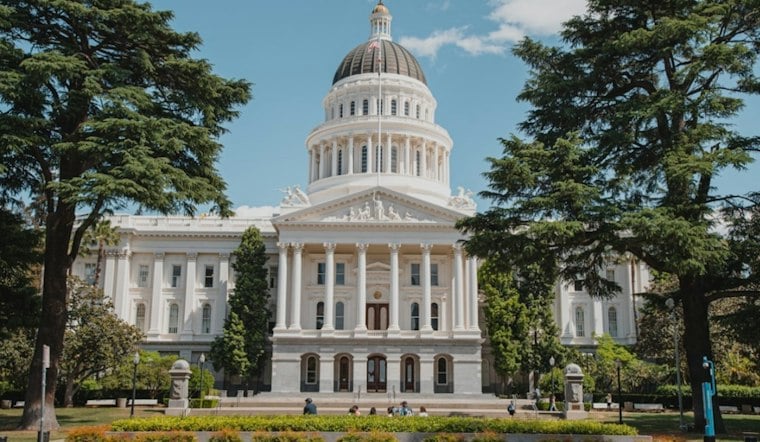
California is staring down a deadline to sign off on $1.86 billion in federal broadband grant money, and doing so may mean gutting the state's own net neutrality law. The Trump administration is requiring states accepting funds from the federal Broadband Equity, Access, and Deployment (BEAD) program to exempt participating internet providers from net neutrality rules and rate regulation, and California has a deadline at the end of September to sign the agreement with the National Telecommunications and Information Administration.
A Law Born From a Wildfire Emergency
California's net neutrality law prohibits internet service providers from blocking or throttling lawful traffic and bars them from requiring fees from websites or online services to deliver or prioritize that traffic, as reported by Ars Technica. The law, known as S.B. 822, bans blocking, throttling, and paid prioritization, according to the Electronic Frontier Foundation. It passed the state Assembly on August 30, 2018, and cleared the Senate the following day before heading to the governor's desk.
The bill's origins trace back to an emergency: the Santa Clara fire department found its supposedly unlimited data plan was being throttled by Verizon during a wildfire, and the company told firefighters they needed to pay more for a better plan, the EFF has reported. A separate 2019 California law prohibits mobile providers from throttling first responders during emergencies, per the Ars Technica report.
What the Federal Government Is Demanding
Under the NTIA's rules, states are prohibited from enforcing broadband rate, term, condition, net neutrality, open access, or utility-style regulations against BEAD-funded subgrantees statewide, according to Ars Technica's reporting. The federal agency has justified the statewide exemption by claiming that non-BEAD regulation could raise compliance costs and threaten the financial viability of funded providers, the outlet notes. That exemption would last up to 14 years and would apply to other BEAD-funded ISPs including SpaceX's Starlink, per the same report.
The Trump administration has also told states they cannot set rates for the low-cost broadband plans the BEAD law requires funded providers to offer people with low incomes. Congress and President Biden enacted the BEAD law in 2021, and the program has a total funding amount of $42 billion nationwide, according to Ars Technica.
California's Money and the Providers in Line for It
California submitted its final BEAD proposal to the federal government on December 19, 2025, and the NTIA approved that plan on July 17, 2026, the outlet reports. The state is slated to spend about $1.4 billion on broadband deployment, with funds aimed at reaching 270,571 locations. Roughly 69 percent of California's BEAD funding flows to five large national providers: Comcast is allocated $400 million, AT&T $331 million, Verizon and Frontier together $173 million, Amazon's Kuiper satellite service $55 million, and SpaceX's Starlink $22 million, according to the same reporting.
The California Public Utilities Commission was scheduled to vote on ratifying the state's final BEAD plan on Thursday, September 17. A CPUC spokesperson described the vote as a procedural requirement to ratify the state proposal, and the commission's resolution reportedly adopted only the approved California final proposal without addressing subgrantee agreements or the NTIA's conditions for those agreements, per Ars Technica. Both California and Illinois have not yet finalized their BEAD funding, the outlet notes.
Advocates Push Back on the Trade-Off
Nearly 30 advocacy groups sent a letter on September 15 urging California leaders to defend the state's net neutrality law, according to Ars Technica's reporting. Paul Goodman, legal counsel for the Center for Accessible Technology, said the CPUC vote is much more than a procedural step and urged the commission to delay the vote while California sues over the NTIA condition.
Stanford law professor Barbara van Schewick said a federal agency cannot use grant fine print to override Congress's statute, per the same report. California could continue enforcing its net neutrality law while accepting federal funding, though doing so would likely mean another long court battle over the state's authority to regulate broadband providers, the outlet notes.
A Dropped Bill and a Legal Clock Ticking
The pressure campaign has already claimed one casualty. California Assemblymember Tasha Boerner, D-Encinitas, had proposed a bill requiring $15-per-month broadband plans for low-income residents, and had earlier steered a related $15-a-month broadband affordability bill through the Assembly on a 52-17 vote in June 2025, according to Broadband Breakfast. But per Ars Technica, Boerner dropped the $15 broadband plan proposal after warnings from the Trump administration.
California's attorney general could challenge the federal requirements in the Ninth Circuit before finalizing the agreement, or wait and challenge them in the D.C. Circuit after accepting the funding, according to Ars Technica's report. The state can also obtain a 30-day extension to challenge the case in court. New York offers a preview of what's at stake: the state agreed to take $664.6 million in BEAD money even though its Affordable Broadband Act requires ISPs to offer $15- or $20-per-month service to low-income people, and New York may now be unable to enforce that law against grant-receiving providers, per the same reporting.
California's fight over S.B. 822 is not new. A Congressional Research Service summary indicates a court previously held that the law was not preempted by federal law, allowing California to keep enforcing it. But a California Senate committee analysis years earlier had recommended stripping some of the bill's own protections, including rules against using interconnection practices to circumvent net neutrality and restrictions tying public broadband funds to net-neutrality compliance, according to Stanford Law School's Center for Internet and Society. Whether the state chooses to fight for its law again, or accept the federal money on Washington's terms, now rests on a decision due by the end of the month.




