

























































California has enacted a new law meant to choke off a key pathway for expanded offshore oil drilling, making it illegal for oil producers to use rigs, pipelines and other equipment in state waters to support new federal offshore leases. Gov. Gavin Newsom signed Assembly Bill 1448, sponsored by Assemblymember Gregg Hart, in a move state officials describe as strengthening California’s protections against offshore drilling.
A Law Aimed Squarely at Federal Leasing Plans
The bill would prohibit leases and oil- and gas-related infrastructure sitting on tidelands and submerged lands in state waters from being used to support Pacific Outer Continental Shelf leases issued after Jan. 1, 2026, except as specifically provided, according to the bill text posted by California Legislative Information. AB 1448 also requires additional scrutiny and waiting periods for renewals, extensions or changes to existing leases. Hart said the message is direct: California’s coast is not open for expanded offshore drilling, and the law ensures existing infrastructure in state waters cannot facilitate federal offshore drilling efforts, as reported by the Los Angeles Times.
The timing is no accident. The Trump administration has proposed opening California’s entire coast to offshore oil and gas drilling, which would mark the first such opening in more than four decades, per the Los Angeles Times report. The U.S. Interior Department has said the proposal will unleash American offshore energy, while the Trump administration has separately said Pacific oil drilling will advance offshore energy production nationwide, the newspaper noted.
Four Decades Without a New Lease
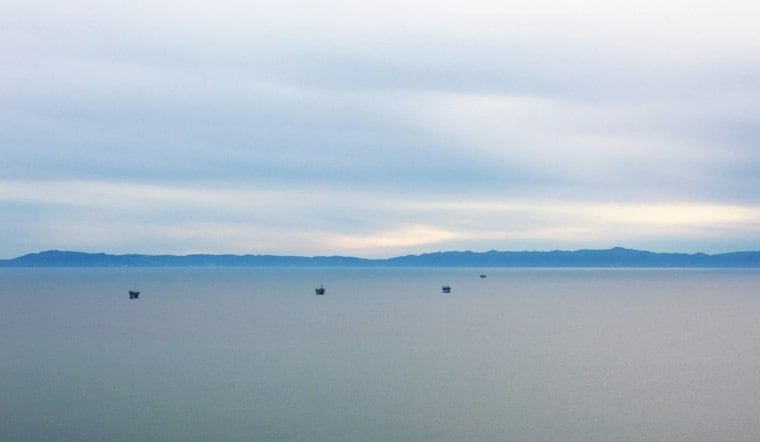
California has not seen new oil leases issued in federal waters since 1984, the Los Angeles Times reported, a nearly unbroken pause traced back to public opposition that followed the catastrophic 1969 Santa Barbara oil spill. That spill contributed directly to decades of resistance toward new offshore leasing, according to the same reporting. The state currently has about two dozen aging oil platforms off its coast, the newspaper said.
Separately, The New York Times reported that the Trump administration’s plan would allow new oil and gas drilling off California for the first time in roughly four decades, and that the Interior Department could announce the proposal within the week of that report’s publication. Newsom told the Times the state would “absolutely” challenge the plan in court once finalized. The Times also noted that there has been almost no fossil fuel development along the California coast since the 1969 Santa Barbara spill.
Coastal Commission’s Role and a White House Review
Federal offshore oil and gas exploration, including any development on the federal outer continental shelf, must be reviewed by the California Coastal Commission for consistency with the state’s federally approved Coastal Management Program, according to the California Coastal Commission. The commission’s Federal Consistency Unit implements the federal Coastal Zone Management Act of 1972 as it applies to federal activities, development projects, permits and licenses, the commission says on its website.
According to the Los Angeles Times, the White House ordered a review of the California Coastal Commission, and that review could strip the commission’s authority over federal coastal projects. The newspaper also reported that the White House struck deals with offshore wind developers to abandon California coastal projects that would have generated about 6 gigawatts of new clean power.
The Sable Offshore Fight in Santa Barbara
The dispute over federal reach into California’s coastal permitting is already playing out around Sable Offshore, which revived a long-dormant pipeline off the Santa Barbara coast after the Trump administration intervened on the company’s behalf, the Los Angeles Times reported. California officials and regulators objected to that pipeline revival, according to the same report.
A Santa Barbara County judge tentatively ruled that the Trump administration’s intervention was not enough to let Sable Offshore restart the pipeline, according to CalMatters. A separate Santa Barbara County injunction bars work considered development under state coastal law without a permit from the California Coastal Commission, CalMatters reported. Underlying the fight is a federal consent decree tied to a 2015 spill that requires approval from the California State Fire Marshal before the pipeline can restart — even after the Pipeline and Hazardous Materials Safety Administration ruled in December that the pipeline qualifies as an interstate pipeline, shifting oversight away from the state fire marshal, per CalMatters. Sable has told investors that production could rise from about 30,000 barrels of oil equivalent per day to more than 50,000 if the pipeline restarts, while a UC Santa Barbara analysis found the restart would not reduce foreign oil imports and would raise global greenhouse gas emissions, CalMatters reported.
Environmental Groups Cheer, Industry Warns of Backfire
Environmental groups applauded AB 1448’s passage, per the Los Angeles Times. Oceana co-sponsored the bill, and the group’s Joseph Gordon said it defends California’s right to protect its coast from federal offshore oil drilling. Brady Bradshaw said the bill gives California’s ocean and coast needed protection and argued the administration is attempting to industrialize the ocean, according to the newspaper’s reporting.
Not everyone is on board. Rock Zierman said existing lease resources could be curtailed by the legislation and warned it could lead to more foreign tankers off California’s coast, the Los Angeles Times reported. The California Independent Petroleum Assn. said AB 1448 could backfire for California, according to the same report.
Where Federal Leasing Actually Stands
Despite the political battle, the federal leasing process remains in an early stage. The Bureau of Ocean Energy Management announced its intent to prepare a programmatic environmental impact statement for proposed oil and gas lease sales in California’s Northern, Central and Southern Planning Areas, according to the Bureau of Ocean Energy Management. The agency described that step as the initial move under the National Environmental Policy Act to begin analyzing a representative California lease sale. A 60-day public comment period on the first proposal for the 11th National OCS Oil and Gas Leasing Program ended Jan. 23, and the bureau has said it will analyze those comments as it weighs next steps.
The political stakes are heightened by public opinion and economic pressure alike. A Public Policy Institute of California poll found that 63% of California voters oppose more drilling off the coast as of July 2026, the Los Angeles Times reported. At the same time, POLITICO has reported that the California Legislature pushed back against the administration’s drilling proposal even as the state’s already-high gasoline prices skyrocketed during the war in Iran, adding pressure on Newsom. The Trump administration, POLITICO noted, has embraced a “Drill, baby, drill” approach to energy policy.


