

























































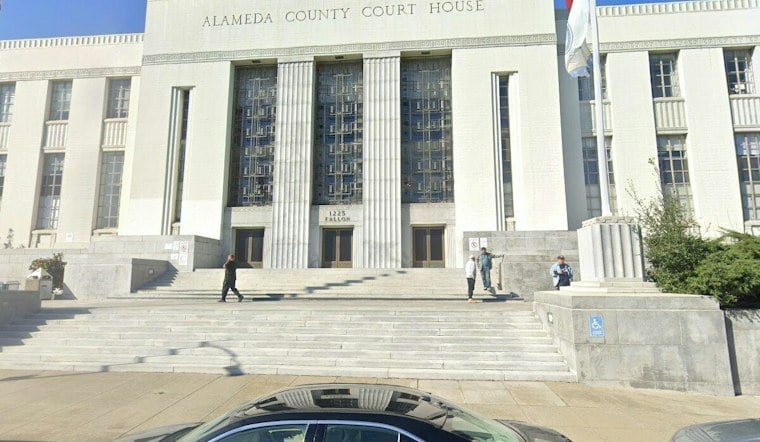
California is asking a court to hit two anti-abortion groups with $20 million in penalties over claims that a hormone treatment can reverse a medication abortion already in progress. The case against Heartbeat International and RealOptions Obria, a chain of Northern California anti-abortion clinics, wrapped up six weeks of evidentiary arguments in Alameda County, leaving a judge to decide whether the groups' promotion of so-called abortion pill reversal is protected speech or unlawful false advertising.
Attorney General Rob Bonta filed the underlying complaint against Heartbeat International and RealOptions Obria in 2023, according to CalMatters, whose reporting was also relayed by Times of San Diego. RealOptions Obria is an affiliate of Heartbeat International, a national anti-abortion group with more than 90 affiliates across California. State lawyers argue there is no way to reverse a medication abortion and that the treatment the groups promote is unproven and potentially dangerous.
Heartbeat International and RealOptions Obria counter that thousands of women bore healthy children after using their services, and they maintain their outreach is protected speech. The organization runs the Abortion Pill Rescue Network, which connects callers with local providers offering high-dose progesterone, and it claims more than 8,000 pregnancies nationwide continued after clients took additional progesterone — with a claimed success rate between 64% and 68%. California's brief, per the same CalMatters account, argues the groups should not make definitive safety or effectiveness claims without credible scientific evidence behind them.
How the Disputed Treatment Is Supposed to Work
A medication abortion typically involves mifepristone and misoprostol taken 24 to 48 hours apart, per the CalMatters report. Mifepristone blocks the progesterone needed to sustain a pregnancy, while misoprostol causes the uterus to contract and expel its contents. Taken together, the two drugs end a pregnancy safely 95% to 98% of the time, and medication abortions now account for nearly two-thirds of all abortions nationwide.
The pill-reversal theory holds that megadoses of progesterone administered after mifepristone alone — before misoprostol is taken — can counteract the first drug's effects. Notably, people who take only mifepristone without following up with misoprostol continue their pregnancies about 50% of the time on their own, a baseline rate cited in the underlying reporting.
Scientific and Legal Pushback
The American College of Obstetricians and Gynecologists does not support prescribing progesterone to stop a medication abortion, saying such claims are not based on science or clinical standards, according to ACOG. The group and the New England Journal of Medicine have both dismissed two frequently cited abortion pill reversal studies as having very little merit, per the CalMatters account. ACOG also says a 2020 controlled study intended to evaluate the treatment in an IRB-approved setting was ended early over safety concerns among participants.
That mirrors an earlier trial reported by NPR, which was stopped after enrolling just 12 women, three of whom required ambulance transport for severe vaginal bleeding. That study could not determine whether progesterone was effective at reversing a medication abortion, per NPR's report. Despite that record, at least seven states legally require abortion providers to tell patients about progesterone treatment for stopping a medication abortion midway, and the approach has been written into mandatory pre-abortion counseling laws in Kentucky, Nebraska and Oklahoma.
Dueling Arguments Inside the Courtroom
Erica Connolly, arguing for the state, accused the groups of taking advantage of individuals in emotional turmoil and said the defendants tout false hope, according to the CalMatters account. She said the groups may discuss abortion pill reversal but may not lie about it. The defendants contended that free abortion pill reversal services fall outside false advertising law altogether.
Paul Jonna, representing the defendants, said the state cannot prove anyone was harmed by the services and that no consumer has filed a complaint against the groups. He said defense witnesses testified they were not harmed, deceived or misled, and he called the prosecution an ideological campaign disguised as consumer fraud prosecution, per the same reporting.
A Judge Weighing Speech Versus Deception
The Alameda County judge overseeing the case must decide whether the First Amendment shields the groups' promotion of hormone treatment or whether their claims cross into false advertising. Judge Patrick McKinney has three months to issue a ruling, according to the CalMatters report.
Legal scholar Mary Ziegler said the case's outcome hinges on how the groups' speech is classified. She said public concerns could arise if protected speech ends up including potentially dangerous information, and she noted that abortion rights advocates might still view a California loss as a long-term win if it forces clearer disclosure standards.
How Other States and Courts Have Ruled
California's case unfolds against a patchwork of conflicting outcomes elsewhere. The 2nd U.S. Circuit Court of Appeals ruled in a New York case that abortion pill reversal statements were constitutionally protected, finding the statements were religiously and morally motivated; a federal appeals court there found the state's false advertising law did not apply because the speech was not commercial. That New York litigation remains pending before the state trial court after related lawsuits were consolidated, according to the Thomas More Society, which also notes a separate California federal challenge, Culture of Life Family Services v. Bonta, is still awaiting a decision from the Ninth Circuit.
Meanwhile, a Kansas state district court judge struck down several anti-abortion restrictions last month, including a requirement that abortion providers discuss abortion pill reversal with patients, finding the requirement violated women's bodily autonomy under state law, per the CalMatters account. In California, crisis pregnancy centers outnumber abortion clinics more than five to one — a landscape shaped in part by a 2018 U.S. Supreme Court ruling that struck down a California law requiring reproductive health centers to notify clients about abortion and birth control options, finding it violated First Amendment free-speech protections.




