

























































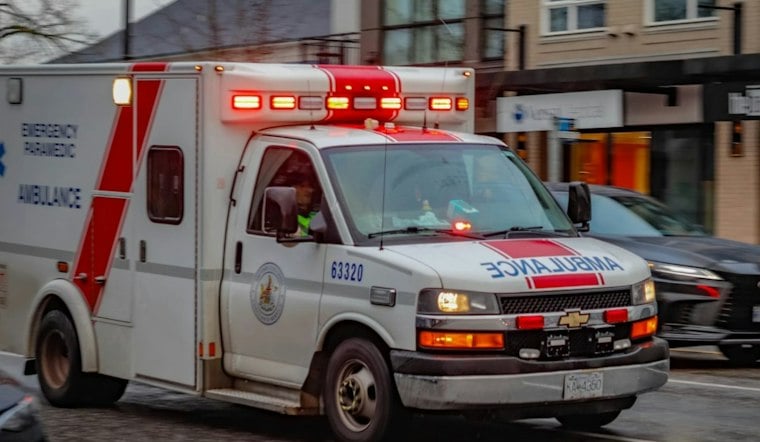
A severe food-allergy emergency sent Sophia to intensive care after a friend called 911 for an ambulance — and months later, she was staring down a $4,517 bill for the ride, even though she has health insurance through her husband's job. She had expected to pay a 20% co-pay. Instead, the ambulance company charged $5,444, her insurer covered $927, and she was left owing the rest.
Sophia's case, first reported by NBC Bay Area, lands at the center of a billing gap that has persisted even as states and the federal government have moved to crack down on surprise medical bills. California law has protected patients from surprise bills since 2024, requiring health plans and ambulance companies to resolve billing disputes between themselves rather than passing the balance to patients. But that protection did not apply to Sophia, because she participates in a self-funded health plan through her husband's employer, and California's law, known as AB 716, does not reach federally regulated self-funded plans.
Self-funded plans are generally regulated by the federal government rather than the state, and about 75% of companies with 500 or more workers offer them, according to an EBRI report cited in the NBC Bay Area story. Under Sophia's plan, her husband's employer actually pays the claims, while Cigna handles front-end administration. State Assemblymember Tasha Boerner, who sponsored AB 716, found herself explaining to Sophia why the law she wrote couldn't help her.
A Federal Loophole Ambulances Fall Through
The problem traces back to the federal No Surprises Act, which does not cover ambulance bills at all. A publication from Harvard Law School has called that omission the last gap in the No Surprises Act, according to the NBC Bay Area report. The gap matters because states generally lack jurisdiction to regulate self-funded employer-sponsored plans, which cover most U.S. workers, as the Commonwealth Fund has explained.
The numbers behind that gap are striking. Each year, about 3 million people with private insurance rely on ground ambulance transport during emergencies, and more than one in four of those trips may result in a surprise bill, per the Commonwealth Fund's analysis. Among privately insured patients generally, 51% of emergency ground ambulance rides and 39% of non-emergency rides included an out-of-network charge that could trigger a surprise bill, according to a separate brief from the Peterson-KFF Health System Tracker. In 2021, the average ground ambulance bill for someone with commercial insurance ran $1,093 — a fraction of what Sophia was initially asked to pay.
California Among States Still Filling the Gaps
As of February 2026, people in 22 states had some protection from surprise ground ambulance bills, with 13 of those states covering nonemergency transportation in addition to emergency rides, the Commonwealth Fund reported. Five states acted in 2025 alone to adopt or revise protections for people with state-regulated plans. Even where laws exist, though, coverage varies widely: Illinois caps patient cost-sharing for ground ambulance services at the lesser of a normal copayment or 10% of the service cost, while Colorado requires state-regulated plans to reimburse out-of-network private ambulances at 325% of Medicare rates and caps patients' out-of-pocket costs at the in-network rate, per the health system tracker brief.
Not every state has moved in that direction. Colorado's governor vetoed legislation that would have expanded ambulance billing protections further, citing fears of rising premiums, according to NPR. And in Texas, a lawsuit found that applying state billing regulations to ground and air ambulances exceeded the state's authority, leaving patients there unprotected from surprise ambulance bills, the Peterson-KFF brief noted. In 2024, the federal Advisory Committee on Ground Ambulance and Patient Billing issued recommendations aimed at closing the gap nationally.
How Sophia's Bill Finally Dropped
After Sophia found AB 716 and pressed the issue, Cigna reprocessed her claim according to ambulance rates set by Santa Clara County, and her bill dropped from roughly $4,500 to $300. Boerner has since urged Congress to close the ambulance-bill gap at the federal level, and the ambulance provider AMR has said it would welcome a law requiring federally regulated health plans to pay the approved rate for emergency ambulance services, according to the NBC Bay Area account.
Consumers trying to figure out where they stand can check their insurance card or ask their employer's personnel department whether their plan is self-funded. Complaints about self-funded plans go to the federal Employee Benefits Security Administration, while complaints about traditional health insurance in California go to the state Department of Managed Health Care. Other patients have faced far steeper stakes from insurance gaps: in Oregon, Debbie Moehnke and her husband were left owing $226,591.35 after their insurer paid $227,959.19 toward a $454,550.54 bill, a debt that a hospital ultimately erased through a charity care waiver, according to KFF Health News. For Sophia, the fight over a few thousand dollars in ambulance charges was enough to reveal just how many patients remain exposed the moment they dial 911.




