

























































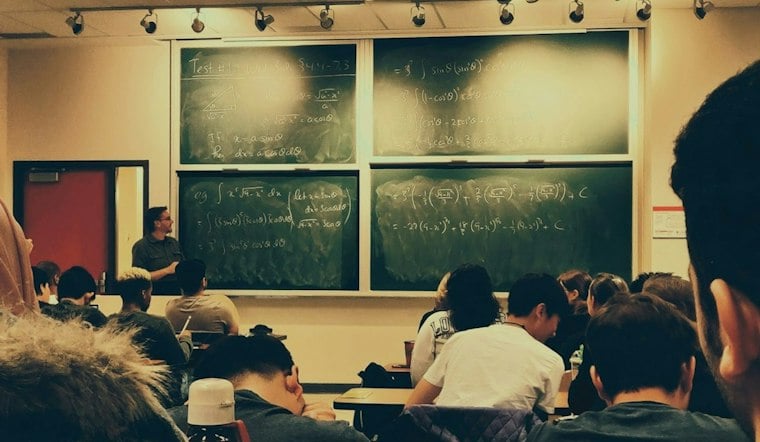
The organizers’ September 28 joint statement describes a Mathathon focused on understanding and explaining established mathematics. Under the theme “Old Problems, New Proofs,” teams will spend 40 hours studying a problem and presenting their findings, then have two months to develop an alternative proof or exposition. Submissions will include an explainer and a GitHub repository, according to the organizers’ statement.
New rules and schedule
The organizers say Mathathon will no longer receive sponsorship from developers of proprietary AI models. Participants may use proprietary tools, but the rules encourage open-source alternatives and require disclosure and justification of any large language model use. The Foundation for Science and AI Research is co-organizing the event and, according to the joint statement, will provide compute, hold workshops and offer prizes and travel grants to teams using open-source models.
In a September 10 statement, the organizers reported more than 1,000 applications from undergraduates, Ph.D. students, postdocs and faculty. The September statement listed October 30–November 1 for the event, while the later joint statement schedules it for November 13–15 at Caltech. LAist also reported that the event would take place in November.
How the timelines compare
Mathathon combines a 40-hour event with two months to develop an alternative proof or exposition. By comparison, according to Pasadena Now’s account of Caltech’s SURF materials, selected students carry out full-time research over 10 weeks in the summer, then submit a technical paper and give an oral presentation at a SURF Seminar Day. The programs use different formats, but their timelines illustrate the contrast between Mathathon’s concentrated event and follow-up period and SURF’s longer research cycle.
Why organizers changed course
The first version of Mathathon was planned as a 40-hour contest in which teams would use AI tools to pursue open research problems, with OpenAI and Anthropic as sponsors. A group of current and former Caltech mathematicians called for the event to be suspended, LAist reported. Their open letter questioned whether rushed work could be properly understood and communicated, and raised concerns about corporate influence. LAist reported that OpenAI withdrew its support after the letter circulated; Anthropic declined to comment.
The revised format separates the initial 40-hour event from the two-month period for developing explanatory work. The organizers say the change shifts emphasis from problem-solving alone to mathematical understanding and exposition, according to their joint statement. The change addresses the event’s format, but does not resolve the broader debate over AI’s role in research.
AI claims remain part of the debate
OpenAI has said an internal system used about 10,000 concurrent agents for roughly 88 hours on its Navier–Stokes effort, and that nearly 100 agents worked for about 50 hours on a related Euler-equation question, according to the company’s announcement. OpenAI has also claimed its agents resolved more than 100 other open problems. TechCrunch reported that the company formed an independent nine-member advisory group to assess results and coordinate their release.


