

























































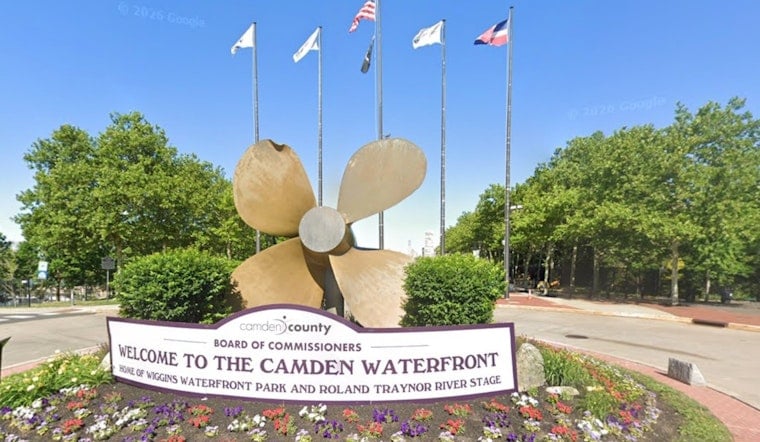
A 49-foot catamaran that is mostly solar-powered and can use land power when needed is making its way from Maine to Camden this month, where it will dock at Wiggins Park Marina and start ferrying local students onto the Delaware River for hands-on science lessons. The vessel, named Firefly, is operated by the nonprofit Upstream Alliance and is expected to begin serving as a floating classroom in mid-October.
Firefly carries 48 lithium-ion propulsion batteries, two lithium-iron-phosphate house batteries and 24 solar panels, and it can also plug into land power when needed, according to NJ.com. Those batteries carry a lower chance of catching fire than other lithium-ion battery types, and NJ.com says the U.S. Coast Guard approved their use for passenger boats with Firefly. Trade Only Today also reports on Firefly's lithium iron phosphate battery system.
Those batteries add up to a serious power system. Lithionics reports the boat's 48 propulsion batteries deliver 403 kWh of storage, working alongside eight battery management systems and twin 50kW QuietTorque electric motors — a system designed for eight- to ten-hour solar-electric cruises, according to WorkBoat.
From Maine Shipyard to the Delaware River
Firefly was built by Lyman-Morse Boatbuilding in Thomaston, Maine, which won the project through a competitive bidding process, according to Trade Only Today. The boat has launched and is undergoing sea trials, per NJ.com. It's expected to travel from Maine to Camden later this month.
The boat was designed by Dave Gerr, a New York-based naval architect whom Upstream Alliance hired in 2021, per NJ.com. Gerr previously designed Solaris, a 44-foot zero-fuel tour boat for the Hudson River Maritime Museum that became the first fully solar-powered passenger boat approved by the Coast Guard, according to the museum. While Solaris ran purely on rooftop solar power at 5 knots, Firefly needed considerably more battery storage and power to handle the currents of the Delaware River, the museum notes. Firefly measures roughly 49 feet long and 20 feet 3 inches wide with a 3-foot 8-inch draft, and can carry up to 32 passengers, according to WorkBoat.
A Project Years and Millions of Dollars in the Making
The Firefly project cost more than $3 million, according to NJ.com, with funding coming from American Water, Subaru of America and additional donations. That corporate support builds on a $250,000 Water and Environment grant that the American Water Charitable Foundation and New Jersey American Water awarded to Upstream Alliance in October 2023 specifically to fund the floating classroom, according to ESG Today. American Water relocated its corporate headquarters to the Camden waterfront in 2018 and has continued investing in local community initiatives since, per the same report. Philadelphia's William Penn Foundation also supported Upstream Alliance paddling events, according to the nonprofit.
Once it's docked, students will study the river by testing water quality and observing wildlife aboard the boat, per NJ.com. Upstream Alliance plans to bring students aboard three times before they graduate from high school, and school district trips will be free, funded through donations. The school district must still provide student transportation to the boat, NJ.com reports.
Water-quality assessments can include indicators such as dissolved oxygen, pH, temperature and total dissolved solids. The Delaware River Basin Commission has reported on dissolved oxygen conditions in the Delaware River.
Building on Years of Local Water Programs
Firefly isn't Upstream Alliance's first foray onto Camden's waterways. The nonprofit has run on-the-water programs in the city since at least 2019, including hosting the Mayor's Paddle on the Cooper River and leading a separate Delaware River paddle from Pyne Poynt to Palmyra Cove, according to Upstream Alliance. Urban waterfronts in Camden were historically cut off from public recreation by heavy industrial infrastructure, the nonprofit notes. Beyond Camden, Upstream Alliance also operates programs in Maryland's Chesapeake Bay and New York's Flushing Bay, per NJ.com.
Camden's North Camden Waterfront Development Project is also part of the waterfront discussion. The New Jersey Department of Environmental Protection said that, during the previous 10 years, more than 100 acres of new open space had been created on six former brownfield sites within or near Camden.
Alfonso Q. Llano Jr., superintendent of Camden schools, said Firefly will deepen students' connection to the Delaware River and expand learning beyond the traditional classroom, according to NJ.com. Vandita Desai, a science teacher at Camden's Creative Arts Academy who has taught in the district for over 25 years, is among the educators expected to bring students aboard. I'ssabella Morton, a 17-year-old Camden native and Upstream Alliance student ambassador, is also involved with the program, per the same report.
Don Baugh, founder and president of Upstream Alliance, said Firefly represents hope, fun and whimsy, according to NJ.com. The Camden County Municipal Utilities Authority is partnering with Upstream Alliance on trips for county residents, and the nonprofit also plans to use Firefly for teacher training and educational trips during schools' off time, offering rides to groups including UrbanPromise, local mayors and commissioners, and Camden County residents.
What Comes Next
Firefly still has to complete sea trials and final certifications before it can begin its full slate of educational trips, per NJ.com. Baugh expects the boat to debut as a classroom in mid-October. If the Camden project succeeds, Upstream Alliance envisions building more boats using Firefly's design, according to the same report — a vision that would place Camden's floating classroom within a broader wave of marine electrification that includes Alabama's 95-foot Gee's Bend Ferry, the nation's first zero-emission electric passenger and vehicle ferry, according to WorkBoat.




