

























































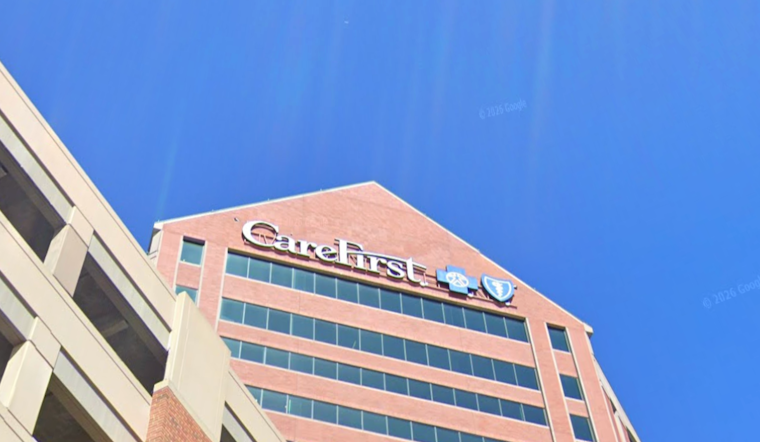
CareFirst BlueCross BlueShield has taken a Hagerstown healthcare company to federal court over its name, arguing that CareFirst Community Health, LLC is deliberately trading on a brand the insurer says it has used for nearly five decades. The lawsuit, filed August 27 in the U.S. District Court for Maryland, accuses the Hagerstown firm of federal trademark infringement and a deceptive trade practice under Maryland's Consumer Protection Act.
CareFirst of Maryland, Inc. filed the case after sending CareFirst Community Health a cease-and-desist letter in January that went unanswered, according to the Daily Record. The insurer alleges the Hagerstown company's name misleads customers into believing it is associated with CareFirst, and that it never gave any other entity permission to use the CareFirst name without a license. CareFirst Community Health, headquartered at 626 Potomac Avenue in Hagerstown, operates residential group homes for people with intellectual and developmental disabilities and offers home healthcare across Western Maryland, holding home health licenses and public contracts with state and county health departments, per the Maryland Board of Public Works.
Why the Name Overlap Matters to CareFirst
The dispute is especially pointed because CareFirst runs its own Maryland Medicaid managed care division under the nearly identical name CareFirst BlueCross BlueShield Community Health Plan Maryland, according to the company's own CareFirst CHPMD terms of use. That overlap is central to the insurer's claim that the Hagerstown firm's branding creates confusion among the very Medicaid population both companies serve. CareFirst BlueCross BlueShield, based in Baltimore, is the region's largest health insurer, serving roughly 3.5 million members across Maryland, Washington, D.C., and Northern Virginia and generating more than $10 billion in annual revenue as a nonprofit with about 75 percent of the Maryland market, per prior reporting from the same outlet.
The five-count lawsuit seeks damages and an injunction against CareFirst Community Health, which the insurer says used the CareFirst mark without authorization. CareFirst of Maryland is represented by Sean Griffin of Longman & Van Grack and by Julie Ann Hopkins of Hopkins IP in Baltimore. CareFirst Community Health did not respond to the cease-and-desist letter and did not return a request for comment from the Daily Record for its report on the filing.
A Legal Precedent That Could Complicate the Case
CareFirst holds registered federal trademarks for the CAREFIRST mark dating back to 1989, with the underlying applications first filed in 1985 and 1987, according to USPTO records. But the insurer has lost this fight before. In a 2006 decision, *CareFirst of Maryland, Inc. v. First Care, P.C.*, the U.S. Court of Appeals for the Fourth Circuit ruled that the word CareFirst on its own, without BlueCross BlueShield attached, was not conceptually strong enough to prove a likelihood of confusion against an independent medical group, noting that CareFirst almost always pairs its mark with BlueCross BlueShield in public view.
The case has been assigned docket number 1:26-cv-03414 and lands before U.S. District Judge Julie Rebecca Rubin, who joined the Maryland federal bench in 2022. The suit comes under new leadership at CareFirst, which named Kurt C. Small as president and CEO effective May 4, following the departure of former CEO Brian D. Pieninck in late 2025 — a transition Hoodline covered earlier this year. Small previously served as president of Medicaid at Elevance Health before joining CareFirst.
A Separate $51 Million Fraud Case, Also in Federal Court
The trademark suit is unrelated to another federal case CareFirst is pursuing against former insurance brokers Avraham and Eliezer Rappaport, though both are unfolding in the same Maryland court around the same time. CareFirst accused the brothers in June of conspiring to exploit more than $50 million in benefits, alleging in its civil racketeering lawsuit that the pair submitted fake Maryland residential addresses for 259 out-of-state and international clients across nearly 20,000 claims totaling $51.1 million, with the alleged scheme running from 2017 through 2023, according to Becker's Payer Issues.
State regulators had already moved against the brothers before CareFirst's lawsuit: the Maryland Insurance Administration revoked Avraham Rappaport's broker license in 2025 and suspended Eliezer Rappaport's license in 2024, issuing a $4,000 fine after finding he had concealed investigation records and failed to submit more than 100 vital documents. Avraham and Eliezer Rappaport filed motions to dismiss the racketeering lawsuit on August 28, arguing that CareFirst's own internal records show the insurer was aware of shared subscriber addresses before June 2022 and had begun investigating billing as early as March 2022 — meaning, they say, the case was filed outside civil RICO's four-year statute of limitations, according to Insurance News.
Whether that timing argument succeeds remains an open question before the court, separate from the trademark fight playing out over the Hagerstown company's name. For CareFirst, the two cases together reflect a broader push to police both its brand identity and its billing integrity as it enters a new leadership era under Small.





