

























































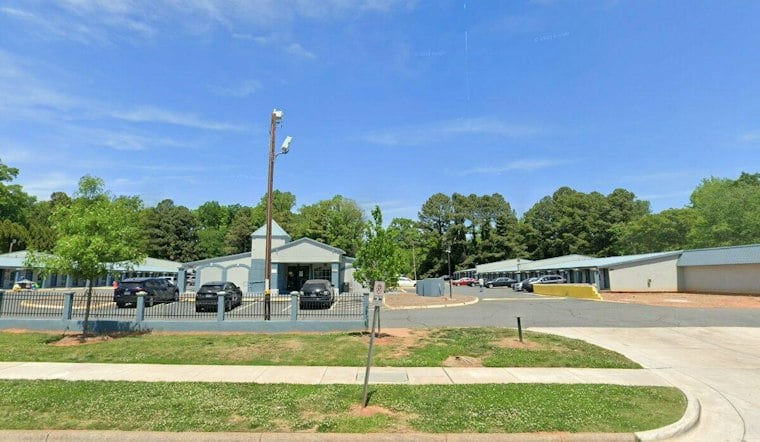
A nondescript office park on Queen City Drive is now the headquarters for what organizers describe as likely the largest archive devoted to Southern LGBTQ+ history in the country. Inside sit photos, love letters, political memorabilia and costumes dating back to the 1940s, all collected by the nonprofit Invisible Histories, which relocated its operations from Alabama and plans to officially open its first independent archive building to the public in Charlotte on November 14.
The move caps a journey that began in Alabama, where Invisible Histories launched full-time operations in 2018 as a nonprofit dedicated to preserving LGBTQ+ history from the American South, according to The Charlotte Observer. The space itself, detailed by WFAE, served as the organizing hub where thousands of donated Southern artifacts were sorted before public access opens. Joshua Burford and Maigen Sullivan, both queer historians from Alabama, co-founded the organization and now serve as its leadership, with Burford acting as co-founder and co-executive director.
Invisible Histories originally functioned as an intermediary, placing collected items into existing institutional partners like the Birmingham Public Library rather than holding them itself. That structure changed after political pressure made state-funded partnerships too risky to sustain, per the Observer's reporting. The organization paused its work in 2023 before relaunching independently in Charlotte, and it is now actively collecting items from Mississippi, Alabama, Georgia, Florida and the Carolinas.
A Lecture That Triggered a Funding Fight
The catalyst for leaving Alabama traces to June 2023, when a lecture on state queer history prompted swift political blowback. Following the talk, Alabama Republican State Senator Chris Elliott introduced legislation seeking to claw back $5 million in funding from the Alabama Department of Archives and History, according to the Associated Press — an amount representing over a third of that department's budget. Alabama lawmakers reacted to Sullivan's talk on the history of LGBTQ+ people and organizations in the state, and threatened to defund the archives department entirely, per the Alabama Reflector.
Sullivan has said Southern queer people experience a double layer of shame — one tied to their identity and another tied to their regional identity. Burford has described the toll even more starkly, saying government officials considered him a terrorist because of his queer and trans archival work. Sullivan and Burford chose independence specifically to prevent state leaders from holding their collections hostage, a decision that pushed the organization toward owning its own building rather than depending on public institutions.
Why Charlotte Won Out
Before settling on Charlotte, the Invisible Histories team spent two years evaluating major Southern metros, including Atlanta and Nashville, according to Qnotes. Charlotte ultimately won out because of its philanthropic ecosystem, an active queer community and Burford's own history in the city — he formerly taught at UNC Charlotte and established the university's King-Henry-Brockington LGBTQ+ Archive at J. Murray Atkins Library in 2013 while serving as assistant director for Sexual and Gender Diversity, earning Charlotte Pride's Harvey Milk Award in 2015. The city's accessibility by flight also factored into the decision, per the Observer.
The Southern U.S. holds the largest LGBTQ adult population of any region in the nation, with more than 3.8 million residents, according to demographic analysis from the Williams Institute at UCLA School of Law cited by Rough Draft Atlanta. Despite that population size, the region has historically lacked funded preservation infrastructure — a gap Invisible Histories was built to fill, having earned the Society of American Archivists' national Archival Innovator Award in 2020 for its community-centered collecting model.
Everyday Objects, Extraordinary Stories
What sets the collection apart is its focus on ordinary objects tied to queer Southern life rather than items belonging to famous figures. Burford has said people do not need to be celebrities to become part of history, and the archive's holdings reflect that philosophy. Among them is a 30-year-old paper KFC bucket that an Athens, Georgia, drag queen fashioned into a purse and used to collect donations for HIV research.
Other items carry equally personal weight. A World War II-era journal kept by Robert Aycock, a veteran from Montgomery, Alabama, describes his experiences while stationed abroad. There's also a disco ball recovered from Tuscaloosa's longest-running gay bar, which closed in the early 2000s — the same bar where Burford once danced under that disco ball on his 21st birthday, before it shut its doors.
The Charlotte archive also holds items with more fraught histories. A 1990s ruby red dress worn by Tuscaloosa drag queen Cliche is the sole surviving artifact after a house fire, according to WFAE's reporting. A silver, crystal-studded crown belonging to Mobile drag performer Lawrence McDavid was nearly lost entirely to a family dispute over his queer identity. Sullivan has said the value of some archival items lies less in the objects themselves and more in the stories behind them.
Building a Regional Network
Beyond its Charlotte repository, Invisible Histories runs Queer History South, a regional network and biennial conference established in 2019 that connects archivists, historians and educators across 13 Southern states, according to the National Park Service. The organization also partnered with the University of Alabama's Summersell Center for the Study of the South in 2019 to create undergraduate courses in local queer history, a program that later expanded to host high school students from Atlanta.
Invisible Histories previously donated items to libraries and universities before shifting to its independent model, and it is now preparing to provide public access to its full collection for researchers and the general public alike. The organization invites anyone who lived as queer in the South to donate items, however ordinary they may seem, as it continues collecting across Mississippi, Alabama, Georgia, Florida and the Carolinas ahead of its November 14 opening in Charlotte.





