

























































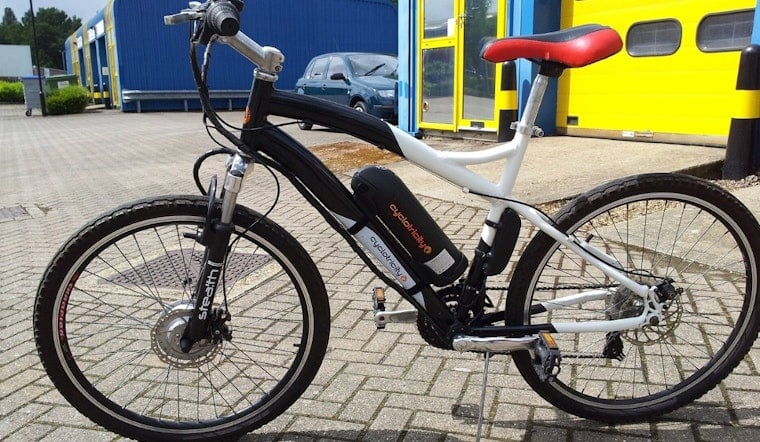
Cherokee County currently has no countywide rules governing e-bikes, electric scooters, or other micromobility devices, but that gap could close soon. The Cherokee County Board of Commissioners has scheduled a public hearing for October 6, 2026, to vote on adopting a new set of regulations that would apply across the entire county.
According to WSB-TV, the county's current code addresses gasoline-powered devices and carts but excludes electric micromobility devices entirely, leaving e-bikes and e-scooters in a regulatory blind spot. County officials said that gap is exactly why a new code section is needed. The proposed rules, known as Article IV, would define each e-bike and scooter device, adopt the state's Title 40 definitions, and establish basic safety and operating rules for riders.
Per WSB-TV's report, the proposed ordinance would specify where each class of e-bike and scooter may and may not operate, matching each device to facilities where it can be used safely — whether that's streets, paved shared-use paths, sidewalks, or trails. The goal, per the county, is to keep higher-speed devices off pedestrian-oriented spaces while giving riders, businesses, and law enforcement clarity that doesn't currently exist. The new section would also require signage and would cross-reference existing parts of the county code, including the motorized-carts article, the all-terrain-vehicle section, and the sidewalk rule found in Section 50-1.
A Model Borrowed From Woodstock
The Cherokee County proposal closely resembles e-bike and micromobility ordinances already in place elsewhere in Georgia, and it draws directly from the City of Woodstock's example. The city passed its own e-bike ordinance in July, and the proposed county code section largely mirrors that model, according to WSB-TV's report citing Channel 2 Action News.
Woodstock's ordinance banned e-bikes from city sidewalks outright and created a “no-ride zone” along Main Street between Oak Street and Fowler Street, with fines of up to $100 for first-time violations, as reported by WSB Radio. The city passed those rules after fielding dozens of resident complaints about high-speed devices crowding downtown pedestrian areas. Under Chapter 32 of Woodstock's updated code, motorized devices on the paved Greenprints trails are limited to adults 18 and older riding Class 1 e-bikes or other approved low-speed devices, capped at 20 mph, according to 11Alive. Wheelchairs and other non-motorized mobility devices remain permitted on both trails and sidewalks.
Mayor's Warning Highlights Youth Safety Concerns
Woodstock Mayor Michael Caldwell publicly warned parents against buying young children high-speed electric devices after the ordinance passed, calling it “wildly dangerous” for 12-year-olds to ride electric motorcycles on Main Street, per 11Alive's report. He noted that police will cite youth who flee officers, and city leaders emphasized that enforcing the ordinance requires cooperation from parents as much as from police.
That concern reflects a broader trend across Georgia. In April 2026, the Go Georgia highway safety initiative published guidance warning that youth are frequently operating illegal “e-motos” — devices with motor power exceeding 750 watts and speeds over 30 mph — on public roadways, even though such vehicles legally require a driver's license, registration, and a DOT-approved helmet. Manufacturers and retailers often market these high-power e-motos to adolescents, the initiative noted, creating confusion between what counts as a bicycle and what counts as a motor vehicle.
How State Law Draws the Line
Georgia's underlying statutory framework, established under HB 454 in 2019, classifies electric-assisted bicycles into three tiers capped at 750 watts with operable pedals, exempting compliant e-bikes from driver's license, registration, and insurance requirements, according to Justia Law. Devices exceeding those limits fall under the state's moped or motorcycle statutes instead. Under separate provisions of state law, Class 3 e-bikes must carry a speedometer, restrict operators to age 15 or older, and require helmets for all riders regardless of age; those faster e-bikes are also barred from multi-use paths unless a local jurisdiction specifically authorizes them.
State law also prohibits all vehicles and e-bikes from operating on public sidewalks statewide, with a sole exception for children aged 12 and younger when a local ordinance permits it, per Velosurance. Local authorities retain the power to designate multi-use paths at least eight feet wide as shared paths, giving cities and counties some flexibility in how they apply the state framework.
Regional Jurisdictions Offer a Patchwork of Approaches
Cherokee County's proposed ordinance would join a growing list of metro Atlanta jurisdictions moving to close similar regulatory gaps. Nearby Cobb County restricts e-bike use on its stretch of the 61.5-mile Silver Comet Trail to Class 1 pedal-assist e-bikes capped at 20 mph, banning throttle-operated Class 2 e-bikes and faster Class 3 models entirely. Woodstock also has its own Greenprints trail policy.
Peachtree City is included in the regional comparison, but the specifics of its approach are not established here.
The Cherokee County proposal is part of the board's broader effort to harmonize unincorporated county rules with state statutes and neighboring municipal codes.



