

























































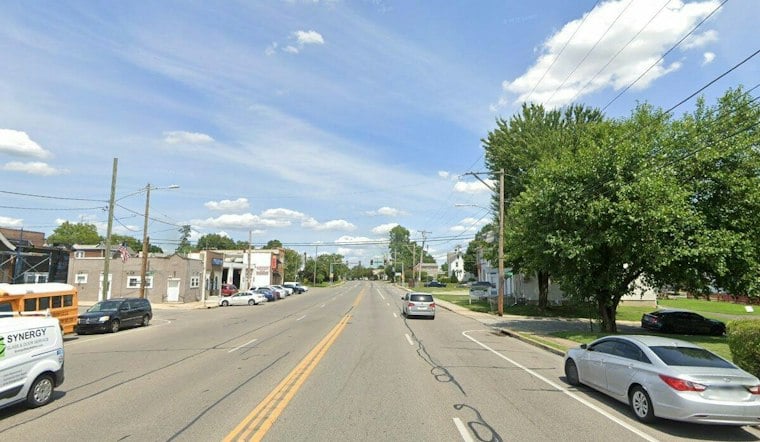
A transportation decision in Southeast Delco is raising a narrow but consequential question: when a school district classifies young students as living within its walking zone, how should that designation account for the safety of the actual route? The issue has surfaced for two boys from Sharon Hill who attend Liberty Baptist Academy in Glenolden.
The route’s broader setting is a heavily traveled corridor. WHYY, citing PennDOT data, reported that about 17,000 vehicles use the six-mile stretch of Chester Pike between Ridley Park and Sharon Hill each day. From 2017 through 2021, that stretch averaged 110 crashes annually, with at least four fatalities. Those figures describe the corridor as a whole, however, and do not establish whether the Harris children’s particular route meets Pennsylvania’s legal standard for a hazardous walking route.
A walking-zone decision, and an unresolved exception
According to 6abc Philadelphia, 8-year-old Liam Harris and 6-year-old Issac Harris had ridden a bus from Sharon Hill to Liberty Baptist for two years. When the school year began, no bus arrived, and the family was told the boys were considered close enough to walk. Their parents said the route requires crossing Chester Pike during a busy period and crossing six other streets without an adult.
Kyra Harris told 6abc that she cannot accompany the boys because of her work schedule. Her husband, Arthur Harris, said a disability prevents him from walking them to school. The family requested an exception from Southeast Delco, but 6abc reported that the district had not granted one at the time of its report. The district and its transportation department did not comment to the station.
Pennsylvania regulations generally allow districts not to provide transportation for elementary students who live within 1.5 miles of school, but the walking route must be considered under the state’s hazardous-route framework. The regulation identifies factors including traffic, roadway conditions and the circumstances under which students must cross streets. The relevant rule is set out in 67 Pennsylvania Code Chapter 447. The available information does not show whether the route used by the Harris children has been formally evaluated or certified as hazardous by PennDOT.
Planning has identified corridor problems, but not a solution for this route
The Chester Pike Corridor Improvement Partners say their Chester Pike Corridor Multimodal Study concluded in June 2024. WHYY reported that proposed improvements include narrower vehicle lanes, bicycle paths and wider sidewalks. Boroughs would determine which projects to prioritize, and no start date or implementation timeline had been announced in the reporting cited here.
That planning work is relevant to the transportation dispute because it concerns the same corridor, but it does not answer the immediate question facing the Harris family. A future sidewalk or crossing project would not by itself show whether the current route is unsafe under state rules, and corridorwide crash totals cannot substitute for an evaluation of the specific crossings the children would use.
Earlier fatal crash shows the stakes, not a trend
The corridor has also been the site of fatal pedestrian crashes. The Delaware County Times reported that two Academy Park High School freshmen were struck at Chester Pike and Glenolden Avenue in Glenolden on Dec. 9, 2011; both later died. That nighttime crash is not the same event as the Harris family's daytime school-walking dispute, and the examples available here are not enough to establish that crashes are becoming more frequent.
For now, the dispute remains between a distance-based transportation designation and the family's assessment of the route's practical risks. The unresolved facts include whether Southeast Delco will grant an exception, whether the district has requested a formal hazardous-route review, and what crossing arrangements—if any—would be available to the children.





