

























































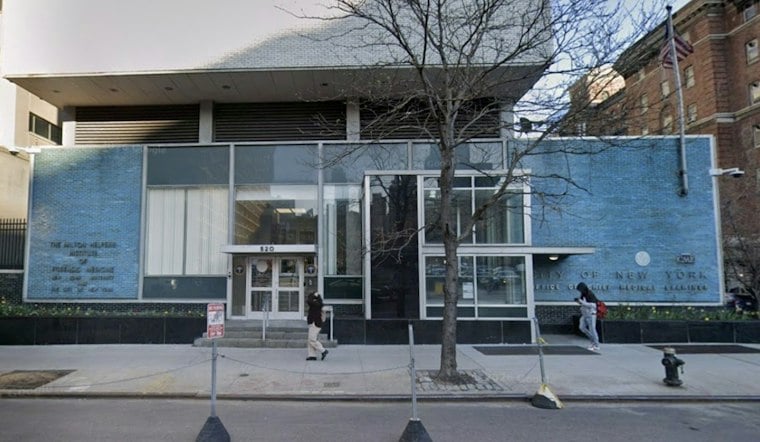
Twenty-five years after the September 11 attacks killed nearly 3,000 people, Chico State anthropology professor Dr. Eric Bartelink still remembers being a 27-year-old flying between New York and Ground Zero, working inside the laboratory and morgue to figure out which body parts belonged to which victims. He spent three years commuting to the project, part of a team tasked with a grim and exacting job: making sure remains from multiple victims never ended up mixed together in the same body bag or container.
A Career Forged at Ground Zero
Bartelink, now a 25-year veteran of forensic studies who has taught at Chico State for 20 years, was asked to assist with 9/11 victim recovery and identification work in Manhattan in 2001, according to Action News Now. The World Trade Center identification effort was led by Dr. Amy Mundorff, herself a Chico State alum, and the station reports that Chico State supplied more participants for the identification effort than any other U.S. university — about seven students and alumni in all. Bartelink's team worked to prevent remains from being commingled, a painstaking safeguard given how badly the site's toxicity, metal, and debris complicated the work, making Ground Zero more difficult, in his account, than the wildfire disasters he would later respond to.
Chico State's anthropology department is one of the oldest forensic anthropology labs in the country, started by Dr. Turhon Murad in the early 1970s. The lab's board-certified anthropologists account for nearly half of all diplomates of the American Board of Forensic Anthropology practicing statewide, according to Chico State Today. Bartelink himself later served as president of that same certifying body, per Chico State Today, cementing his standing as one of the field's national leaders.
Nearly 1,100 Victims Still Unnamed
Twenty-five years on, forensic teams are still working to identify the remains of nearly 3,000 9/11 victims, and the scale of what remains undone is staggering: roughly 40 percent of the World Trade Center's 2,753 victims — about 1,099 individuals — have never had any remains positively identified by the New York City Office of Chief Medical Examiner, according to CBS News. Those unidentified remains are stored at bedrock within a secure repository operated exclusively by the medical examiner's office, as described by the National September 11 Memorial & Museum.
The technology has not stood still. In August, the medical examiner's office announced the first successful identification of a World Trade Center victim using Forensic Investigative Genetic Genealogy, a modern genomic technique, according to a statement from NYC.gov. Chico State led its own preservation efforts at Ground Zero aimed at keeping samples viable for exactly this kind of future testing, per Action News Now's report.
From Manhattan to Bosnia to California's Wildfires
Ground Zero was not Bartelink's only mass-casualty deployment. He worked on mass grave exhumations in Bosnia in 2000, the outlet notes, experience that would inform decades of disaster response work back home in California. He has since worked on the 2018 Camp Fire, the 2023 Maui fire, and the 2025 Eaton Fire, and the station describes his team as probably the most experienced group assisting with wildfire-victim search and recovery in the country.
That reputation was built during the Camp Fire, California's deadliest wildfire, when Chico State's Human Identification Lab deployed 39 faculty, staff, graduate students, and alumni to Butte County, where the fire ultimately claimed 85 victims, according to Chico State Today. Five years later, when Bartelink's team deployed to the Lahaina wildfire in West Maui, forensic anthropologists worked in Tyvek suits and P100 respirators, sifting ash through one-eighth-inch mesh screens to recover microscopic bone fragments and tooth roots, the Los Angeles Times reported. When Southern California's Eaton Fire burned more than 14,000 acres across Altadena and Pasadena in January 2025, Bartelink, of Chico State, also worked on the response, according to California State University, Chico. Hoodline previously reported on the forensic challenges Southern California medical examiners faced during that Eaton Fire recovery effort.
A Growing Lab Built for the Next Disaster
Demand from those wildfires has driven real investment back in Chico. In 2025, Cal State Chico planned a new $55 million, 28,600-square-foot facility for the Human Identification Laboratory, with groundbreaking scheduled for November 14, according to Lab Design News. The planned facility is to include isotope and DNA extraction laboratories.
Hoodline has separately reported on a cold-case identification using DNA analysis. For Bartelink, that thread runs straight back to Manhattan: the same painstaking commitment to identification, whether at Ground Zero, in Bosnia, or in the ash of a California wildfire, is what still drives the search for the nearly 1,100 September 11th victims who remain unnamed a quarter-century later.





