

























































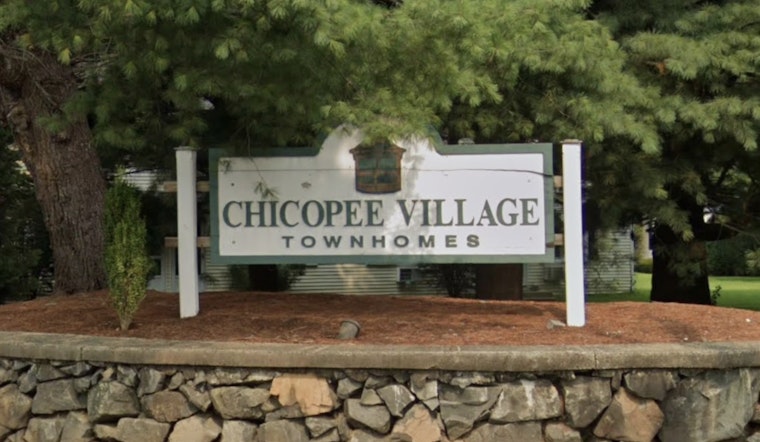
A 79-year-old affordable housing complex in Chicopee was on track to lose its affordability protections this year — until a $41.5 million rehabilitation deal stepped in to save it. Chicopee Village Townhomes, a 290-unit community of 62 two-story buildings spread across 17.6 acres, will now stay income-restricted for another 50 years while crews replace worn-out roofs, siding, windows and furnaces across the property.
The financing behind the overhaul closed on August 13, combining a mix of public and private capital, according to Boston Real Estate Times. The stack included twinned 4% and 9% Low-Income Housing Tax Credits allocated by the Massachusetts Executive Office of Housing and Livable Communities, a permanent mortgage from the Massachusetts Housing Partnership, tax-exempt bonds from MassHousing, and $36 million in construction financing plus $9.8 million in tax credit equity from Rockland Trust, along with construction financing and equity from U.S. Bancorp Impact Finance. As ConnectCRE reports, WinnCompanies closed on the financing to purchase and rehabilitate the property, a deal that renewed the affordability protections that had been set to expire this year.
Built in 1947, Chicopee Village Townhomes had drawn attention from state housing officials well before the financing closed. The Executive Office of Housing and Livable Communities identified the property as a preservation priority in February 2025, then tapped WinnDevelopment two months later as its designee to make an offer and lead the redevelopment, per the same ConnectCRE report.
Why the State Stepped In
The mechanism behind that intervention is Chapter 40T, a Massachusetts law enacted in November 2009 that requires notice before affordability restrictions expire and gives the state a right of first refusal to purchase or designate a buyer for subsidized housing at risk of converting to market rate, according to guidance from Mass.gov. The law has a strong track record: over its first decade, Chapter 40T helped preserve affordability for 99 percent of publicly assisted housing units sold statewide, safeguarding nearly 20,000 homes, according to the Community Economic Development Assistance Corporation.
That statewide success sets the stage for what's happening in Chicopee, where the deal locks in affordability restrictions for 50 years through 2076, ensuring all 290 units remain reserved for households earning at or below 60 percent of the Area Median Income, the Boston Real Estate Times report notes. Of those units, 196 are two-bedroom apartments and 73 are three-bedroom layouts, underscoring the property's role as family housing in a Gateway City where the housing stock skews heavily toward larger units.
A Rare Kind of Housing
Adam Stein, in comments cited by ConnectCRE, said family housing like this is invaluable and rare, a fact that all of our public and private partners recognized immediately. The rehabilitation effort will address deferred maintenance on the aging townhouse-style buildings, work that includes adding insulation and air sealing along with resurfacing driveways and sidewalks across the complex, according to the Boston Real Estate Times account.
The redevelopment team includes Canton-based Keith Construction as general contractor, Chelsea-based The Architectural Team as architect, Watertown-based VHB as civil engineer, and Boston law firm Robinson+Cole as transaction counsel, all working under WinnDevelopment Project Director Derek Hansen, per the same outlet. The modernization project is already underway and is expected to wrap up by summer 2028.
Local and State Leaders Sign On
Chicopee Mayor John Vieau endorsed the project, saying the city supports the revitalization and that WinnDevelopment has demonstrated the capacity to manage the complex long-term, while EOHLC Secretary Juana Matias emphasized that preserving existing affordable homes is as critical as constructing new ones, according to the Boston Real Estate Times report. That alignment between city hall and state housing officials reflects a broader push to protect aging affordable stock rather than rely solely on new construction to meet demand.
The stakes are especially high in Gateway Cities like Chicopee, where roughly 45 percent of the rental stock is deed-restricted or naturally affordable, compared to just 23 percent in non-Gateway communities outside Boston, according to research from MassINC. That imbalance makes preserving large complexes like Chicopee Village Townhomes especially consequential for regional housing stability.
Part of a Bigger Financing Shift
The deal also arrives amid federal tax policy changes that have widened the financing pipeline for projects like this one. Adjustments in 2026 lowered the private-activity bond threshold for 4% Low-Income Housing Tax Credits from 50 percent to 25 percent and increased 9% credit allocations by 12 percent, expanding financing availability for preservation projects across Massachusetts, as Hoodline previously reported.
WinnDevelopment is the development arm of Boston-based WinnCompanies, which has built or preserved 18,000 housing units over its 50-year history and currently maintains a pipeline of 5,000 additional units across 11 states and Washington, D.C., according to the company. The Chicopee project follows other recent WinnCompanies efforts, including a $2 billion climate-resilient overhaul of public housing in South Boston and a 753-unit redevelopment in Jersey City.





