

























































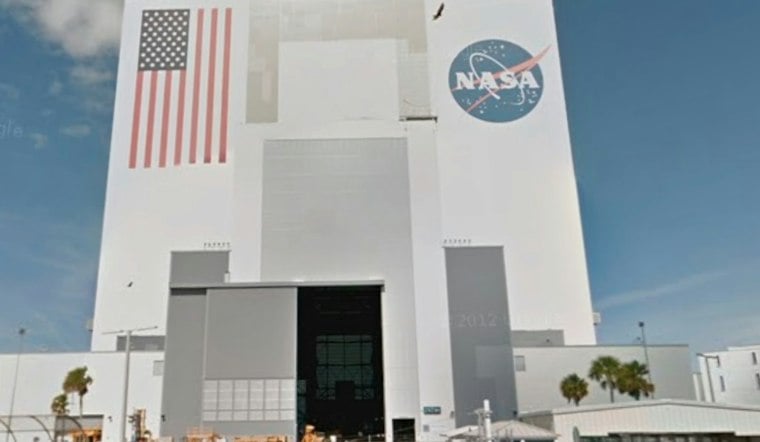
A tourist from China has been charged with federal crimes after allegedly flying a drone over protected airspace near Kennedy Space Center, capturing video of key NASA facilities along the way. Federal prosecutors say Xiaodong He ignored no-fly restrictions around the launch site during the July flight, according to a criminal complaint filed in Orlando federal court.
As reported by FOX 35 Orlando, He was charged with criminal offenses tied to the drone flight near Kennedy Space Center. The federal complaint, filed August 7 in Orlando under case number 6:26-mj-1933, accuses He of violating national defense airspace under 49 U.S.C. 46307 and operating an aircraft without an airman's certificate under 49 U.S.C. 46306(b)(7), according to Space Coast Rocket. The filing followed an investigation by NASA's Office of Inspector General and Kennedy Space Center Security Police.
An affidavit from a NASA OIG special agent lays out the flight in granular detail: on July 25, 2026, He allegedly launched a DJI Mavic 4 Pro from the Playalinda Beach Vista #8 parking lot and kept it airborne for 12 minutes and 24 seconds, reaching a maximum altitude of 230 feet inside restricted zone R-2932, the same source reports. Playalinda Beach sits within the Canaveral National Seashore, directly adjacent to active launch pads.
How Close the Drone Got to Active Launch Pads
Court filings show just how near the aircraft came to sensitive infrastructure. The drone allegedly approached within 1.56 miles of Space Launch Complex 39B and 4.23 miles of NASA's Rotation, Processing and Surge Facility while recording video of launch pads 39A and 39B, per the same account. Those two pads serve as primary launch sites for NASA's Artemis moon program and SpaceX missions.
Investigators say He lacked any of the required credentials for the flight. FAA and NASA records confirmed he did not hold a Part 107 remote pilot license and that his drone was unregistered, according to Florida Politics. The outlet reports that he proceeded despite receiving a conspicuous warning on the controller indicating he was entering a restricted warning zone.
What He Could Face in Court
The statutes carry significant exposure. A violation of national defense airspace under 49 U.S.C. 46307 carries penalties of up to one year in prison and $100,000 in fines, while operating an aircraft without an airman's certificate under 49 U.S.C. 46306(b) can carry up to three years in prison, according to law firm Greenberg Traurig LLP. Restricted airspace R-2932 is identified in the case materials as the restricted zone over Kennedy Space Center.
Part of a Broader Pattern on the Space Coast
He's case is not the first of its kind on Florida's Space Coast. In August 2025, 71-year-old Chinese-born Canadian citizen Xiao Guang Pan was sentenced to probation and deported after pleading guilty to using a drone to capture over 200 unauthorized photos and videos of sensitive infrastructure at Cape Canaveral Space Force Station, according to DroneDJ. Pan had flown a DJI Mavic 3 Pro from a Port Canaveral parking lot in January 2025.
A similar case unfolded on the West Coast. In March 2025, Chinese national Yinpiao Zhou was sentenced to four months of time served after pleading guilty to flying a drone in restricted airspace over California's Vandenberg Space Force Base, according to the Air Force Office of Special Investigations. Zhou was reportedly intercepted at San Francisco International Airport while trying to board a flight to China.
His case is not the first of its kind on Florida's Space Coast. In August 2025, 71-year-old Chinese-born Canadian citizen Xiao Guang Pan was sentenced to probation and deported after pleading guilty to using a drone to capture over 200 unauthorized photos and videos of sensitive infrastructure at Cape Canaveral Space Force Station, according to DroneDJ. Pan had flown a DJI Mavic 3 Pro from a Port Canaveral parking lot in January 2025. A similar case unfolded on the West Coast. In May 2025, 34-year-old Chinese national Yinpiao Zhou was sentenced to four months in federal custody and ordered deported after pleading guilty to flying a drone in restricted airspace over California's Vandenberg Space Force Base during a November 2024 satellite launch, according to the Air Force Office of Special Investigations. Zhou was reportedly intercepted at San Francisco International Airport while trying to board a flight to China. The Florida and California cases described above involve foreign nationals operating consumer drones — principally manufactured by Chinese firm DJI — over restricted spaceports including Cape Canaveral Space Force Station and Vandenberg Space Force Base. His family said the trip was a vacation and that they were unaware of flight restrictions. The He investigation involved NASA OIG and KSC Security Police.
Legislative and Trade Pressure Building
The prosecution arrives amid broader federal moves targeting drone activity tied to China. In February, the Senate Judiciary Committee approved the Drone Espionage Act, introduced by Florida Senator Ashley Moody to update federal law beyond the 1917 Espionage Act and impose stiffer penalties for unauthorized drone surveillance over Florida's 21 military installations and space sites. In August, President Trump signed an executive proclamation under Section 232 imposing tariffs of up to 100% on imported drones, specifically targeting Chinese manufacturers like DJI over national security risks tied to foreign supply chains and aerial data collection.
The case also follows a separate incident in spring 2025 in which an RV full of Chinese nationals was detained near White Sands Missile Range during a similar drone-related investigation. Key questions remain open in He's case, including whether the government will seek active prison time or deportation, and how courts will weigh intent given the software warning and posted signage along Canaveral National Seashore access roads. While drone photography of the launch pads from off-site locations has been reported, physically launching or flying an unmanned aircraft inside active restricted airspace can trigger the cited federal criminal statutes when the government alleges the required knowing or willful conduct.




