

























































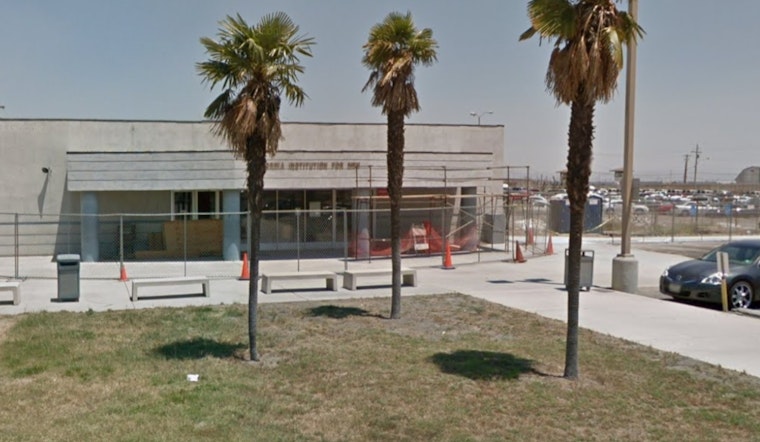
Chino officials are ramping up pressure on state corrections leaders to move faster on repairs at the California Institution for Men, after a new state audit confirmed what residents near the aging prison have argued for years: the facility is falling apart, and the fixes keep getting pushed back. The 85-year-old lockup, one of California's oldest prisons, is now sitting on a maintenance backlog so large that state officials estimate it could take 70 years to resolve at the current spending rate.
That estimate comes from the California Department of Corrections and Rehabilitation itself, cited in the audit, and it's tied to a broader price tag of $1.2 billion in infrastructure repairs first identified back in 2019. According to the San Bernardino Sun, the California State Auditor reported that CIM's infrastructure is in poor condition and needs significant repair or replacement. Chino Mayor Eunice Ulloa said the findings validate concerns chino officials and residents have raised for years about the prison, according to the same report.
The prison first opened in 1941, and the problems auditors flagged this year echo warnings issued nearly two decades ago. The state auditor recommended in 2019 that CDCR complete 26 infrastructure projects at CIM, and a state consultant that same year identified 25 critical deficiencies tied to life safety or impending failure. Persistent trouble spots include plumbing, roofs, temperature control, windows, doors and kitchen equipment, the outlet's report notes.
A Backlog That Keeps Growing
CDCR has acknowledged that its annual special-repair budget is insufficient to address CIM's needs, and the numbers back that up. The agency has funded only four of the 26 recommended projects and completed none of them as of this year, while CIM continues to carry the greatest infrastructure needs among five prisons identified for initial work under a broader state plan. About 25% of the prison's work orders go unfinished because of missing replacement parts or inadequate annual funding, the report states.
CDCR has still spent real money trying to catch up. From fiscal years 2020-21 through 2024-25, the agency put nearly $240 million into infrastructure maintenance, repairs and upgrades at CIM, including $85 million on roof replacement, electrical renovations, and water-treatment and storage-facility repairs. But a large share of that spending, 60%, went instead to building a new mental health facility on the grounds, at a cost of roughly $141 million. Statewide, CDCR's 31 prisons carried about $1.6 billion in unfunded special repair projects as of 2025.
What the Audit Wants Fixed
The state auditor's recommendations go beyond just writing bigger checks. Auditors called on CDCR to move up its timeline for repairing or replacing CIM's deteriorating facilities by a full year, establish clear policies for prioritizing major repair projects, and regularly audit maintenance records so they accurately reflect outstanding work. The auditor also recommended CDCR give prison staff clearer instructions for tracking and closing work orders, helping address the maintenance backlog.
Even so, state auditors found no specific infrastructure problem at CIM posing an imminent public safety threat, per the audit. That finding hasn't eased local concern. The cumulative effect of the deteriorating conditions still increases the risk of a security incident, state auditors warned, and officials say the persistent problems have already affected sanitation, living conditions, education access and rehabilitation-program access for people housed there.
Long History of Warnings
This isn't the first time state watchdogs have sounded the alarm. The California Office of Inspector General warned back in 2008 that dilapidated housing, failing plumbing, leaking roofs and other conditions at CIM posed safety and security risks. A defective perimeter alarm sensor also sat broken for three years before it factored into a 2018 inmate escape, underscoring how deferred maintenance can translate directly into security failures.
The infrastructure fight has taken on added urgency locally since 2024, when Chino officials and local law enforcement opposed the transfer of condemned inmates from San Quentin to CIM, citing the prison's age, deteriorating conditions, and proximity to homes, schools and businesses. More than 3,600 Chino residents signed a petition opposing those transfers that year. Chino's earlier death row coverage and the statewide shift chronicled when San Quentin's death row emptied both trace back to that same population shift.
According to City of Chino general-plan materials, Chino began as an agricultural community around a railroad depot in 1887 and maintained its agricultural focus well into the 1940s. City of Chino records say the College Park Specific Plan is located within and adjacent to the city's northeastern boundary and encompasses 710 acres.
What Comes Next for CIM
City leaders formally requested a comprehensive audit of CIM's infrastructure, maintenance, funding, operational impacts and public safety in March 2025, a request backed by Assemblymember Michelle Rodriguez and submitted to the Joint Legislative Audit Committee. A CDCR infrastructure master plan released in May 2026 proposed renovating or rebuilding CIM along with four other prisons, but pegged the cost of CIM's repairs and replacement at roughly $2.6 billion, with construction not slated to begin before July 2029 and planning recommended to begin by July 2028.
Chino Council Member Marc Lucio said the city and CDCR must ensure CIM remains safe and operational for employees and the surrounding residents, businesses and neighborhoods, per the report. CDCR spokesperson Will Matthews said the department will engage stakeholders to develop proposals and improve living and working conditions at CIM and across the CDCR system. Chino officials say they intend to keep pressing CDCR and state lawmakers for a long-term plan, and plan to work with local public safety agencies and residents to track the state's progress going forward.





